Blog: Roof Inspection
Leaves in the Valleys: Why Tile Roof Valleys Leak on Gilbert Homes in Winter
Roof valleys leak more often than other parts of a tile roof because they carry water from two roof planes at once. On Gilbert homes, fallen leaves and debris can dam a valley and push water under the tile, where worn underlayment lets it through. Check from the ground, keep valleys clear and have a roofer inspect.
The short answer: valleys handle the most water on your roof
A roof valley is the inside angle where two sloped sections of roof meet. On a typical Gilbert home, with its hips, gables and two-story pop-outs, there may be several of them. Every valley collects the rain running off both roof planes and channels it down to the edge of the roof, so it carries far more water, and faster, than the open field of tile around it.
That is why valleys are one of the most common places a tile roof leaks. As a roofer based in Gilbert, we see it every rainy season: the tile looks fine from the street, but a stain shows up on a ceiling or wall right below where two rooflines meet.
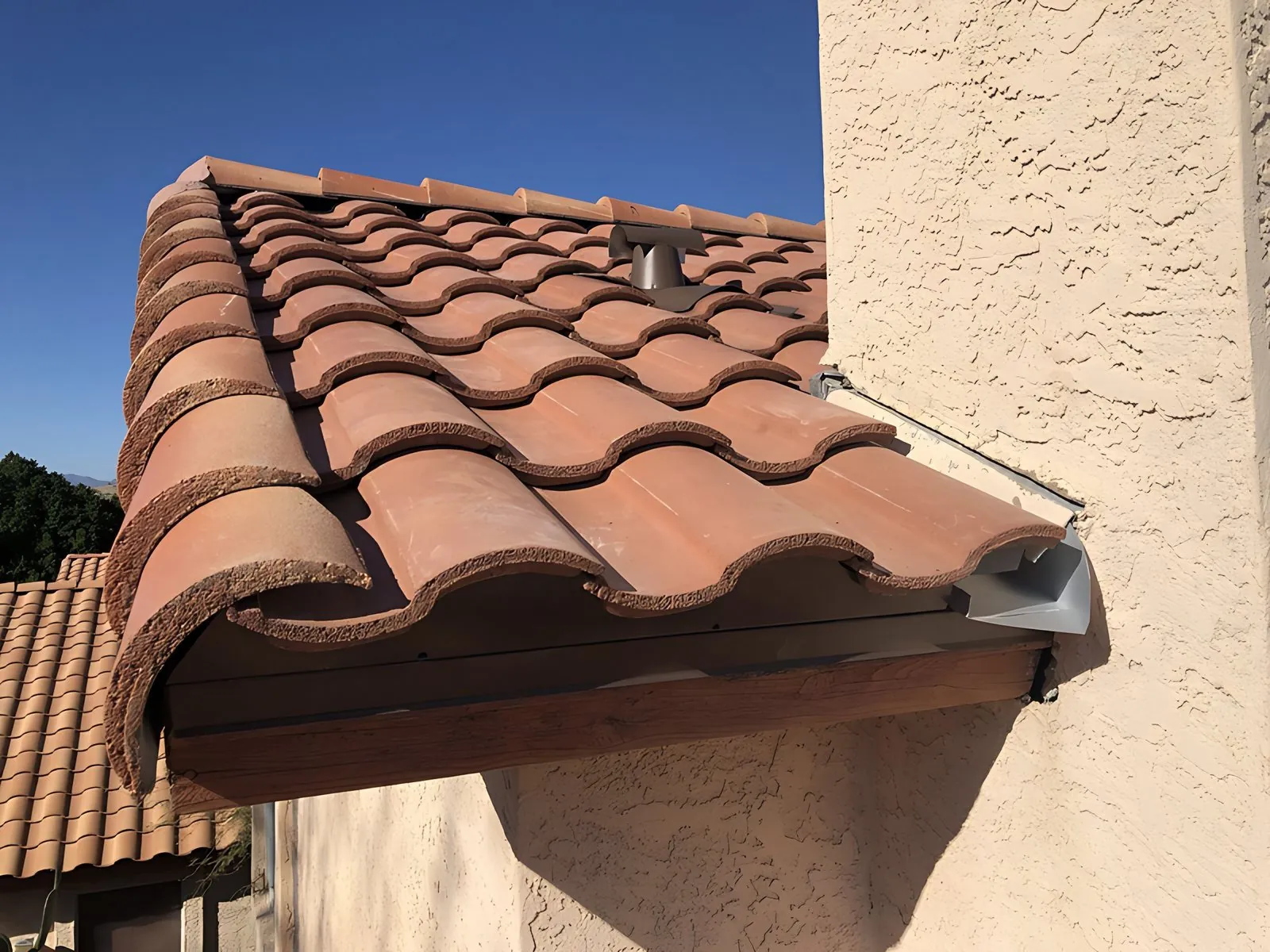
Why winter is valley-leak season in Gilbert
Monsoon storms get the attention, but our winter rain is a different kind of test. Winter storms in the Valley tend to be slower and longer, and several rounds of showers have already moved through the Phoenix area this November. A long, steady rain keeps water moving through a valley for hours instead of minutes.
Winter is also when leaves come down. Many Gilbert yards have shade trees that drop their leaves in late fall and winter, and older neighborhoods with mature landscaping tend to have more of them close to the roof. Wind from the monsoon months may also have left dust, twigs and bits of broken tile sitting in valleys. By the time winter rain arrives, a valley that looked clear in spring can be partly blocked.
How leaves and debris turn a valley into a leak
Most tile roofs use what is called an open valley: a channel of metal flashing runs down the valley, and the tiles on each side are cut to leave that metal exposed so water can flow freely. The system works well as long as the channel stays open.
When leaves, dirt and twigs build up, a few things can happen:
- Water dams and backs up. A clump of debris slows the flow, and water spreads sideways under the edges of the cut tiles instead of running straight down the metal.
- Debris holds moisture. A wet pile of leaves keeps the valley and the tile edges damp long after the rain stops.
- Water finds the underlayment. Once water gets past the tile, the underlayment beneath it is the last line of defense. On a roof that is 20 years old or more, that layer is often brittle or cracked.
Valley metal itself can also wear out, and long runs can shift with our daily heat and cooling. Our post on roof flashing repair signs covers what failing metal tends to look like.
Why so many Gilbert tile roofs are vulnerable right now
Much of Gilbert was built from the 1990s onward in master-planned neighborhoods, and concrete or clay tile is by far the most common roof. The tile can last 50 years or more, but the underlayment under it typically needs attention somewhere around 20 to 30 years. That means a lot of Gilbert roofs are reaching the stage where a small valley backup can turn into a real leak.
Lake communities such as Val Vista Lakes, which dates from the mid-1980s, and Greenfield Lakes, with homes from 1997 to 2004, are good examples of neighborhoods where original underlayment is well into that range. If your home is in one of them, or anywhere built in that era, valleys deserve a closer look. Our guide to tile roof underlayment replacement explains what a re-felt involves if the underlayment is the real problem.
Safe checks you can do from the ground and the attic
Please do not climb onto a tile roof to check a valley. Tiles crack easily underfoot, a cracked tile can let more water in, and a fall from a roof or ladder can cause serious injury. You can learn a lot without going up there.
- Find your valleys. Walk around the house and note where rooflines meet in an inside corner. A pair of binoculars helps.
- Look for buildup. Leaves, palm fronds, dirt or plant growth sitting in the valley channel is a sign it needs clearing.
- Look for displaced tile. Cut tiles along a valley that have slipped, cracked or gone missing leave the valley edge exposed.
- Watch a rainstorm. From a dry spot, see whether water sheets cleanly off the bottom of each valley or spills over the side.
- Check inside. After rain, look at ceilings and upper walls below each valley for stains, bubbling paint or a musty smell. If you can safely reach an attic access, a flashlight look for damp wood or stains under a valley is useful, too.
Our guide to finding a roof leak walks through how to narrow down where water is coming in.
Keeping valleys clear without damaging the roof
The best prevention is simply keeping valleys open. Trimming tree branches that hang over the roof cuts down on what falls into valleys in the first place. Many Gilbert HOAs have landscaping rules, so check yours before major tree work.
Clearing the valleys themselves is a job for a roofer or someone experienced with walking tile safely. Pressure washers can force water under tile, and stepping on the cut tiles along a valley is an easy way to break them. A good rule of thumb is to have valleys checked and cleared as part of a roof inspection once or twice a year, ideally in fall before winter rain and in spring before monsoon season. Our winter roof care tips list a few other items worth checking at the same time.
How a roofer fixes a leaking valley
The fix depends on what failed. If the valley was simply clogged and the underlayment is still in good shape, clearing debris and resetting or replacing a few cut tiles may be all it needs. If the valley metal is rusted, split or poorly overlapped, the tiles along the valley are removed, new flashing goes in, and the tiles are reinstalled.
If the underlayment under the valley has broken down, it is worth asking whether the rest of the roof is in the same condition. On an older roof, a localized valley repair can buy time, but a re-felt of the whole roof may make more sense. A roofer can show you photos and explain the options. Our tile roof FAQ answers common questions about repairs and re-felts.
Have a Gilbert roofer check your valleys before the next storm
Payne Roofing is a family-owned roofer based in Gilbert, on E Fairview St, and we have been serving Arizona since 1984. We inspect valleys, flashing and underlayment on tile roofs across town, from Power Ranch to the older lake communities up north. Learn more about our roof inspections and roof repairs and maintenance, or see our main Gilbert roofing page.
We also serve Phoenix, Mesa, Tempe, Chandler, Queen Creek, San Tan Valley, Apache Junction and Cave Creek. Call 480-988-9250, Monday through Friday from 7 am to 5 pm or Saturday from 8 am to 2 pm, or request a free estimate.
Questions & answers
Why does my tile roof only leak during long rains?
Long rains often expose weak spots that short storms do not, and valleys are a common one. A brief shower may run off before water reaches worn underlayment, while hours of steady rain keep a valley full and give water time to work under tiles and through gaps. A roofer can trace the leak to its source.
Can I clean my roof valleys myself?
It is safer to have a roofer do it. Walking on tile risks cracking it, especially the cut tiles along a valley, and falls from roofs cause serious injuries. You can safely trim back overhanging branches from the ground, watch for buildup with binoculars and schedule valley clearing as part of a regular roof inspection.
How often should roof valleys be checked in Gilbert?
Once or twice a year is a good rule, ideally in fall and spring. Fall checks catch leaves and debris before winter rain, and spring checks clear anything left before monsoon season starts on June 15. Homes with trees overhanging the roof may need checks more often, and any valley should be looked at after a major storm.
Does a leaking valley mean I need a new roof?
Not necessarily. Many valley leaks are fixed by clearing debris, replacing cracked tiles or installing new valley flashing. If the underlayment beneath the valley has broken down and the roof is 20 years old or more, the rest of the underlayment may be close behind, so a re-felt could be worth discussing.
Does Payne Roofing repair valley leaks in Gilbert?
Yes, valley and flashing repairs on tile roofs are a regular part of our work, and Gilbert is our home base. We inspect the valley, check the underlayment and explain your options before any work starts. Call 480-988-9250 during business hours, or request a free estimate through our contact page.
Talk to a roofer who knows Arizona roofs.
Call for a free estimate. Open Monday through Friday 7–5 and Saturday 8–2.