Spray foam roofing
Foam Roof Recoating & Restoration
A foam roof is recoated, not replaced, when its coating wears: clean the roof, cut out wet or damaged foam, repair flashing, then apply new coating at the specified thickness. Recoat when you see chalky coating, exposed foam, blisters, bird pecks or ponding. Tear-off is needed only when insulation is wet or the deck is damaged.
Why Foam Roofs Are Built to Be Renewed
The biggest advantage of a spray foam roof is that you do not have to tear it off when the surface wears out. The closed-cell foam is the insulated foundation of the roof, and the elastomeric coating on top is its weathering skin. The coating takes the sun, rain, dust and foot traffic so the foam does not have to. Over time the coating wears down, as it is designed to, and it is renewed with a recoat.
As long as the foam underneath stays sound and dry, a foam roof can be cleaned, repaired and recoated many times over its life. Most foam roofs need recoating roughly every 5 to 10 years, depending on the coating, its original thickness, sun exposure, ponding and traffic. The key is timing. Recoat while the foam is still protected and the job is usually straightforward. Wait until the foam is exposed and weathering, and there is more repair work to do first.
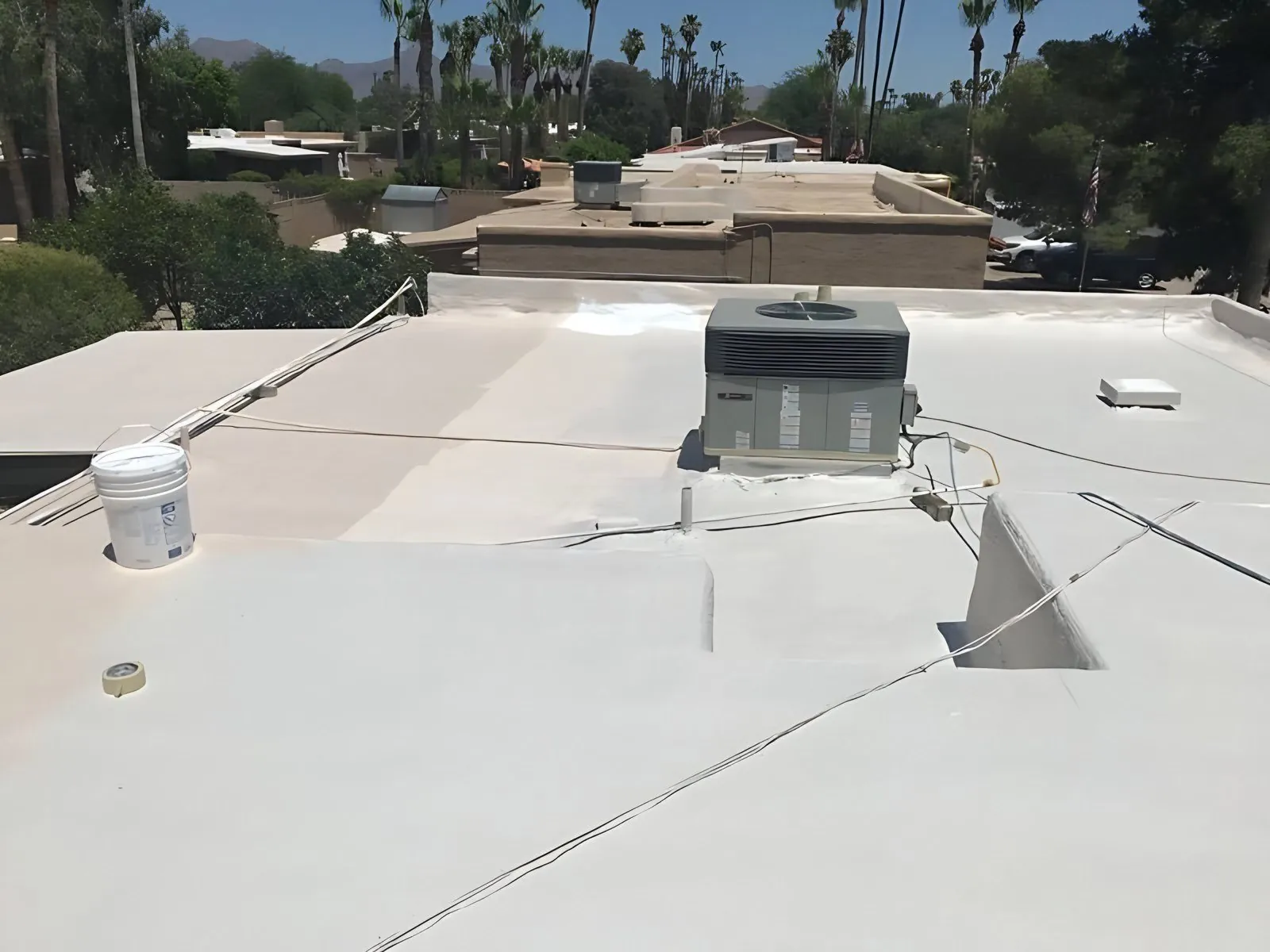
Signs Your Foam Roof Needs Recoating
These are the warning signs we look for. A professional inspection is the best way to check, but homeowners can often spot some of them with binoculars from a safe vantage point on the ground. Please do not climb onto the roof yourself.
Chalky or worn coating
Coatings naturally chalk as they age. A faded, powdery surface, or one where the texture of the foam is starting to show through, means the coating is getting thin and has less protection left.
Exposed foam
Tan, yellow, orange or dark brown patches mean the coating is gone in those spots and the sun is reaching the foam. UV degrades exposed foam, leaving it brittle and powdery, and the damage spreads the longer it waits.
Blisters
Raised bubbles in the coating or foam can signal trapped moisture or a lost bond. They need to be opened and evaluated, because a blister can hide wet foam.
Bird pecking
Birds sometimes peck at foam roofs, leaving small holes through the coating. Each hole is a path for water and UV, so even small pecks should be sealed.
Ponding
Water still standing on the roof long after a storm speeds up coating wear, holds dirt against the surface and adds weight. Ponding areas often wear out first.
Cracks, punctures and hail damage
Crazing in the coating, dents from hail, and punctures from dropped tools or foot traffic around HVAC units all break the protective film and should be repaired.
The Inspection Comes First
Before recommending a recoat, we need to know what is under the surface. A foam roof inspection typically covers:
- Coating condition and thickness, including thin spots and areas of exposed foam.
- What coating is on the roof now, because the new coating must be compatible, and few things bond to silicone.
- Foam condition, including blisters, soft spots, erosion and adhesion.
- Moisture. Wet foam or wet insulation beneath it must be found and removed, not coated over.
- Drainage, including ponding areas, drains and scuppers.
- Flashing and penetrations at parapets, curbs, vents, pipes and rooftop equipment.
- The deck, where there are signs of sagging or interior leaks.
From there, we explain what we found and whether the roof is a good candidate for a recoat, needs more significant repairs first or needs something more.
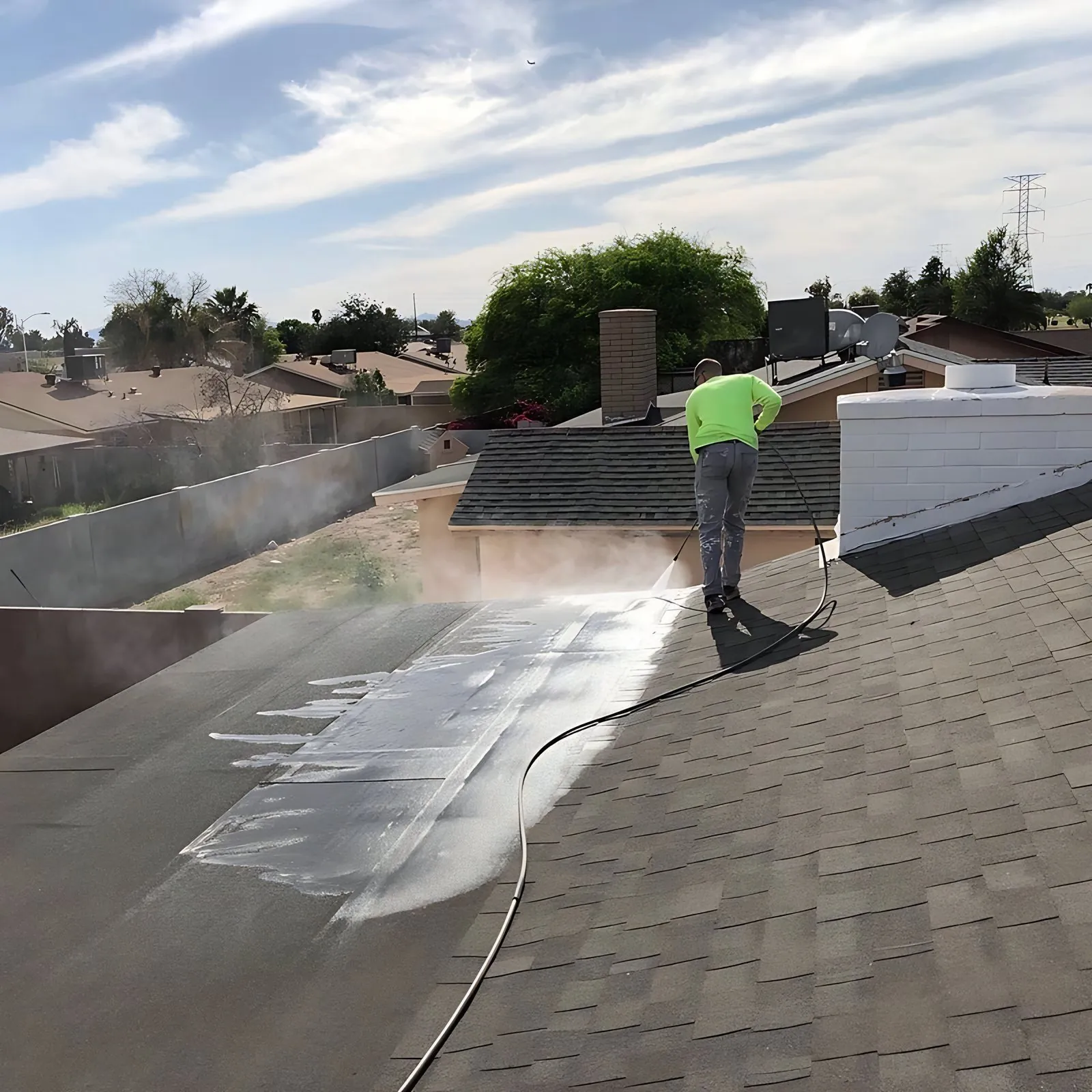
The Repair-Then-Recoat Process, Step by Step
- Clean the roof. Dust, dirt and debris are removed so the new coating can bond. Arizona roofs collect a lot of dust, especially after haboobs, so this step matters.
- Remove damaged and wet material. Wet, degraded or poorly bonded foam is cut out back to sound, dry material. Repairs that stop short of sound foam just move the problem to the edge of the patch.
- Re-foam and repair. Removed areas are filled with new foam, blisters are repaired, punctures and bird pecks are sealed and low spots can be built up where appropriate.
- Address flashing and details. Penetrations, curbs, parapet transitions, drains and scuppers are repaired and reinforced with compatible fabric or sealant where needed.
- Prime if required. Some coatings and surfaces call for a primer to ensure adhesion.
- Apply the coating. The new coating is applied to the manufacturer's specified thickness, often in more than one pass, with granules or walkway pads added in traffic areas.
- Final review. We walk the finished roof, check details and recommend an inspection schedule going forward.
Because coatings need dry conditions to cure, we plan recoats around monsoon storms, which officially run from June 15 to September 30, and avoid days with rain in the forecast.
Restoring an Existing Commercial Roof: Silicone or New Foam?
Not every restoration involves a foam roof. Many existing commercial roofs, including some built-up, single-ply, metal and foam roofs, can be restored rather than replaced if they are still sound and dry. There are two very different approaches.
Silicone restoration coating
The existing roof is cleaned, repaired, primed where needed and coated with a silicone system. This renews the waterproofing surface, adds reflectivity and avoids a tear-off. It does not add meaningful insulation and does not change the roof's slope, so it suits roofs that are in decent shape and drain reasonably well.
New spray foam over the existing roof
Closed-cell foam is sprayed over a suitable existing roof, then coated. This adds insulation, creates a new seamless surface and can build slope to correct ponding. It is a bigger project than a coating, but it delivers the full benefits of foam without demolition.
Which one fits depends on the roof's condition, moisture, drainage, insulation goals and budget. Our commercial spray foam roofing page covers this from a building owner's point of view.
When Tear-Off Is Needed
Recoating and restoration are great options when the roof is a good candidate. Sometimes it is not, and coating over the problem only hides it for a while. Removal is usually needed when:
- Insulation or foam is wet. Saturated material loses its insulating value, will not hold a coating and can keep feeding moisture into the roof. Small wet areas can be cut out, but widespread moisture means removal.
- The deck is damaged. Rotted wood, rusted metal or a sagging deck must be repaired or replaced before anything new goes on top.
- The existing material is incompatible with foam or the planned coating.
- Too many layers are already in place, or the roof cannot carry another one.
- The foam has lost adhesion over large areas.
We will tell you plainly when a roof needs to come off, and we will also tell you when it does not.
A Maintenance Schedule That Protects the Foam
- Spring inspection. Check coating wear, drains and flashing before summer heat and monsoon season.
- Fall inspection. Look for damage from the monsoon, clear drains and scuppers and seal any punctures before winter rains.
- After storms. Have the roof checked after hail, major monsoon storms and haboobs.
- Ongoing care. Keep debris off the roof, keep drains clear, use walkway pads around HVAC equipment and repair small damage promptly.
- Recordkeeping. Keep a record of when the roof was installed, what coating is on it and when it was last coated. That makes planning the next recoat simple.
Our foam roof care and recoating guide has more everyday tips.
Staged Renewal for Large Roofs
A large commercial roof does not always have to be recoated all at once. Recoating can sometimes be phased across sections to fit a budget. The worst areas, such as exposed foam, ponding zones and high-traffic paths around equipment, are handled first, and the rest follow on a planned schedule. The rule is that no area can be left unprotected while waiting its turn. Exposed foam needs at least repair and coating right away.
Staged renewal works best with a written maintenance plan, so everyone knows which sections were done and when.
Recoating and Restoration From Payne Roofing
Payne Roofing has served Arizona since 1984, recoating and restoring foam roofs on homes and commercial buildings in Phoenix, Mesa, Tempe, Chandler, Gilbert, Queen Creek, San Tan Valley, Apache Junction and Cave Creek. Our roof repairs include a 2 to 5 year warranty, and complete re-roofs offer 10, 15 or 20-year warranty options. Estimates are free, and flexible financing options are available.
Call 480-988-9250, Monday through Friday from 7:00 am to 5:00 pm or Saturday from 8:00 am to 2:00 pm, or request an estimate. To learn more, visit our spray foam roofing page.
Common questions
How do I know if my foam roof needs recoating?
Your foam roof likely needs recoating if the coating looks chalky, faded or thin, or if you see tan, yellow, orange or brown patches of exposed foam. Blisters, bird pecks, cracks and areas that pond also call for attention. A professional inspection confirms coating thickness and checks for wet foam underneath.
What color is exposed spray foam?
Exposed spray foam usually looks tan, yellow, orange or dark brown, and the color deepens as UV damages it. A healthy coated roof is usually white or light colored. If you see these colored patches from the ground, the coating has worn through in those areas and should be repaired and recoated soon.
Can a foam roof be repaired instead of replaced?
Yes, most foam roof damage can be repaired locally. Damaged or wet foam is cut out to sound material, filled with new foam and recoated with a compatible coating. Full replacement is usually needed only when moisture is widespread, the deck is damaged or the foam has lost adhesion across large areas.
Can you coat over wet foam?
No, wet foam should never be coated over. Moisture trapped under a new coating keeps damaging the roof, reduces insulating value and can cause blisters and coating failure. Wet areas must be cut out and replaced with new foam before recoating, and widespread moisture may mean the roof needs to be removed.
How long does a foam roof recoat take?
A recoat on a typical home often takes a few days, while large commercial roofs take longer. Timing depends on roof size, how much repair work is needed, the coating system and the number of coats. Weather matters too, since coatings need dry conditions to cure, so we plan around storms.
Why are there blisters on my foam roof?
Blisters on a foam roof usually point to trapped moisture or a spot where the coating or foam lost its bond. They should be opened and evaluated, because some hide wet foam. Once the cause is found, the damaged material is removed, repaired with new foam and recoated with a compatible coating.
What is the difference between a recoat and a roof restoration?
A recoat renews the coating on an existing foam roof after cleaning and repairs. A restoration usually refers to renewing an existing roof of any type, such as built-up, single-ply, metal or foam, with a coating system instead of tearing it off. Both depend on the existing roof being sound and dry.
Can I recoat only part of my roof?
Sometimes, yes. Large roofs can often be recoated in stages, starting with the most worn areas such as exposed foam, ponding zones and traffic paths. No section should be left with exposed foam while it waits. A written maintenance plan helps track which areas were done and when the rest are due.
How often should a foam roof be inspected?
A foam roof should be inspected at least once a year and ideally twice, in spring and fall, plus after hail, major monsoon storms and haboobs. Regular inspections catch thin coating, punctures, bird damage and drainage problems while they are still simple, inexpensive repairs rather than larger foam replacements.
Talk to a roofer who knows Arizona roofs.
Call for a free estimate. Open Monday through Friday 7–5 and Saturday 8–2.