Roof Types
Phoenix Roof Types
Payne Roofing works with all conventional roofing materials used in Arizona: asphalt shingles, concrete and clay tile, sloped and flat roofs, spray polyurethane foam and elastomeric coatings. The best choice depends on your roof's pitch and structure, budget, HOA rules, desired look and how the roof will handle Valley heat and storms.
Every Roof Type, One Experienced Team
At Payne Roofing, our Arizona roofing contractors work with all conventional roofing materials. You can rely on us to install, repair or replace virtually any material your roof system needs, with quality materials, careful craftsmanship and customized service.
Our experience with Arizona's weather and temperature changes, since 1984, has taught us how each type of roof behaves in the desert. Below is an overview to help you understand your options.
Asphalt Shingles
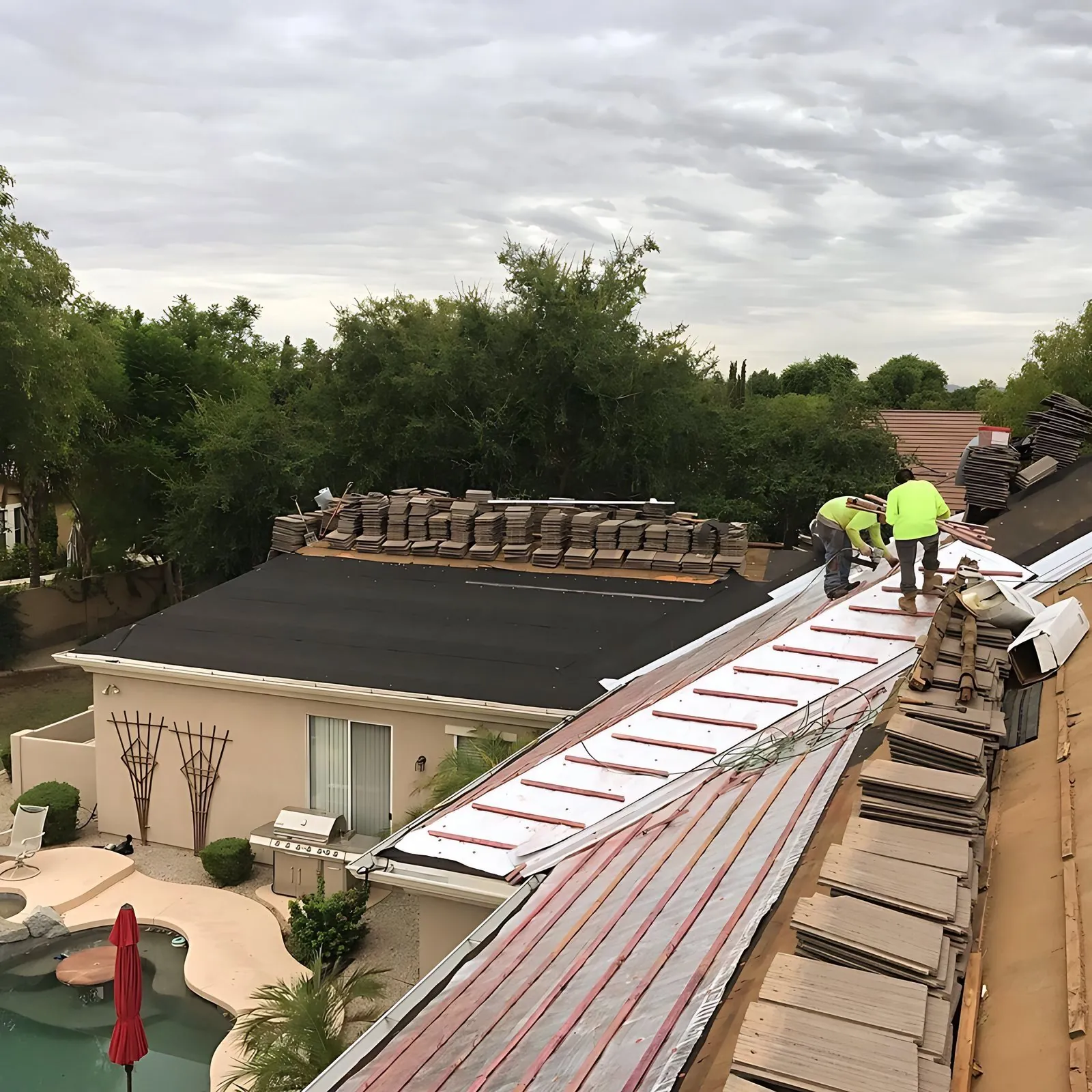
Asphalt shingles offer wide design flexibility. They come in many colors, and some are made to resemble textures like wood shakes, slate or tile. The two most common styles are 3-tab shingles, which lie flat and look uniform, and architectural shingles, which are thicker and add dimension.
Shingles are a practical fit for many Valley homes because they are relatively lightweight and efficient to install. We install shingle lines such as Owens Corning Oakridge and CertainTeed, and photos of finished shingle roofs in our project gallery can help you compare colors in real light.
Ventilation matters a great deal with shingles in Arizona. A hot, poorly ventilated attic bakes shingles from below, shortening their life, so we check attic airflow as part of any shingle replacement. In the Arizona sun, they typically last around 20 to 30 years depending on quality, ventilation and maintenance. Heat and UV can eventually cause curling, cracking and granule loss. Learn more in our post on shingled roof facts.
Tile Roofs
Tile roofs are common across the Phoenix area and East Valley for good reason. Concrete and clay tile provide high-end curb appeal and stand up well to sun and heat. We can help you select tile profiles and colors that meet your style goals and HOA requirements.
The key to understanding tile roofs in Arizona is the underlayment. The tiles themselves can last 50 years or more, but the underlayment beneath them, which provides most of the waterproofing, often needs attention around 20 to 30 years. When the tiles are still in good shape, a re-felt replaces the underlayment and reuses the tiles. Read more about the benefits of a tile roof.
Sloped Roofs
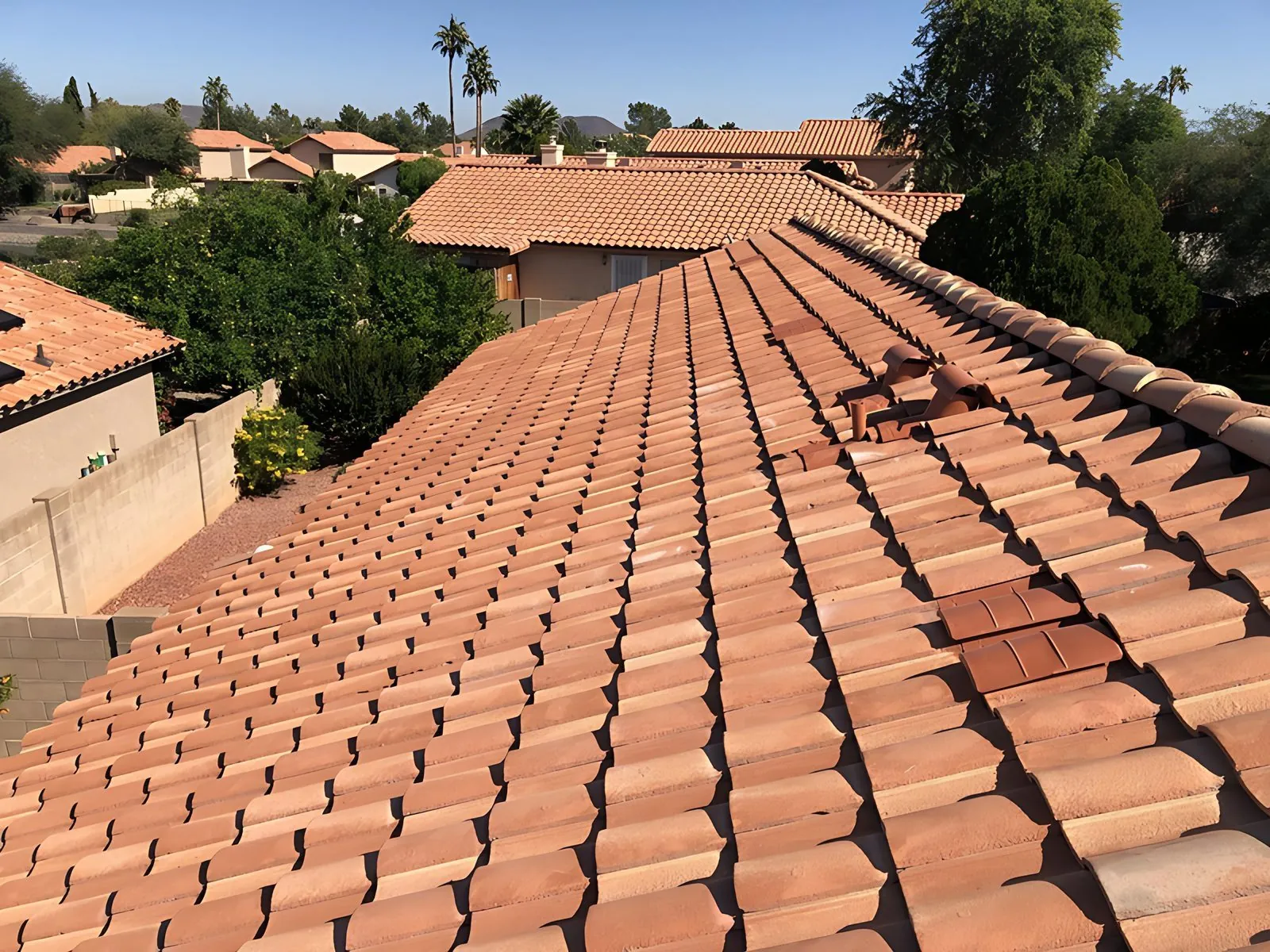
Most Arizona homes combine roof types. It is common to see a tile or shingle main roof with a flat foam-and-coating section over a patio or addition. Each section needs the right material for its slope, and the transitions between them need careful flashing.
We understand the importance of both form and function. Pitched and sloped roofs shed water efficiently and give a home its architectural character. We work with homeowners to design and build sloped roofs that look right for the property, using shingle or tile and paying close attention to valleys, ridges and flashing where slopes meet.
Flat Roofs
Flat roofs are not truly flat. They have a low slope to drain, which means the roofing must be watertight and the drainage must work well. Water that ponds on a flat roof accelerates wear. Payne Roofing contractors create and maintain flat roofs that resist surface damage and support energy efficiency. Common flat roof options include spray foam and coated systems.
Polyurethane Foam
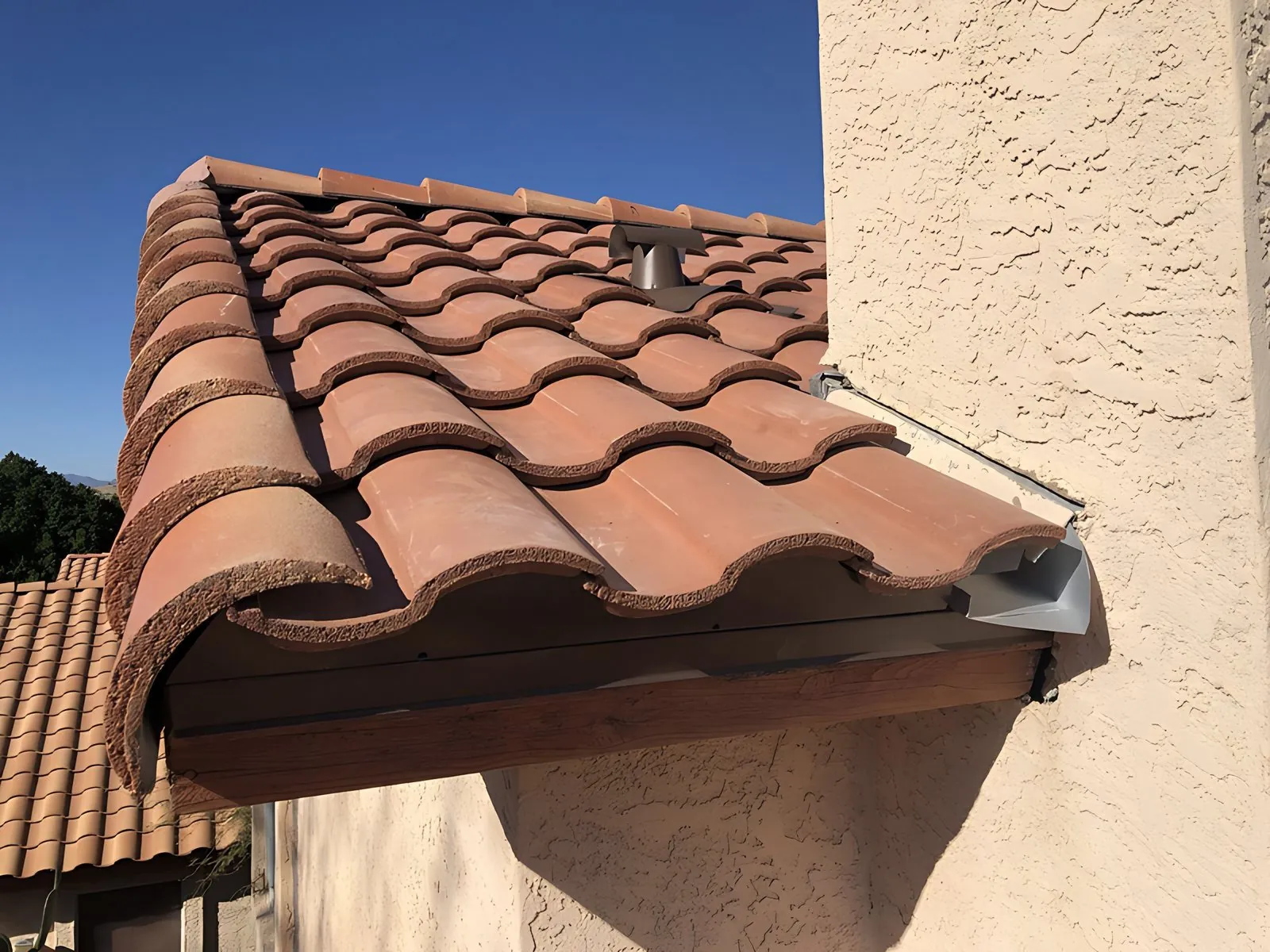
Spray polyurethane foam (SPF) is applied as a liquid that expands and hardens into a seamless roofing surface. Without seams, there are fewer places for leaks to start. Foam is lightweight and flexible, so it can be applied to irregularly shaped roofs and around penetrations, and it adds insulation.
Foam must be protected from UV by a coating. With proper recoating, roughly every 5 to 10 years depending on the coating, a foam roof can last for decades.
Elastomeric Roof Coatings
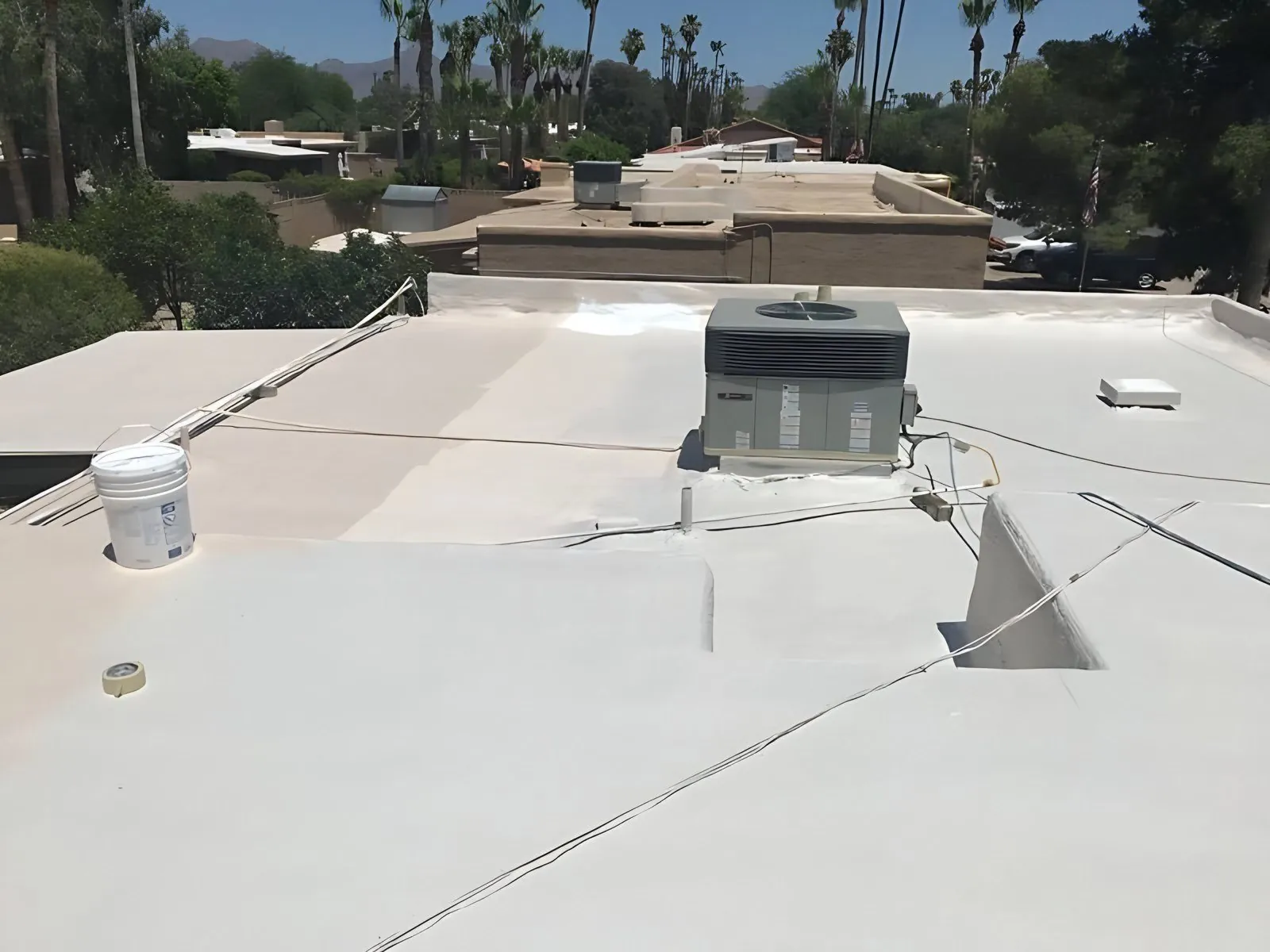
Elastomeric and emulsion roof coatings are used for repairs and to add a layer of protection to roofing surfaces. These coatings can expand and contract with temperature swings, help insulate and reflect sunlight, so they adapt to conditions throughout the year. White, reflective cool roof coatings lower heat gain, which can help keep the building cooler in summer. Coatings need periodic reapplication to keep performing.
How Arizona Weather Affects Each Roof Type
- Heat and UV: Shingles can curl, crack and lose granules. Tile underlayment dries out and becomes brittle. Foam degrades if its coating wears thin, and coatings gradually weather away.
- Monsoon wind: Shingles can lift or tear off, tiles can shift or crack, and flashing can loosen on any roof type.
- Heavy rain: Flat roofs are most vulnerable where drainage is poor and water ponds. On sloped roofs, valleys and flashing take the most water.
- Dust and debris: Haboobs and wind-blown debris can clog gutters, valleys and roof drains.
- Hail: Occasional hail can crack tiles, bruise shingles and puncture coatings or foam.
- Birds: Pigeons commonly nest under the edges of tile roofs, and nesting debris can block water flow.
Maintaining Your Roof, Whatever the Type
Every roof type lasts longer with regular care. We recommend a professional inspection one to two times a year, ideally in spring and fall, and after major storms. Typical maintenance includes replacing broken tiles or damaged shingles, resealing flashing, clearing drains and valleys, and recoating foam and coated roofs on schedule. Please stay off your roof, especially tile, which cracks easily underfoot. Learn more about our repair and maintenance services.
How to Choose the Right Roof
The right roof depends on several factors:
- Roof pitch: Tile and shingles need sufficient slope; foam and coatings suit flat and low-slope roofs.
- Structure: Tile is heavier than shingles, so the structure must support it.
- Budget and long-term value: Consider both upfront cost and expected lifespan and maintenance.
- HOA rules: Many communities regulate materials and colors.
- Energy efficiency: Reflective coatings and good ventilation help manage heat.
- Appearance: Color, texture and profile should suit the home.
We are happy to walk you through options. See our roof replacement services or call 480-988-9250.
Common questions
What is the best roof type for Arizona?
There is no single best roof for every Arizona home. Tile is popular for durability and curb appeal, asphalt shingles offer versatility and value, and spray foam with reflective coatings works well on flat roofs. The right choice depends on pitch, structure, budget, HOA rules and your goals.
How long do asphalt shingles last in Arizona?
Asphalt shingles typically last around 20 to 30 years in Arizona, depending on shingle quality, attic ventilation and maintenance. Intense heat and UV gradually cause curling, cracking and granule loss, so regular inspections help you get the most life from a shingle roof.
Why do tile roofs need the underlayment replaced?
Because the underlayment, not the tile, provides most of the waterproofing, and Arizona heat breaks it down over time. Tiles can last 50 years or more, but underlayment often needs attention around 20 to 30 years. A re-felt replaces the underlayment and reuses sound tiles.
What is the difference between 3-tab and architectural shingles?
3-tab shingles are a single flat layer cut to look like three separate shingles, giving a uniform appearance. Architectural shingles are thicker, with layered construction that adds depth and dimension. Architectural shingles are a popular choice for their appearance and durability.
How often does a foam roof need to be recoated?
A foam roof typically needs recoating roughly every 5 to 10 years, depending on the coating used and the roof's exposure. The coating protects the foam from UV damage. Keeping up with recoating is what allows a foam roof to last for decades.
What does an elastomeric roof coating do?
An elastomeric coating forms a flexible, protective layer over a roof surface. It expands and contracts with temperature changes, helps seal minor imperfections and, in white or reflective versions, reflects sunlight to lower heat gain. Coatings need periodic reapplication to keep protecting the roof.
Can a flat roof be energy efficient?
Yes. Flat roofs with spray foam add insulation, and white or reflective coatings reduce the heat the roof absorbs. Good drainage and regular maintenance keep the system performing well. These features can help keep a building cooler during Arizona summers.
Can I switch from one roof type to another?
Sometimes. Switching depends on the roof's pitch, the structure's ability to carry the new material's weight, and HOA rules. For example, tile is heavier than shingles, and foam is best suited to low-slope roofs. We evaluate your roof and explain which options are practical.
Talk to a roofer who knows Arizona roofs.
Call for a free estimate. Open Monday through Friday 7–5 and Saturday 8–2.