Spray foam roofing
Silicone Roof Coatings Over Spray Foam
Silicone is often the best coating over spray foam on Arizona flat roofs because it resists UV, generally tolerates ponding water and is highly reflective when clean. It does collect dirt, some products are soft and future recoats usually must be silicone too. Drainage, foot traffic and the existing coating decide the right choice.
What a Silicone Coating Does on a Foam Roof
A spray foam roof has two layers with two different jobs. The closed-cell foam insulates and forms the seamless body of the roof. The coating on top is the weathering surface, the part that faces the sun, rain, dust and foot traffic every day. Foam left uncoated breaks down under UV, so the coating is not optional.
Silicone is one of the most widely used coatings over foam in hot, sunny climates, and on many Arizona roofs it is the one we recommend. It is an elastomeric coating, which means it stretches and recovers as the roof expands in the heat and contracts at night. Applied at the right thickness over clean, sound foam, a white silicone coating blocks UV, adds a continuous waterproof film, reflects much of the sun's heat and can be renewed over the years without disturbing the foam beneath it.
Silicone is not the only option, and it is not perfect. This page compares it in depth with acrylic and polyurethane coatings, explains how it handles ponding and dirt, what recoating it involves and when another coating is the better choice.
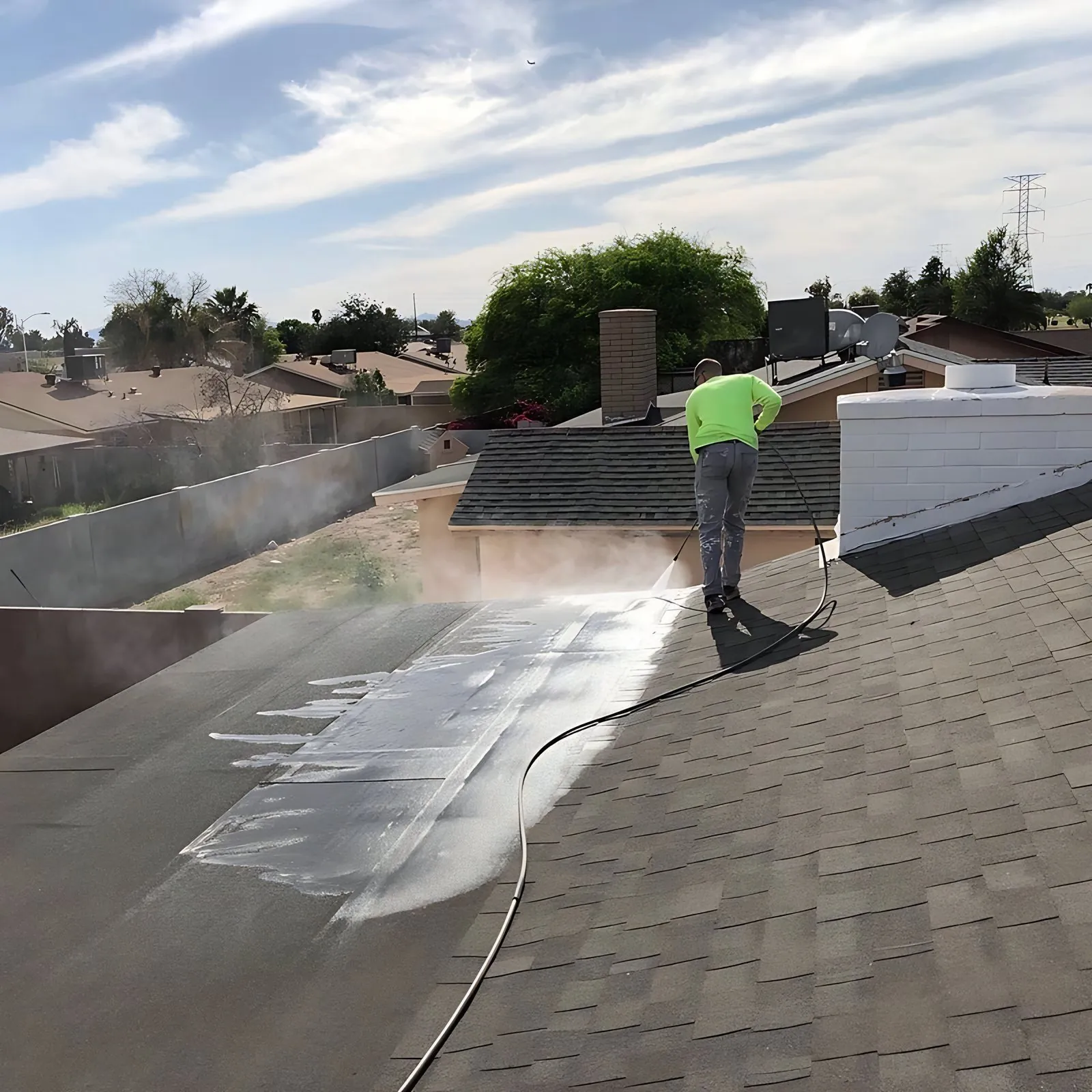
Silicone vs. Acrylic vs. Polyurethane
All three are used over spray foam, and each family includes many products. Exact performance depends on the formulation, so manufacturer data for the specific product always matters more than a general comparison.
| Quality | Silicone | Acrylic | Polyurethane |
|---|---|---|---|
| UV resistance | Excellent | Generally good | Depends on formulation |
| Ponding water | Generally excellent | Often limited under prolonged ponding | Depends on formulation |
| Reflectivity | Excellent when new and white | Excellent when new and white | Varies with product and color |
| Dirt pickup | Tends to collect dirt | Varies | Varies |
| Abrasion and traffic | Varies; some are soft | Moderate | Some are very tough |
| Cleanup | Generally solvent | Water-based | Generally solvent |
| Future recoats | Demanding; often silicone over silicone | Generally simpler with proper prep | Needs compatible materials |
Silicone
Silicone's strengths are UV resistance and its tolerance of standing water. It does not break down quickly under intense sun, and it generally holds up where water sits after a storm, which is a common problem on flat roofs. It stays flexible through Arizona's temperature swings. Its weak points are dirt pickup, softness in some products and the fact that few materials bond to it later.
Acrylic
Acrylic coatings are water-based, offer generally good UV resistance and are highly reflective when new and white. They are a sound choice on roofs that drain well and where budget is a priority. Their main limitation is ponding. Many acrylics do not hold up well when water sits on them for long periods, so they are less suited to flat roofs with low spots.
Polyurethane
Polyurethane coatings come in aliphatic and aromatic types, and performance depends heavily on the formulation. Some are very tough and abrasion resistant, which makes them useful where a roof sees regular foot traffic or needs extra durability. They are sometimes used as a base coat or in high-traffic areas within a larger system.
Ponding Water and Silicone
Ponding is water that is still sitting on the roof long after a storm has passed. On a flat roof in monsoon season, it is one of the biggest causes of early coating wear. Standing water magnifies sun exposure, holds dirt against the surface and keeps the coating wet for days.
Silicone is generally the most tolerant of the three coating families when water sits on it, which is one reason it is popular over foam on flat Arizona roofs. But a coating that tolerates ponding is not a cure for it. Ponding still adds weight, collects debris and can find any weak spot in the roof. Where possible, the better answer is to correct the drainage. Spray foam can be applied thicker in some areas to build slope toward drains and scuppers, and clearing clogged drains after a dust storm often makes a real difference. Also check whether a warranty excludes ponding damage before relying on any coating to handle it.
Reflectivity and Dirt
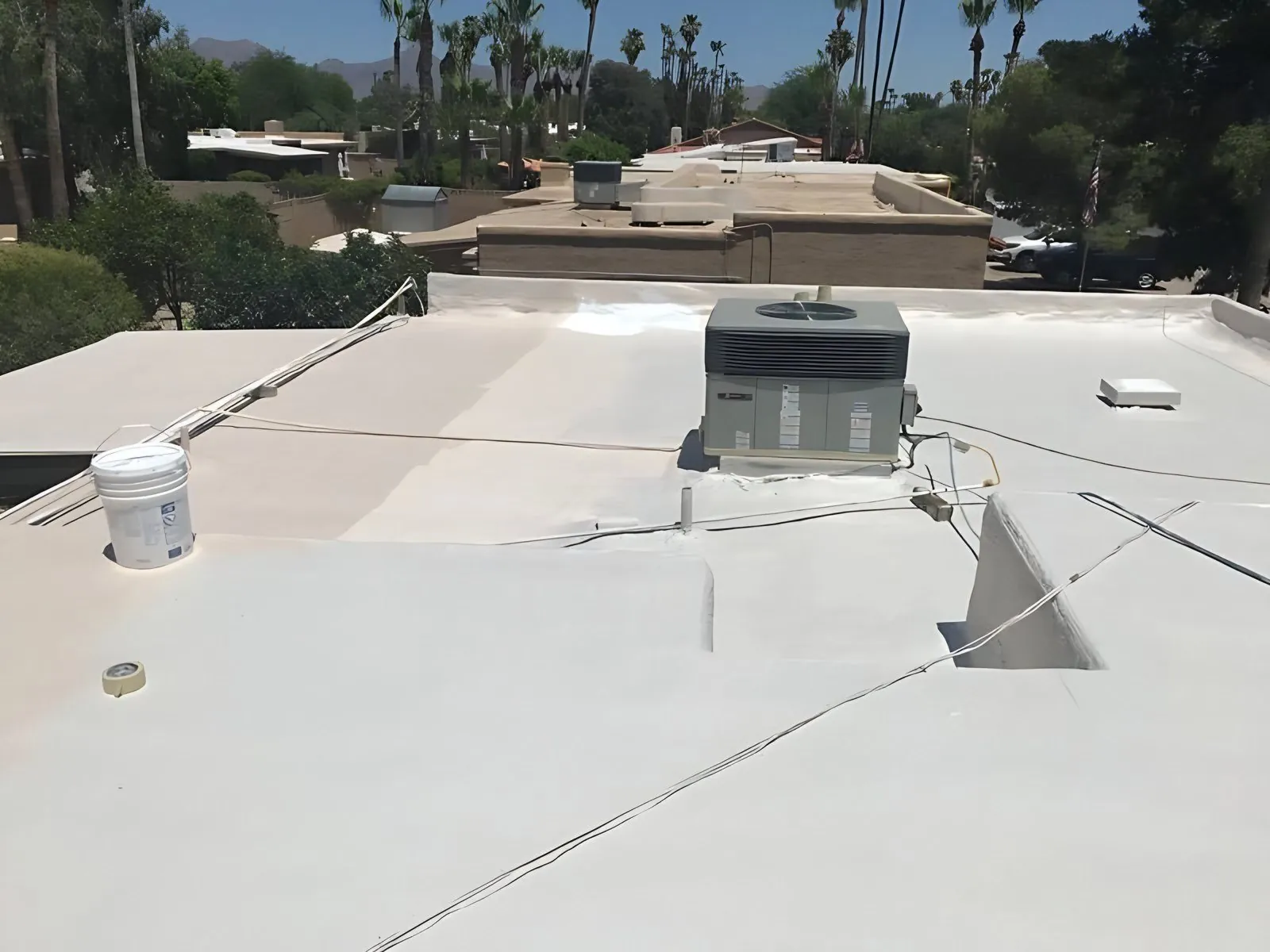
A fresh white silicone roof reflects a large share of the sun's energy, keeping the roof surface cooler and reducing the heat that moves into the building. That is the cool roof effect, and it is a big part of why reflective coatings are so common in the Valley.
Reflectivity is not permanent, though. Silicone surfaces tend to hold onto dust and dirt, and haboobs deposit plenty of both. As the surface darkens, it reflects less and absorbs more heat. A few practical points:
- Expect a new silicone roof to lose some brightness over time as dust settles in.
- Gentle cleaning can restore some reflectivity, but use methods the coating manufacturer approves.
- Dirt also matters before a recoat, because new coating will not bond well to a dirty surface.
- Energy benefits depend on the coating's reflectance and emittance, how clean it stays and how much insulation is under it, so they vary from roof to roof.
Recoat Compatibility
This is the most important thing to understand about silicone before you choose it. Very few materials stick to silicone. Once a roof has a silicone coating, future recoats generally need to be silicone as well, applied after thorough cleaning and with the preparation the manufacturer specifies. Some systems also call for a primer or adhesion test.
That has a few consequences for planning:
- If you are recoating a roof and do not know what is on it, an inspection should identify the existing coating before choosing a new one.
- Silicone can often go over a well-prepared acrylic or other existing coating, but going the other direction is much harder.
- Sealants and patching materials used for repairs must also be compatible with silicone.
- Keeping records of the coating type and when it was applied makes future recoats simpler.
Thickness and Surface Preparation
Coating performance depends on getting two things right: the surface it goes on and how much of it goes on.
Preparation
The foam or existing roof must be clean, dry and sound. On a recoat, that means removing dust, loose material and anything that will interfere with the bond, then repairing damaged foam, blisters, punctures and flashing before coating. Wet foam has to be cut out and replaced. Primer is used where the surface or product requires it.
Thickness
Each coating system has a specified thickness, measured in mils, and that thickness is what delivers the UV protection and durability the product is designed for. A coating applied too thin wears through early. We apply coatings to the manufacturer's specification, often in more than one pass, and check the build as we go. Granules can be broadcast into the coating in some areas for added wear resistance.
Weather
Coatings need dry conditions and suitable temperatures to cure properly, so we schedule around monsoon storms and avoid days with rain in the forecast.
Maintaining a Silicone-Coated Foam Roof
- Inspect twice a year, ideally in spring and fall, and after monsoon storms, haboobs or hail.
- Keep drains and scuppers clear so water does not pond longer than it has to.
- Protect traffic areas. Some silicones are soft. Walkway pads around HVAC units and coolers help, and technicians should avoid dragging tools or equipment.
- Repair damage promptly. Small punctures, bird pecks and hail marks are simple to fix with compatible materials before water reaches the foam.
- Watch for wear. Thin spots, exposed foam or a coating that has lost its build are signs it is time to plan a recoat.
- Recoat on time. Foam roofs are typically recoated roughly every 5 to 10 years, depending on the coating and conditions.
Please leave rooftop checks to a professional. Binoculars from the ground and an eye on your ceilings for stains are the safe way for homeowners to keep watch.
When Silicone Is Not the Right Choice
We recommend silicone often, but not always. Another coating or approach may be a better fit when:
- The roof sees heavy foot traffic. A tougher polyurethane coating, or walkways built into the system, may serve better.
- The roof drains well and budget is tight. A quality acrylic can be a good option where water does not sit.
- The existing coating is not compatible or the roof needs a system where future flexibility in recoating materials is important.
- The real problem is structural or drainage-related. No coating fixes a sagging deck, wet insulation or a roof that holds water because of its shape.
- The roof is too far gone. When foam or insulation is saturated, or the deck is damaged, the roof needs repair or replacement, not a coat over the top.
Installation quality matters more than the label on the bucket. Prep, thickness, moisture conditions and detailing at penetrations decide whether any coating performs.
Silicone Coatings From Payne Roofing
Payne Roofing has served Arizona since 1984 and works with elastomeric and emulsion coatings on foam roofs for homes and commercial buildings across Phoenix, Mesa, Tempe, Chandler, Gilbert, Queen Creek, San Tan Valley, Apache Junction and Cave Creek. We inspect first, explain which coating fits your roof and why, and give you a free written estimate. Flexible financing options are available.
Call 480-988-9250, Monday through Friday from 7:00 am to 5:00 pm or Saturday from 8:00 am to 2:00 pm, or contact us online. For the bigger picture on foam roofs, see our spray foam roofing and silicone coatings page.
Common questions
Is silicone better than acrylic for a foam roof?
Silicone is usually better where water ponds, because it generally tolerates standing water far better than acrylic and resists UV very well. Acrylic is a solid, water-based option on roofs that drain well and where budget matters. The right choice depends on drainage, traffic, the existing coating and how you plan to recoat later.
Can you put acrylic over a silicone roof coating?
Generally no, because very few coatings bond reliably to silicone. Once a roof has silicone, future recoats are typically silicone as well, applied after thorough cleaning and the manufacturer's specified preparation. That is why knowing what coating is already on the roof matters before any recoat.
Does silicone roof coating handle ponding water?
Yes, silicone is generally the most ponding-tolerant of the common foam roof coatings. Even so, ponding adds weight, holds dirt and can find weak spots, and some warranties exclude ponding damage. Where possible, improving drainage, such as tapering foam toward drains or clearing clogged scuppers, is still the better long-term fix.
Why does my white silicone roof look dirty?
Silicone surfaces tend to attract and hold dust, and Arizona dust storms deposit a lot of it. The dirt reduces reflectivity, so the roof absorbs more heat than when it was new. Cleaning with manufacturer-approved methods can help, and a clean surface is also essential before any future recoat.
How thick should a silicone coating be on a foam roof?
A silicone coating should be applied at the thickness the manufacturer specifies for that system, which is measured in mils. Thickness is what provides the UV protection and durability the product is designed to deliver. Coatings applied too thin wear through early, so the build should be checked during application.
How long does a silicone coating last on spray foam?
A silicone coating on spray foam typically lasts several years before it needs renewing, and foam roofs are generally recoated roughly every 5 to 10 years depending on the coating. Original thickness, sun exposure, ponding, dirt and foot traffic all affect how long a given roof goes between recoats.
Is silicone coating slippery or soft?
Some silicone coatings are relatively soft compared with other roof coatings, and any coated roof can be slippery when wet or dusty. Walkway pads around HVAC units protect the coating where technicians walk. For safety, homeowners should stay off the roof and leave inspections to a professional.
When should I choose polyurethane instead of silicone?
Polyurethane is worth considering when a roof sees heavy foot traffic or needs extra abrasion resistance, because some formulations are very tough. Performance varies by formulation, so the specific product matters. Sometimes polyurethane is used in high-traffic areas or as a base coat within a larger coating system.
Will a silicone coating stop my roof from leaking?
A silicone coating can stop leaks caused by a worn or thin surface, but only after the underlying problems are repaired. It will not fix wet foam, failed flashing, major cracks, structural issues or poor drainage. An inspection identifies the source of the leak so repairs are made before the roof is coated.
Talk to a roofer who knows Arizona roofs.
Call for a free estimate. Open Monday through Friday 7–5 and Saturday 8–2.