Spray foam for homes
Residential Foam Roofing
Spray foam with a reflective coating is a strong fit for flat and low-slope roofs on Arizona homes, from territorial and ranch houses to patio covers and Arizona rooms. Success depends on careful transitions to tile or shingles, well-sealed parapets and scuppers, the right coating color and timely recoats. Payne Roofing offers free estimates.
Spray Foam on Arizona Homes
Drive through older neighborhoods in Phoenix, Tempe or Mesa and you will see plenty of homes with roofs you cannot see from the street. Flat and low-slope roofs hide behind parapet walls on territorial and pueblo-style houses, sit over mid-century ranch homes and cover countless patios, carports and room additions. For many of those roofs, spray polyurethane foam with a reflective coating is one of the most practical systems a homeowner can choose.
This page is written for homeowners. It covers the kinds of houses and roof sections where foam works well, how foam is tied into tile and shingle roofs on the same house, what parapets and canales need, how a foam roof affects comfort in the rooms below, how to choose a coating your HOA will approve and what living through a foam project is actually like. If you want the technical background on foam itself, our main spray foam roofing page covers it in depth.
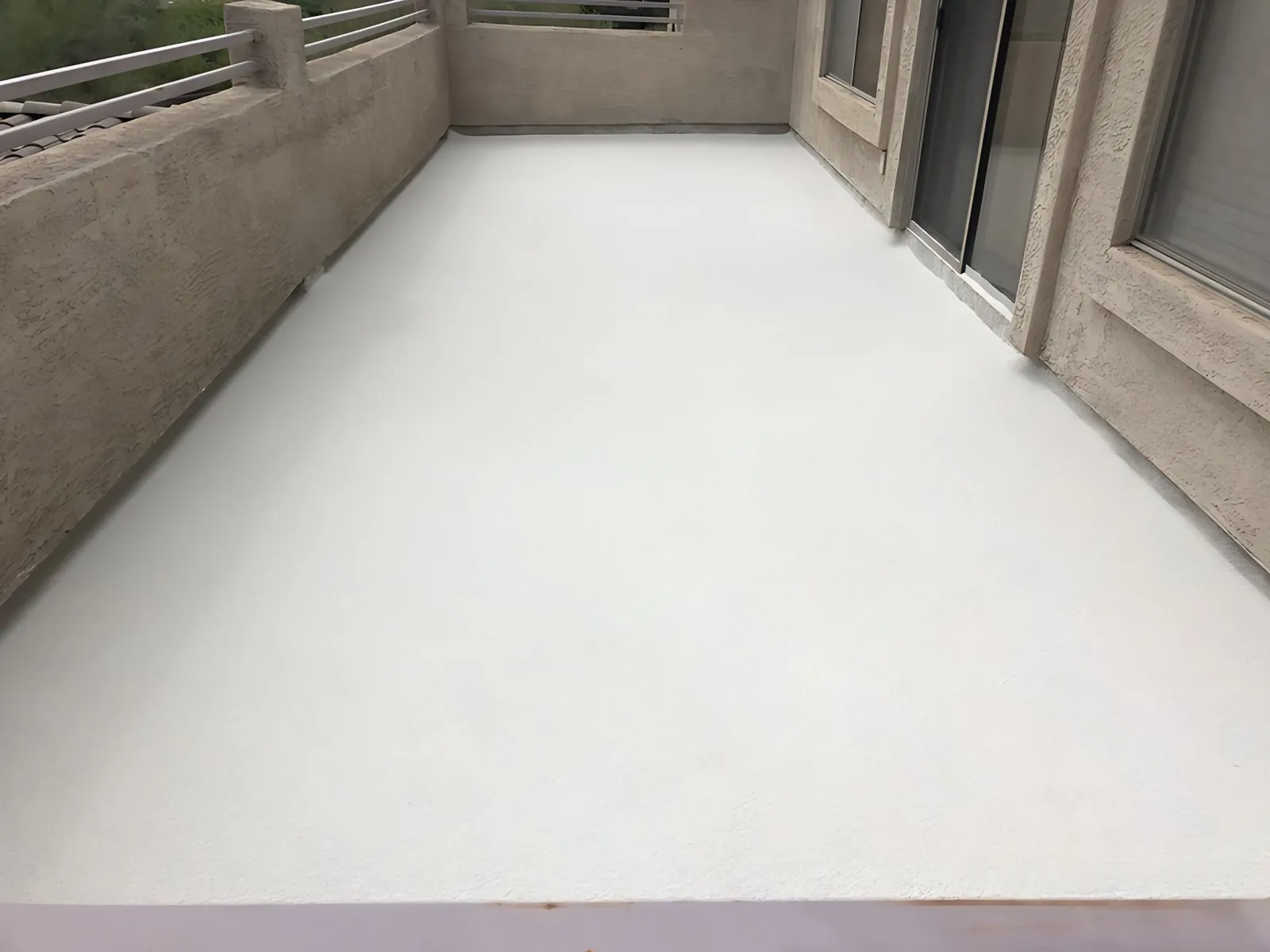
House Styles Where Foam Makes Sense
Territorial and pueblo-style homes
These homes are built around a flat roof surrounded by stucco parapet walls, often with wood vigas or canales poking through. Water has nowhere to go except toward a few low points, so the roof has to drain well and every wall-to-roof joint has to stay sealed. Foam suits them because it can be sprayed slightly thicker in the middle and thinner at the drains, and because it runs up the inside of the parapet as one continuous surface instead of relying on separate pieces of flashing.
Mid-century ranch homes
Many Valley ranch homes from the 1950s through the 1970s have very low-pitched or nearly flat roofs, sometimes covered with built-up roofing and gravel or rolled roofing that has been patched for decades. When the existing roof is dry and sound, foam can often go over it after preparation. When it is not, the old layers come off first. Either way, the low profile of these homes means the roof sits close to the ceilings, so the insulation foam adds is felt directly in the living space.
Homes with a mix of roof types
Plenty of houses combine a pitched tile or shingle roof over the main living area with flat sections elsewhere. Foam is usually the right answer for the flat parts, while the pitched parts stay tile or shingle. The trick is in how the two meet, which we cover below.
Patio Covers, Carports, Arizona Rooms and Additions
Some of the most common residential foam roofs are not on the main house at all. A patio cover, carport or screened Arizona room built with a shallow slope is hard to keep watertight with shingles, which need more pitch to shed water. Rolled roofing on these structures tends to crack and curl in the sun. Foam handles low slopes well and covers awkward framing, ledger boards and post connections in one sprayed layer.
Arizona rooms and enclosed additions deserve special attention. When a porch is closed in and turned into living space, the roof above it was often built as an outdoor cover, with little or no insulation. Those rooms are frequently the hottest part of the house in summer. Adding foam on top gives that roof a continuous insulating layer and a reflective surface, which can make the room noticeably more usable, though the result depends on the walls, windows and how the room is cooled.
Before foaming any attached structure, we check how it connects to the house. The joint where a patio roof meets the main wall or fascia is a classic leak point, and the framing has to be sound enough to support the work. If the structure itself is sagging or rotted, that gets repaired first.
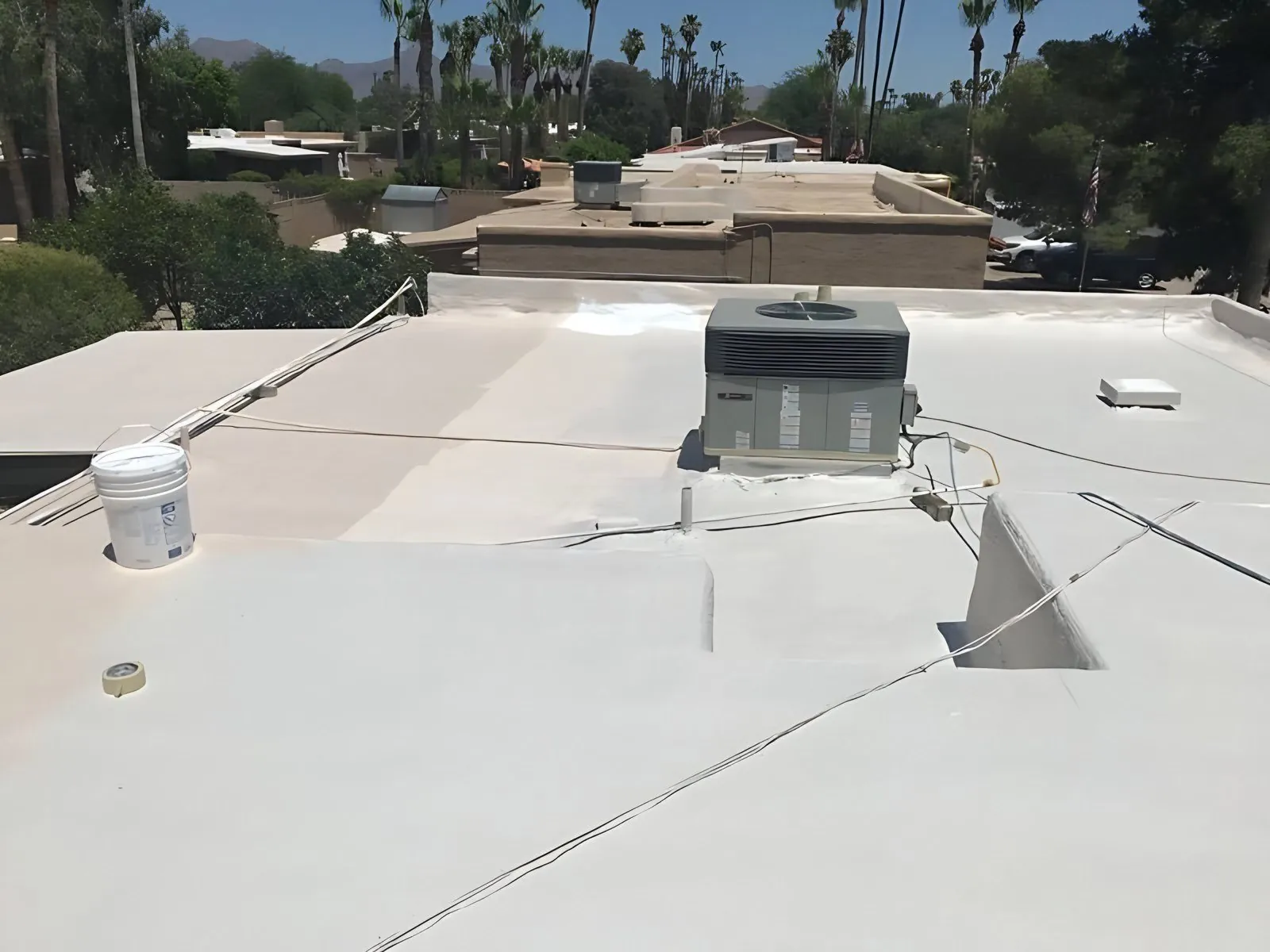
Tying Foam Into Tile or Shingle Roofs
Where a flat foam section meets a pitched tile or shingle roof, water from the steep roof pours onto the flat one during every monsoon downpour. That transition is where we see a large share of leaks on mixed-roof homes, and it needs careful planning.
- The transition itself. Foam is generally carried up under the bottom edge of the pitched roof far enough to catch water running off it, and the tile or shingles are lapped over the foam so water flows from the steep roof onto the coated surface rather than behind it. On tile roofs, the underlayment at the bottom course has to lap correctly onto the foam, which sometimes means lifting and resetting a few rows of tile.
- Crickets. A cricket is a small built-up ridge that splits water around an obstacle, such as a chimney or the back of a wall, so it does not dam up. Foam can be sprayed to form a cricket directly, which is simpler than framing one.
- Flashing. Metal flashing at walls, roof-to-wall joints and edges must be clean, secure and compatible with the foam and coating. Rusted or loose flashing is replaced, not buried.
- Valleys and heavy runoff. Where a valley on the pitched roof dumps water onto the flat section, the coating in that spot takes extra wear and may get reinforcement or extra thickness.
If your home has tile, keep in mind the tile itself usually outlasts the underlayment beneath it. When the flat section is being foamed, it is a good moment to have the tile underlayment near the transition looked at too. Our roof inspections cover both.
Parapet Walls, Scuppers and Canales
Parapet walls give flat-roofed homes their clean, boxy look, but they also turn the roof into a shallow basin. Everything depends on the water reaching the openings in those walls and leaving the roof quickly.
Parapets
Foam and coating are usually carried up the inside face of the parapet, and the top of the wall needs its own protection, either a cap or a coated surface, because water that gets into the top of a stucco parapet can travel down inside the wall. Cracked stucco on the inside face is common on older homes and should be repaired before the roof is coated.
Scuppers
Scuppers are the openings through the parapet that let water out, often draining into a downspout or a collector box. They clog with leaves, bird nests and haboob dust, and a clogged scupper can hold water on the roof for days. Foam can be tapered so the roof slopes toward each scupper, and the scupper lining has to be sealed into the foam and coating so water does not slip behind it.
Canales
Canales are the open channels, often wood, metal or plastered, that throw water clear of the wall on pueblo and territorial homes. They are part of the character of the house and are also a frequent source of leaks where they pass through the parapet. Wood canales can rot from the inside. We seal the connection where the canale meets the roof, recommend lining or replacing deteriorated ones and make sure the roof surface feeds water into them instead of around them.
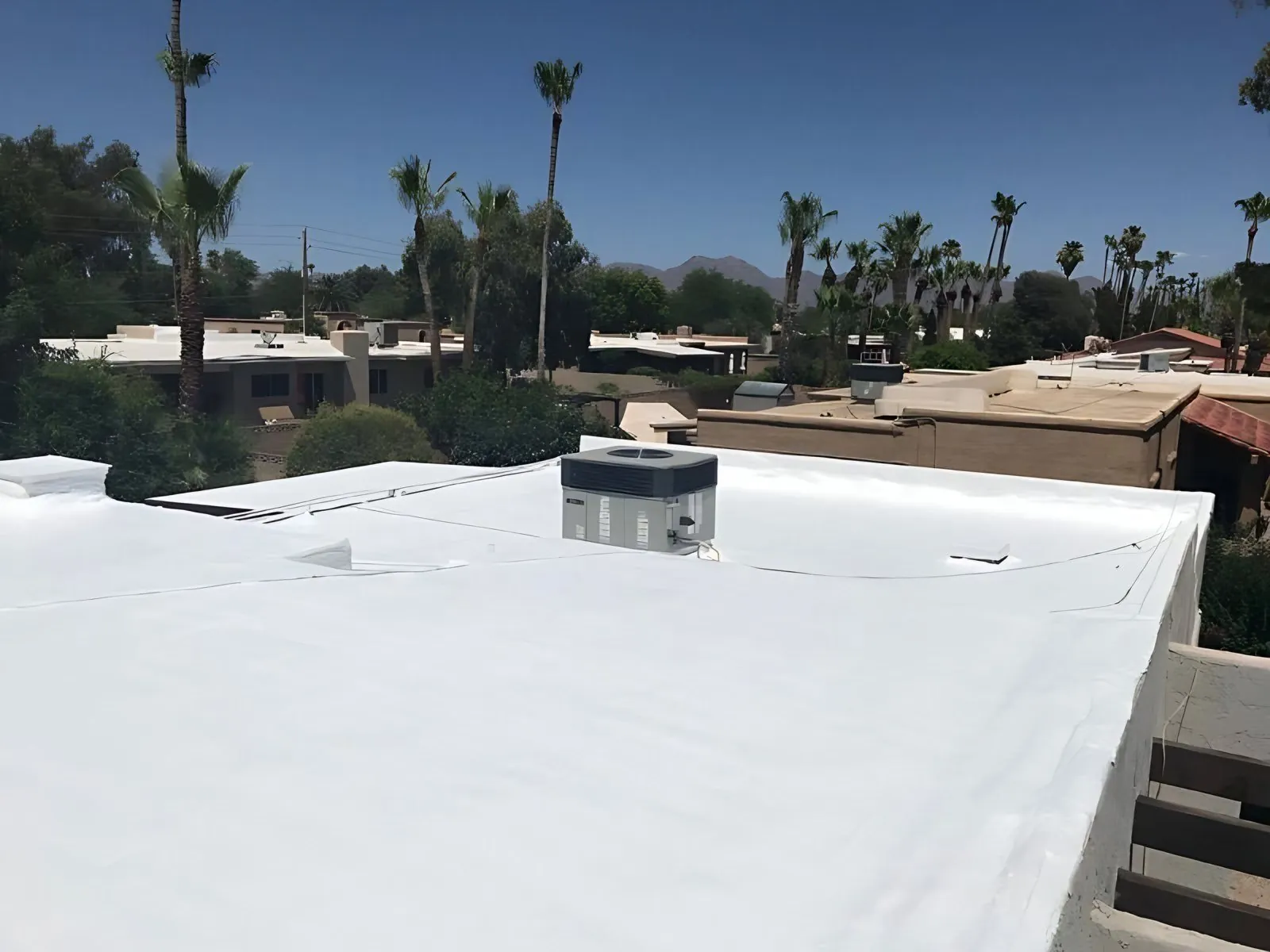
Attic Heat and Comfort Under a Foam Roof
Many flat-roofed homes have little or no attic, just a shallow space or no space at all between the roof deck and the ceiling. That means summer heat soaking through the roof reaches the rooms almost directly. A foam roof changes that in two ways: the foam adds a continuous layer of insulation on top of the deck, and the white coating reflects much of the sunlight before it turns into heat.
Homeowners often describe the difference in practical terms: a bedroom that no longer feels hot by late afternoon, or a ceiling that is no longer warm to the touch. How much difference you will notice depends on how much insulation the home already has, how leaky the ceiling and ducts are, the condition of the air conditioner or evaporative cooler and how clean the coating stays. We are glad to talk through what to realistically expect for your house, but we will not promise a particular drop in your power bill.
If your home does have an attic under a low-slope roof, foam on the roof still reduces the heat the attic collects, which helps any ductwork running through it.
Choosing a Coating for Your Home
Every foam roof needs a protective coating, and for most homes the choice comes down to a few practical questions rather than brand names.
| Question about your home | Why it matters for the coating |
|---|---|
| Does any part of the roof hold water after a storm? | Low spots favor a coating that tolerates standing water, and they may need re-sloping with foam. |
| Does anyone walk on the roof, such as to service a cooler or AC unit? | Service routes may call for a tougher coating, granules or walkway pads. |
| What coating is on the roof now? | Some coatings, especially silicone, limit what can go over them later. |
| Can the roof be seen from the street or a neighbor's second story? | Visible roofs may be subject to HOA color rules. |
| Is keeping the home cool the top priority? | White and light colors reflect the most heat. |
On many Arizona homes we recommend a white elastomeric coating, and silicone is a frequent choice on flat roofs that pond a little. Acrylic can be a good fit on patio covers and well-drained roofs. Our roof coatings page explains the coating families in more detail.
HOA Color Rules and Visible Roofs
Many Valley communities have HOA rules about roof materials and colors, and they usually care most about what can be seen from the street. A flat roof hidden behind parapets is rarely an issue. A low-slope patio cover or carport that faces the street, or a foam section visible beside a tile roof, may be.
- Check your HOA's architectural guidelines before choosing a coating color, and ask whether a submittal or approval is needed.
- Many roof coatings come in colors other than white, including tans and earth tones that blend with stucco and tile. Darker colors reflect less heat, so there is a trade-off between appearance and coolness.
- If approval is required, we can provide the product information your HOA typically asks for so you can submit it.
Planning this before the project is scheduled avoids delays later.
What to Expect During a Home Foam Project
Before the crew arrives
We walk through the plan with you: which areas are being foamed, whether any old roofing comes off, where the equipment will park and what you need to move. Expect to move cars out of the driveway and away from the house, and to bring in or cover patio furniture, grills and anything near the walls. Let your neighbors know the work is coming, especially if their cars or homes are close by.
Preparation
The roof is cleaned, loose or damaged material is removed, flashing and scuppers are addressed and anything that should not get foam on it is masked. If an old roof is being removed, that part is the noisiest and messiest day of the job.
Overspray precautions
Spray foam and coatings can drift in the wind, so we watch wind conditions closely and stop spraying when it picks up. We mask windows, walls, skylights and equipment, and we cover or relocate nearby items. This is one reason a foam job may pause on a breezy afternoon.
Noise and odor
The spray rig and its equipment run from a truck or trailer near the house, so expect steady equipment noise during working hours. Foam and some coatings have a noticeable odor while they are being applied. We ask you to keep windows and doors on that side of the house closed and to turn off evaporative coolers and any system that pulls outdoor air while spraying is underway. If anyone in the household is especially sensitive to odors, tell us ahead of time so you can plan to be out during spraying.
Staying home
Most homeowners stay in their homes during a foam project. You will want to keep kids and pets indoors or away from the work area, and expect people and equipment around the house during the day.
How long it takes
The foam itself goes on fairly quickly. Much of the schedule goes to preparation, detailing and applying the coating in more than one pass. A typical home project often takes a few working days, and larger roofs, tear-offs or extensive repairs take longer. Because foam and coatings need dry conditions, we schedule around monsoon storms, and a stretch of bad weather can push the finish date.
Recoat Schedule and Simple Checks From the Ground
A foam roof is a long-term roof as long as the coating is kept up. Most homes need a recoat roughly every 5 to 10 years, depending on the coating, how thickly it was applied, how much water sits on the roof and how often anyone walks on it. Keeping a note of when the roof was last coated, and with what, makes the next recoat easier to plan.
You do not need to climb up to keep an eye on things, and we ask that you do not. These checks are all done from the ground or from inside:
- Look from a distance with binoculars. From across the street or a neighbor's yard, you may be able to see patches of tan or brown where foam is showing, or dark streaks near scuppers.
- Watch the scuppers and canales during a storm. Water should pour out steadily. If a scupper only drips, or water runs down the wall beside it, the opening may be clogged or the seal may have failed.
- Check the walls below. Staining, efflorescence or peeling paint on stucco under scuppers or along parapets often means water is getting where it should not.
- Check ceilings inside. Brown rings or soft spots, especially near exterior walls or under coolers, are worth a call.
- After hail, a haboob or a major monsoon storm, schedule an inspection. Spring and fall inspections are a good routine for any roof.
Repair, Recoat or Re-Foam?
When a foam roof on a home starts showing its age, there are three basic options. The right one depends on what an inspection finds under the surface.
| Option | Usually the answer when | What it involves |
|---|---|---|
| Spot repair | The roof is in good shape overall, with a few punctures, bird pecks, hail marks or a leaking scupper. | Damaged areas are cut out, filled with foam or sealed and coated to match. |
| Recoat | The coating is thin, chalky or worn through in places, but the foam beneath is dry and well bonded. | Cleaning, repairs, primer where required and a fresh coating at the specified thickness. |
| Re-foam | The foam has eroded from long exposure, has lost adhesion or the roof needs added slope to stop ponding. | A new layer of foam over the prepared existing foam, or removal and new foam where moisture or adhesion problems are widespread. |
On homes, small problems tend to stay small if they are handled early. A roof that goes years past its recoat window often moves from the middle row of that table to the bottom one. Our foam roof recoating and restoration page goes deeper into how we make that call.
Residential Foam Roofing From Payne Roofing
Payne Roofing is a family owned and operated company run by Steven and Linda Payne, serving Arizona since 1984. We are licensed, bonded and insured under Arizona ROC #138549 and ROC #194202 and are members of the Arizona Roofing Contractors Association. Our roof repairs include a 2 to 5 year warranty, complete re-roofs offer 10, 15 or 20-year warranty options and every job is backed by our 100% satisfaction guarantee. Flexible financing options are available.
We work on residential foam roofs in Phoenix, Mesa, Tempe, Chandler, Gilbert, Queen Creek, San Tan Valley, Apache Junction and Cave Creek. To schedule a free estimate, call 480-988-9250, Monday through Friday from 7:00 am to 5:00 pm or Saturday from 8:00 am to 2:00 pm, or contact us online. If you are buying or selling a home with a flat roof, ask us about an inspection for the transaction.
Common questions
Is spray foam a good roof for a flat-roofed house in Arizona?
Yes, spray foam is one of the best-suited systems for flat and low-slope roofs on Arizona homes. It forms a seamless surface inside parapet walls, can be tapered toward scuppers and adds insulation directly over the living space. Whether it fits your house depends on the condition of the existing roof and deck, which an inspection confirms.
Can you put foam on just my patio cover or carport?
Yes, foam works well on patio covers, carports and other low-slope structures on their own. These roofs are often too flat for shingles and wear out rolled roofing quickly in the sun. We check the framing and the connection to the house first, because that joint is a common leak point and must be sealed into the new roof.
How do you connect a foam roof to my tile roof?
We carry the foam up under the lowest edge of the tile roof and lap the tile and underlayment over it so water runs onto the coated foam, not behind it. Sometimes a few rows of tile are lifted and reset to get that lap right. Flashing, crickets and extra coating in heavy runoff areas complete the transition.
Will a foam roof make my house cooler?
It often makes rooms under the roof more comfortable, especially in homes with little or no attic. The foam insulates the deck and the white coating reflects sunlight before it becomes heat. How much difference you notice depends on existing insulation, air leakage, your cooling system and how clean the coating stays, so we do not promise specific savings.
Does my HOA have to approve a foam roof color?
It depends on your HOA, but many communities regulate roof colors that can be seen from the street. Flat roofs hidden behind parapets are rarely an issue, while visible patio covers or carports may be. Check your architectural guidelines first, and we can provide product information if your HOA requires a submittal before work begins.
Is there a smell when a foam roof is installed?
Yes, foam and some coatings have a noticeable odor while they are being sprayed. We ask homeowners to keep nearby windows and doors closed and to turn off evaporative coolers and anything that pulls in outdoor air during spraying. If someone in the home is sensitive to odors, let us know so you can plan to be away during that part of the work.
Can I stay home while my foam roof is being installed?
Most homeowners stay home during a foam project. Plan to keep children and pets inside or away from the work area, move vehicles away from the house and keep windows closed on the side being sprayed. We walk through the schedule with you beforehand so you know which days will be noisiest and when spraying will take place.
How do you keep overspray off my car and my neighbor's house?
We control overspray by masking the house, watching the wind and stopping work when conditions get breezy. Vehicles should be moved well away, and patio furniture and grills are covered or brought inside. We also suggest giving close neighbors a heads-up so they can move their cars on spraying days.
Why does water stain the wall under my scupper?
Stains below a scupper usually mean water is running down the wall instead of pouring clear of it. The scupper may be partly clogged with debris or dust, or the seal between the scupper and the roof may have failed, letting water slip behind it into the stucco. Have it inspected before the damage spreads into the parapet.
Should I repair, recoat or re-foam my home's foam roof?
Repair isolated damage, recoat when the coating is thin but the foam is sound and re-foam when the foam has eroded, lost adhesion or needs added slope. The only reliable way to know which applies is an inspection that checks coating thickness, foam condition and moisture. Waiting too long often turns a recoat into a bigger re-foam job.
Talk to a roofer who knows Arizona roofs.
Call for a free estimate. Open Monday through Friday 7–5 and Saturday 8–2.