San Tan Valley neighborhood
Roofing services in San Tan Heights, San Tan Valley, Arizona
San Tan Heights is a large master-planned community on the west side of San Tan Valley, near San Tan Mountain Regional Park, planned for about 4,800 homes. Homes date from at least the early 2010s, with new builder sections still opening, so roofs range from brand new to mid-life tile.
About San Tan Heights
San Tan Heights is one of the largest master-planned communities in San Tan Valley, set in the western part of town near San Tan Mountain Regional Park and its roughly 10,000 acres of desert trails. It is planned for about 4,800 homes at completion. Homes in its parcels date from at least the early 2010s, and building continues: Mattamy Homes bought an 85-acre parcel platted for 324 homes for its Pinnacle at San Tan Heights neighborhood.
The HOA maintains parks of several sizes with 23 playgrounds, volleyball and basketball courts, greenbelts, more than six miles of trails, and a community center with a pool and fitness center.
Roofing considerations for San Tan Heights homes
- Wide range of roof ages. Older parcels and brand-new sections sit side by side. Your build year decides whether you need maintenance or warranty checks.
- New construction checks. On new homes, an inspection before the builder warranty ends can catch installation issues.
- Next to the mountains. Homes near the San Tan Mountains see wind coming off open desert and more dust in valleys and gutters.
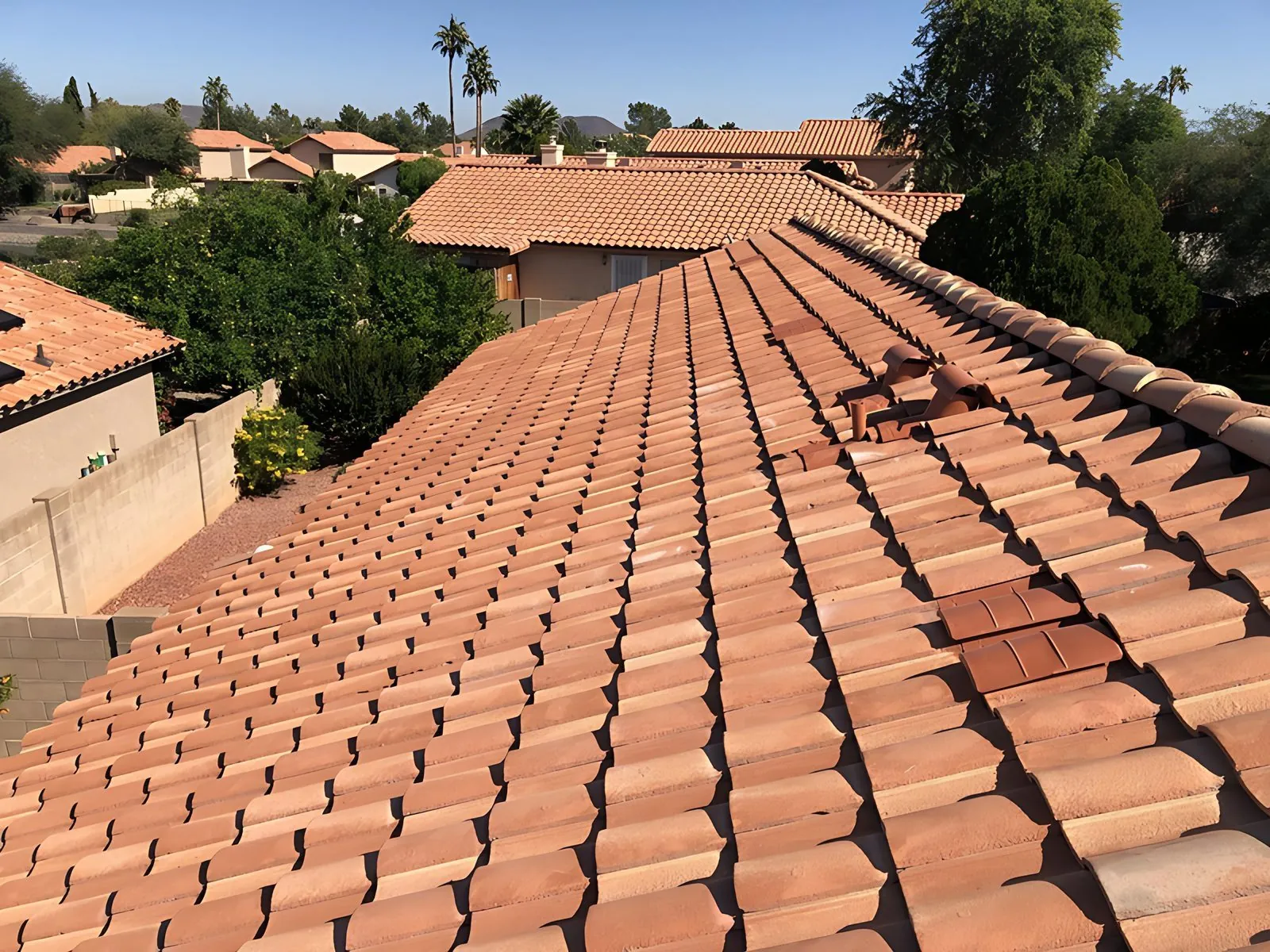
- Tile upkeep. Cracked tiles and worn flashing are the usual leak points on mid-life tile roofs.
- HOA standards. Repairs should match the community's approved tile.
How Arizona weather affects roofs in San Tan Heights
- Extreme heat and UV. Summer roof surfaces get far hotter than the air. Years of heat and UV dry out tile underlayment, age shingles and break down roof coatings.
- Monsoon storms. Arizona's monsoon season runs June 15 to September 30. Sudden wind gusts lift tiles and shingles, and short, heavy downpours find any weak spot in flashing or underlayment.
- Dust storms and debris. Haboobs and wind-blown debris fill valleys, gutters and flat-roof drains, which can back water up under roofing.
- Winter rain. Slow, steady winter rains expose small leaks that summer storms started.
Most roof trouble in the Valley starts small. A spring and fall inspection catches it early. See our monsoon roof tips for a checklist.
Roofing services for San Tan Heights
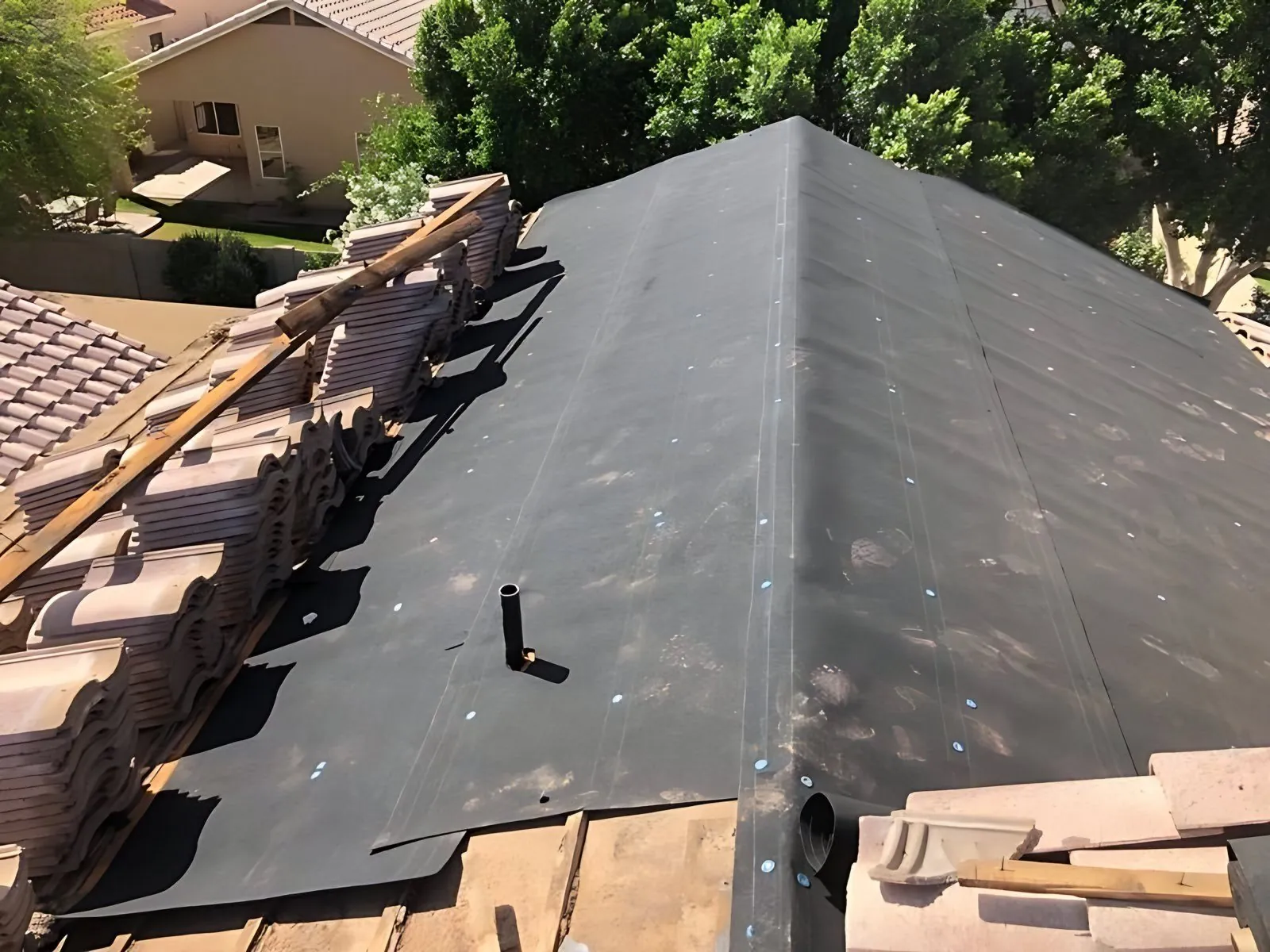
We offer roof inspections for new and resale homes, roof repairs, flashing work and replacements across San Tan Heights.
Roofing services in San Tan Heights
San Tan Heights roofing questions
Who provides roof repairs in San Tan Heights, San Tan Valley?
Payne Roofing repairs, inspects and replaces roofs in San Tan Heights. We are a family-owned roofing contractor based in Gilbert, serving Arizona since 1984 under ROC #138549 and #194202. We work on tile, shingle, foam and flat roofs. Call 480-988-9250 for a free estimate.
What roof issues are common on San Tan Heights homes?
On homes from the early 2010s, cracked or slipped tiles, worn flashing and dried-out pipe boots are the usual sources of leaks. On the newest homes, damage from other trades and installation defects are more common. In both cases, problems are usually small if caught before water reaches the underlayment.
I'm buying a brand-new home in San Tan Heights. Should the roof be inspected?
Yes, it is worth it. A new roof can have missing flashing, loose tiles or debris left under the tile. An independent inspection before closing, or before your builder warranty ends, gives you a record to share with the builder so defects are fixed while they are covered.
Does living near San Tan Mountain Regional Park affect my roof?
Mainly through wind and dust. Open desert lets storm winds build speed, which can shift ridge and edge tiles, and wind-blown debris collects in valleys. A spring check before monsoon season and a quick look after big storms help keep drainage clear and tiles secure.
How often should I have my San Tan Heights roof inspected?
Once or twice a year is a good rule: in spring before monsoon season begins on June 15, and in fall after it ends on September 30. Also schedule a check after any major wind or hail storm. Regular inspections find small problems before they turn into ceiling repairs.
Talk to a roofer who knows Arizona roofs.
Call for a free estimate. Open Monday through Friday 7–5 and Saturday 8–2.