Coatings & waterproofing
Roof Coatings
Payne Roofing applies acrylic, silicone, polyurethane and emulsion roof coatings to foam, built-up, single-ply, modified bitumen and commercial metal roofs, and provides wall coatings and waterproofing. A coating can renew a sound, dry roof and reflect Arizona heat, but it will not fix wet insulation, a failed deck or poor slope. Estimates are free.
Roof Coatings for Valley Homes and Businesses
A roof coating is a liquid-applied membrane, rolled or sprayed onto an existing roof, that cures into a continuous, flexible skin. Applied over a sound roof, a good coating renews the waterproofing surface, shields the roof below from sun damage and, in a light color, reflects much of the heat that would otherwise soak into the building. In Arizona, where a flat roof can spend most of the year under direct sun, that combination is worth a lot.
Payne Roofing has worked with elastomeric and emulsion roof coatings since we started serving Arizona in 1984. We coat spray foam roofs, built-up roofs, single-ply membranes, modified bitumen and metal roofs on commercial buildings, and we provide wall coatings and waterproofing for commercial properties. This page explains the main coating types, where each one fits, how a coating job should be done and, just as important, when a coating is the wrong answer.
What a Coating Can and Cannot Do
Coatings are sometimes sold as a cure-all. They are not, and understanding the limits up front saves a lot of disappointment.
A coating can
- Renew the weathering surface of a roof that is worn but still sound and dry.
- Seal small cracks, open laps and minor surface defects when combined with proper repairs.
- Protect the material underneath from UV, which is what ages most roofs in our climate.
- Lower roof surface temperatures when a reflective color is used.
- Avoid or postpone a tear-off on a suitable roof.
A coating cannot
- Dry out wet insulation or fix a rotted or rusted deck.
- Change the shape of a roof that holds water because it was built without enough slope.
- Hold together a roof membrane that is splitting, shrinking or pulling away from its edges.
- Make up for skipped preparation or a coat applied too thin.
Coatings on the Roof Types We Work With
Spray polyurethane foam
Foam roofs depend on their coating completely, because the foam degrades in sunlight. Recoating is routine maintenance on a foam roof rather than a repair, and it is covered in detail on our silicone roof coatings page and our main spray foam roofing page.
Built-up roofs (BUR)
Built-up roofs are layers of felt and asphalt, often finished with gravel or a cap sheet. Many older Valley commercial buildings and some homes still have them. When a BUR is dry and the plies are still bonded, loose gravel can be removed, blisters and splits repaired and the surface coated. An asphalt emulsion is sometimes used as a base on these roofs, with a reflective topcoat over it.
Single-ply membranes
Single-ply roofs use a single sheet of membrane, with seams that are welded or adhered. As they age, seams and flashings are usually the first to go. A coating system can restore some single-ply roofs, but the membrane type matters a great deal because some membranes need specific primers before anything will stick.
Modified bitumen
Modified bitumen is an asphalt-based sheet roofing, often with a granulated surface. Once the granules wear and the asphalt begins to crack in the sun, a coating can protect it, provided the sheets are still well adhered and the laps are sound.
Metal roofs on commercial buildings
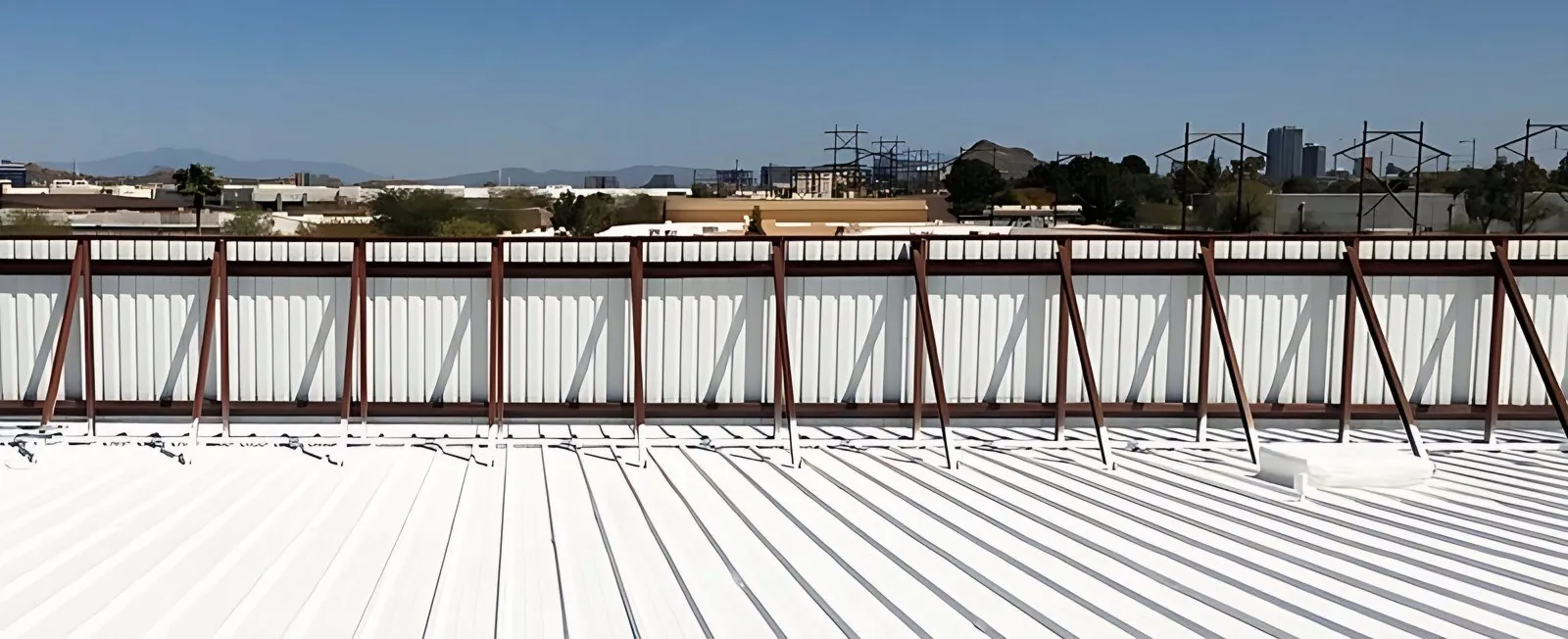
Metal roofs on warehouses, shops and other commercial buildings tend to leak at fasteners, seams and end laps, and they rust where the factory finish has worn off. Coating metal involves treating rust, tightening or replacing fasteners, reinforcing seams and then coating the panels. A light color also reduces the heat that metal transmits so readily.
The Main Coating Families
Acrylic
Acrylic coatings are water-based, easy to work with and widely used. They come in white and a range of colors, clean up with water and are usually easy to recoat later. Their weakness is standing water, so they are best on roofs that drain well.
Silicone
Silicone coatings resist sunlight and tolerate ponding better than most coatings, which makes them common on flat roofs in hot climates. They hold dust, which dulls their reflectivity, and very little sticks to silicone later, so a silicone roof generally stays silicone for future recoats.
Polyurethane
Polyurethane coatings are generally among the toughest roof coatings, with good resistance to abrasion and impact. Some types are used as a base coat under a more UV-stable topcoat, and others are designed to be exposed. They are worth considering where a roof gets regular foot traffic.
Asphalt emulsion
Emulsion coatings are asphalt suspended in water. They are compatible with asphalt-based roofs such as BUR and modified bitumen and are often used as a base layer, for saturating reinforcing fabric or for repairs. On their own they are dark and absorb heat, so in Arizona they are usually covered with a reflective topcoat.
Where Each Coating Tends to Fit
The table below is a general starting point, organized by roof type rather than by coating. Specific products vary, and the manufacturer's requirements for the existing surface always come first.
| Existing roof | Coatings often considered | What usually decides it |
|---|---|---|
| Spray foam | Silicone, acrylic, polyurethane | Ponding, foot traffic and the coating already on the roof |
| Built-up (BUR) | Emulsion base with a reflective topcoat; acrylic or silicone systems | Whether the plies are dry and bonded, and how gravel is handled |
| Modified bitumen | Emulsion, acrylic or silicone, often with a primer | Granule loss, lap condition and bleed-through from the asphalt |
| Single-ply membrane | Acrylic or silicone with a membrane-specific primer | Membrane type, seam condition and adhesion test results |
| Metal (commercial) | Acrylic, silicone or polyurethane over a rust-inhibiting primer | Rust, fasteners, seams and how much the panels move |
| Roof with a previous coating | Usually the same family as the existing coating | What is already there, especially if it is silicone |
For a close look at silicone against acrylic and polyurethane over foam specifically, see our silicone roof coatings page.
Cool Roofs and the Arizona Sun
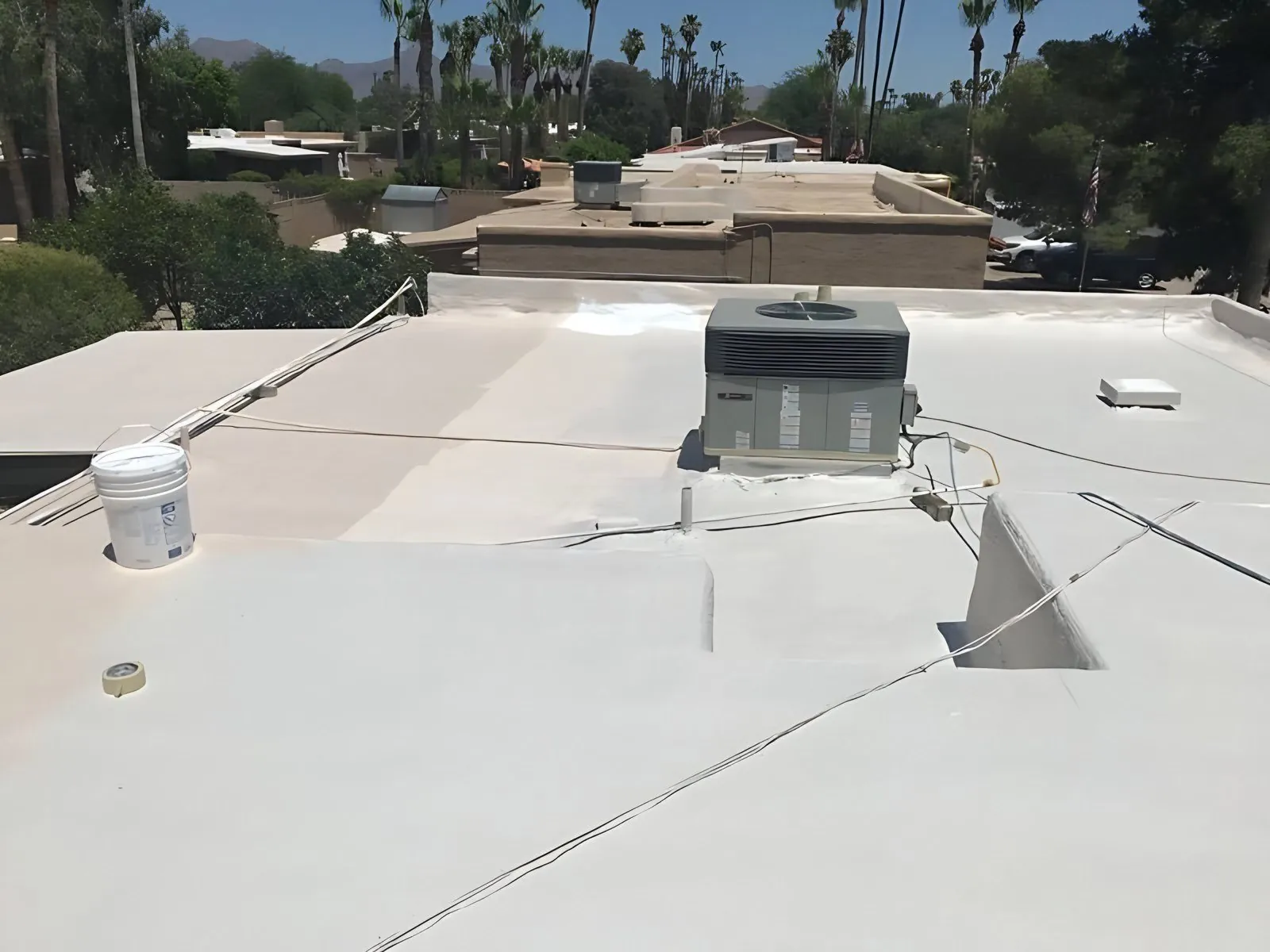
A cool roof is simply a roof surface that stays cooler in the sun. Two properties make that happen. Solar reflectance is how much sunlight the surface bounces away instead of absorbing. Thermal emittance is how readily the surface gives off the heat it does absorb. White and light-colored coatings score well on both, which is why reflective coatings are so common across the Valley.
On a building, a cooler roof surface means less heat moving down into the structure. That can make top-floor rooms and spaces under the roof more comfortable and reduce the load on air conditioning. It also reduces the daily expansion and contraction the roof goes through, which is part of what wears roofs out.
A few honest caveats:
- Reflectivity drops as dust builds up, and haboobs deliver plenty of it. Periodic cleaning helps.
- The benefit depends on how much insulation is under the roof, how the building is used and the cooling equipment, so results vary from building to building.
- Colored coatings that match an HOA palette or a building's design reflect less than white. That trade-off is often worth it, but it should be a conscious choice.
Restoration or Replacement?
A coating restoration makes sense when the roof is basically sound and its main problem is a worn surface. Replacement makes sense when the problem goes deeper. The deciding questions are the same on almost every roof:
- Is the roof dry? Moisture in insulation or between layers rules out coating over that area. Small wet sections can be cut out and replaced; widespread moisture usually means removal.
- Is the deck sound? Rot, rust-through or sagging must be fixed before anything goes on top.
- Is the existing membrane still attached and intact? Coatings protect a membrane; they do not hold a failing one together.
- Does the roof drain? Some ponding can be tolerated by the right coating. Large, deep ponds need a slope correction.
- How many layers are already there? Code and the structure limit how many roofs can be stacked.
When the answers are favorable, restoration often avoids tear-off debris, shortens the project and keeps the building in use. When they are not, we will tell you, and we can talk through replacement options instead.
How a Coating Job Should Be Done
Most coating failures trace back to preparation or thickness, not to the product. A properly done job follows a sequence along these lines:
- Inspection and moisture check. We identify the roof type, any existing coating, wet areas, deck problems and drainage issues before recommending anything.
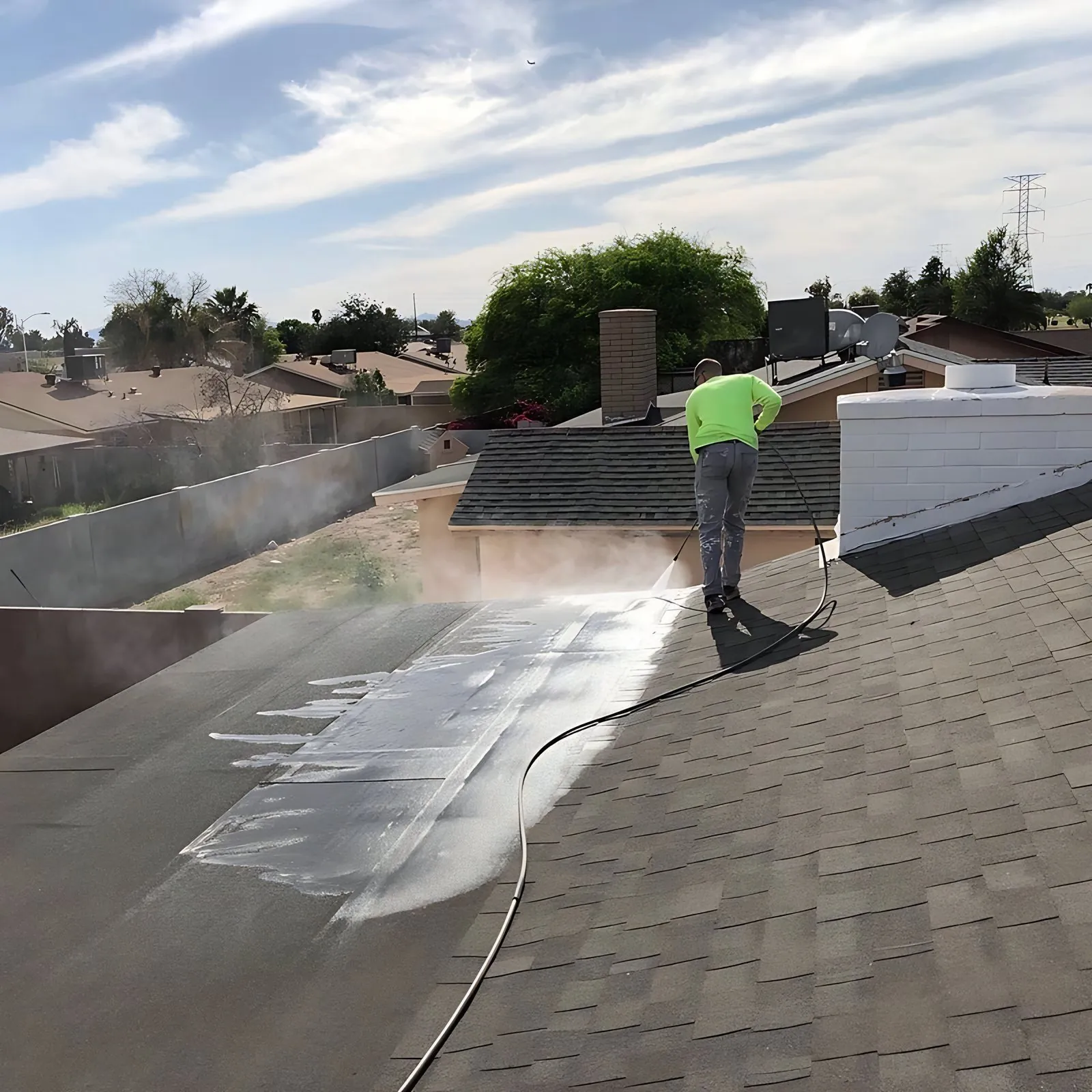
- Cleaning. Dirt, dust, oxidation and loose material are removed. Coatings bond to whatever is on the surface, so if dust is left behind the coating sticks to the dust.
- Repairs. Wet or damaged material is cut out and replaced, blisters and splits are opened and repaired, loose fasteners are secured and failed flashing is fixed.
- Primer where required. Many surfaces, including some single-ply membranes, rusted metal and asphalt roofs that can bleed through, need a specific primer for adhesion or stain blocking. Adhesion tests confirm the choice on uncertain surfaces.
- Reinforcing fabric at seams and penetrations. Polyester fabric embedded in coating strengthens the places that move or crack first: seams, laps, drains, pipes, curbs, roof-to-wall joints and metal panel end laps.
- Coating at the specified thickness. Each system calls for a specific dry film thickness, usually applied in more than one coat. We check thickness as we go, because a coat that is too thin is the most common reason coatings wear through early.
- Final review. We walk the roof, check details and record what was applied and when, so future maintenance and recoats are straightforward.
Coatings need dry weather and suitable temperatures to cure, so we schedule work around monsoon storms and rain in the forecast.
When a Coating Is Not the Answer
We turn down coating work when it would not hold up. Common reasons include:
- Wet insulation. Coating over trapped moisture seals the water in. The insulation loses its value, the roof can blister and the deck underneath can deteriorate out of sight.
- A failed deck. Soft spots, rotted wood or rusted-through metal decking need structural repair or replacement first.
- Ponding that needs re-sloping. If large areas of the roof hold water because of how the roof is built, the fix is to add slope, often with tapered foam or tapered insulation, not to coat the low spots and hope.
- A membrane that has lost its bond. Widespread blistering, shrinking or loose sheets mean the roof is past restoration.
- Incompatible surfaces. Some existing materials will not accept certain coatings, and some will not accept any.
In each of these cases the better path is a real repair, re-sloping or replacement, followed by a coating if it still makes sense.
Wall Coatings and Waterproofing
Coatings are not only for roofs. On commercial buildings, we also apply wall coatings and provide waterproofing for the parts of the building envelope that take the most weather.
Wall coatings
Elastomeric wall coatings are thicker and more flexible than ordinary paint. On stucco and masonry walls they can bridge hairline cracks, help shed wind-driven monsoon rain and protect the surface from sun and weathering. Larger cracks and damaged stucco are repaired before coating.
Waterproofing
Parapet walls, roof-to-wall joints, scuppers, ledges and other details are frequent leak points on commercial buildings. Waterproofing these areas, often with fabric-reinforced coatings and sealants, keeps water out of the wall cavity and the interior. We look at the roof and the walls together, because water that seems to come through a ceiling often enters at a parapet or wall joint above it.
Maintenance and Recoat Cycles
Every elastomeric coating wears gradually, which is by design. The surface erodes slowly under sun and weather, and when it thins enough, it is renewed. How often depends on the coating family, the thickness applied, sun exposure, ponding, dirt and foot traffic. On foam roofs, recoating typically comes around roughly every 5 to 10 years. Coatings on other roof types follow a similar pattern of periodic reapplication.
- Inspect in spring and fall and after hail, major monsoon storms and haboobs.
- Keep drains, scuppers and gutters clear so water does not sit and wear the coating faster.
- Repair small damage promptly with compatible materials, especially punctures near equipment.
- Protect traffic areas with walkway pads where technicians service HVAC units.
- Keep records of the coating type and application date. The next contractor will need to know what is on the roof.
- Recoat before the base is exposed. Recoating a worn but intact surface is far simpler than restoring one that has been exposed for a few summers.
Homeowners should not climb onto the roof to check it. Binoculars from the ground, an eye on interior ceilings and a professional roof inspection are the safe ways to keep track.
Coatings for Homes and Businesses
For homeowners, coatings most often come up on flat and low-slope roofs: spray foam over a territorial or ranch home, a patio cover, a carport or an Arizona room. HOA color rules may affect the choice where the roof can be seen. Our residential foam roofing page covers coatings and foam on homes in more detail.
For business owners and property managers, coatings are often about extending the life of a large roof, reducing heat gain and avoiding the disruption of a tear-off. We plan commercial coating projects around your operations, coordinate access and HVAC shutdowns where spraying is involved and can stage the work by section on larger roofs. See our commercial roofing services for the full range of systems we install and maintain.
Why Choose Payne Roofing for Roof Coatings
- Family owned and operated by Steven and Linda Payne, serving Arizona since 1984
- Licensed, bonded and insured under Arizona ROC #138549 and ROC #194202, verifiable at roc.az.gov
- Member of the Arizona Roofing Contractors Association (ARCA)
- Roof repairs include a 2 to 5 year warranty; complete re-roofs offer 10, 15 or 20-year warranty options
- 100% satisfaction guarantee, free estimates and flexible financing options
Coating manufacturers may offer their own material warranties, with terms that depend on the product, system and maintenance. We review what applies to your project before work starts.
We serve homes and businesses in Phoenix, Mesa, Tempe, Chandler, Gilbert, Queen Creek, San Tan Valley, Apache Junction and Cave Creek. Call 480-988-9250, Monday through Friday from 7:00 am to 5:00 pm or Saturday from 8:00 am to 2:00 pm, or request a free estimate.
Common questions
What is an elastomeric roof coating?
An elastomeric roof coating is a liquid-applied coating that cures into a rubbery membrane able to stretch and recover as the roof moves. That flexibility lets it handle Arizona's daily heating and cooling without cracking. Acrylic, silicone and many polyurethane coatings are elastomeric, and each suits different roofs depending on drainage, traffic and the existing surface.
Which roof types can be coated?
Spray foam, built-up, modified bitumen, many single-ply membranes and metal roofs can all be coated when they are sound and dry. Each needs its own preparation, and some need a specific primer before the coating will bond. An inspection confirms whether your roof is a candidate and which coating system fits it best.
Is a roof coating the same as a new roof?
No, a coating renews the surface of an existing roof rather than replacing it. It works when the roof underneath is dry, attached and structurally sound. If insulation is wet, the deck is damaged or the membrane is failing, those problems must be fixed or the roof replaced. A coating is a restoration, not a substitute for a failed roof.
What is the difference between acrylic and emulsion coatings?
Acrylic coatings are water-based elastomerics, usually white or light colored and used as finish coats on many roof types. Asphalt emulsions are asphalt suspended in water, dark in color and compatible with asphalt-based roofs like BUR and modified bitumen. In Arizona, emulsions are typically used as a base or for repairs, then covered with a reflective topcoat.
Do white roof coatings really keep a building cooler?
Yes, white and light-colored coatings lower roof surface temperatures by reflecting sunlight and releasing absorbed heat efficiently. Less heat then moves into the building below. How much difference that makes inside depends on existing insulation, building use and cooling equipment, and reflectivity drops as dust builds up, so periodic cleaning helps.
Can you coat a roof that has ponding water?
Sometimes, if the ponding is limited and the coating chosen tolerates standing water, such as many silicones. Large or deep ponds caused by the roof's shape usually need slope added first, with tapered foam or tapered insulation. Ponding also wears coatings faster, collects dirt and may be excluded from some manufacturer warranties.
What is reinforcing fabric used for in a coating system?
Reinforcing fabric strengthens the coating at the spots most likely to crack or move. Polyester fabric is embedded in wet coating at seams, laps, drains, pipes, curbs, roof-to-wall joints and metal panel end laps. Once covered, it becomes part of the membrane and helps those details stay sealed as the roof expands and contracts.
How thick does a roof coating need to be?
A roof coating should be applied at the dry film thickness the manufacturer specifies for that system, usually measured in mils and built up in more than one coat. Thickness is what provides the coating's durability and UV protection. Applying too little is one of the most common reasons coatings wear through before they should.
How often does a coated roof need to be recoated?
Most coated roofs need periodic recoating, and on foam roofs that is typically roughly every 5 to 10 years depending on the coating. Coating type, original thickness, sun, ponding, dirt and foot traffic all affect the interval. Inspections in spring and fall show when the coating is getting thin, before the roof underneath is exposed.
Do you coat walls as well as roofs?
Yes, Payne Roofing provides wall coatings and waterproofing for commercial buildings in addition to roof coatings. Elastomeric wall coatings help protect stucco and masonry from sun and wind-driven rain, and waterproofing seals parapets, roof-to-wall joints and other leak-prone details. Call 480-988-9250 to schedule a free estimate for your property.
Talk to a roofer who knows Arizona roofs.
Call for a free estimate. Open Monday through Friday 7–5 and Saturday 8–2.