Guide
How to Find (and Stop) a Roof Leak
To find a roof leak, start inside: trace the stain or drip up to the attic, follow the water trail uphill on the underside of the deck, and note nearby penetrations, valleys or flashing. Contain the water safely, stay off the roof, and have a roofer make the permanent repair.
First, limit the damage
When water is coming through the ceiling, the first job is protecting your home, not finding the source. Take these steps right away:
- Catch the water. Put a bucket or bin under the drip and lay towels around it.
- Move valuables. Shift furniture, electronics and rugs away from the area.
- Relieve a bulging ceiling carefully. If drywall is sagging with trapped water, a small hole poked at the lowest point can let it drain into a bucket instead of collapsing. Keep clear of light fixtures.
- Turn off power to affected fixtures if water is near lights, fans or outlets.
- Take photos. Document stains, drips and damage with date and time. This helps your roofer and any insurance conversation.
Do not go up on the roof during or right after a storm. Wet roofs are slippery, monsoon winds are unpredictable, and tile cracks under foot. Temporary measures from inside are far safer.
Why leaks are hard to pinpoint
Water rarely comes through the ceiling directly below where it enters the roof. It gets under shingles or tile, runs down the underlayment or along the top of the deck, follows rafters or trusses, and finally drips where gravity and a seam in the drywall let it out. The actual entry point can be several feet uphill.
That is why patching the spot directly above a stain often fails. Finding the source takes some detective work, starting from the inside and working up and out.
Tracing the leak from inside
Start in the attic
If you can safely access your attic, bring a good flashlight and step only on framing members, never on the drywall between them. Go to the area above the ceiling stain and look for:
- Wet or darkened wood on the underside of the roof deck
- Water trails or drip marks on rafters and trusses
- Damp, matted or stained insulation
- Daylight showing through the deck
- Rusty nails, which often point to repeated moisture
Follow the water uphill
Once you find wet wood, follow the trail upward toward the ridge. The highest point of the trail is usually closest to the entry point. Note what is above that spot on the roof: a vent pipe, a valley, a skylight, an evaporative cooler, a wall where a second story meets the roof.
Note the conditions
Write down when the leak happens. Only during heavy wind-driven rain? Only when the AC or cooler runs? Only after a long storm? These details narrow the cause considerably.
Common leak sources on Arizona roofs
These are the usual suspects we find when tracing leaks across the Phoenix area and East Valley:
- Pipe boots and roof jacks. The rubber and sealant around plumbing vents dry out and crack in the heat.
- Flashing. Wall, chimney, skylight and valley flashing can loosen, rust or lose its sealant.
- Worn tile underlayment. On older tile roofs, the underlayment beneath intact-looking tile may be brittle or torn.
- Cracked or slipped tiles and missing or lifted shingles after monsoon winds.
- Clogged valleys, gutters and roof drains. Debris and dust dam water so it backs up under roofing.
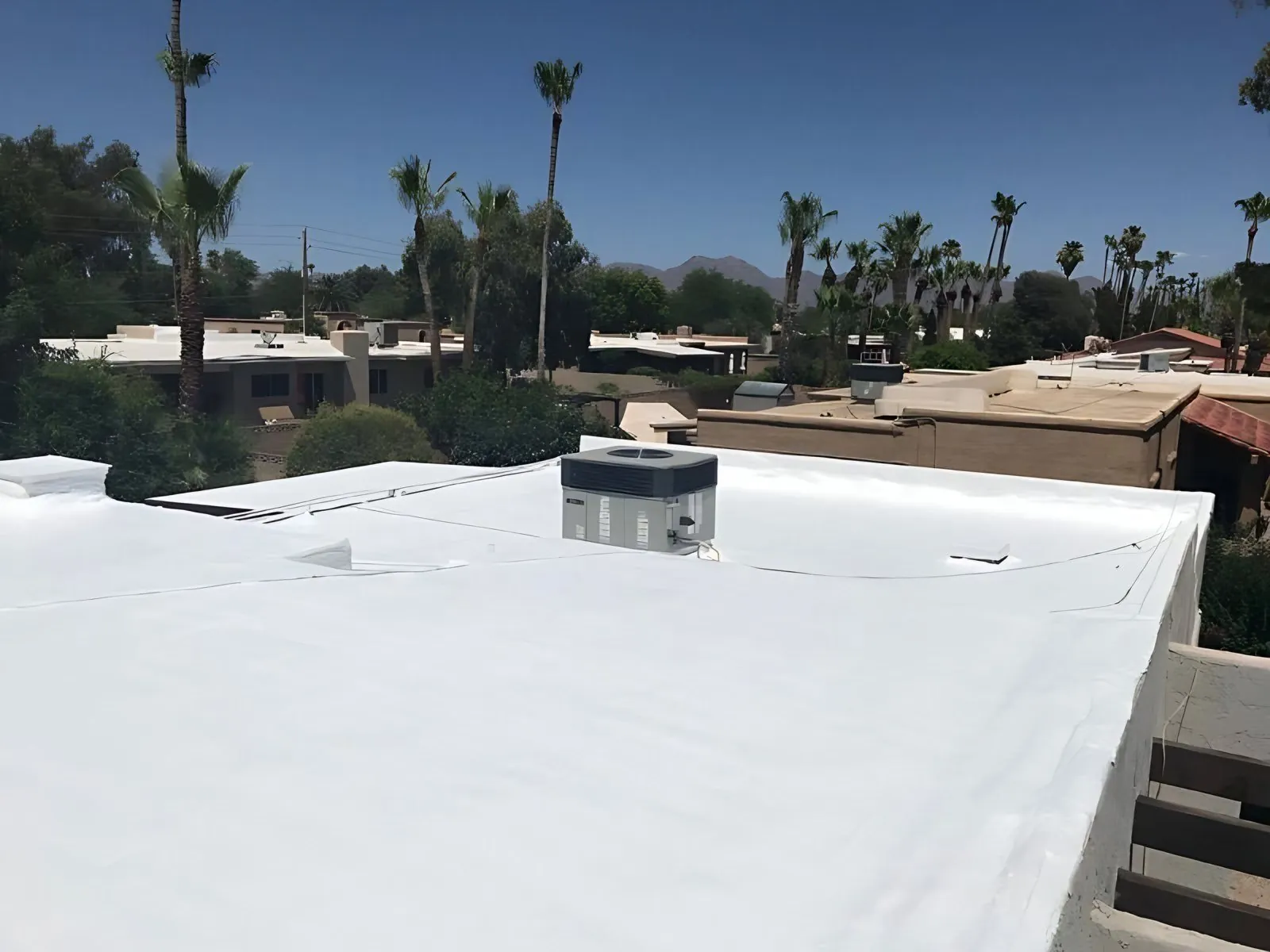
- Flat roof issues. Ponding water, worn coatings, exposed foam, and cracks at parapet walls and scuppers.
- Rooftop equipment. Evaporative coolers and AC units can leak themselves, or their mounts and penetrations can fail.
- Bird nests and debris under tile that block water channels.
Our article on causes of a leaking roof in Phoenix covers these in more detail.
Ruling out things that are not the roof
Not every ceiling stain is a roof leak. Before assuming the worst, consider:
- AC condensate lines that are clogged or disconnected in the attic
- Evaporative cooler overflow or supply line leaks
- Plumbing leaks from supply or drain lines running through the attic or from an upstairs bathroom
- Condensation on ductwork, especially poorly insulated ducts
A clue: if the stain grows on dry, sunny days, the source is more likely plumbing or HVAC than the roof.
Stopping it: temporary vs. permanent fixes
Temporary fixes are about buying time. A professional tarp installed by a roofer, or roof cement applied by a pro to a failed seal, can slow water down until a proper repair is made. Homeowners should limit themselves to protecting the interior.
A permanent fix addresses the cause: replacing a pipe boot, resetting flashing, replacing cracked tiles and the underlayment beneath them, or recoating a worn section of a flat roof. If leaks are appearing in several places, the conversation may shift to whether a repair or replacement makes more sense.
When to call a roofer
Call a roofer as soon as you notice an active leak, a new stain, or wet insulation in the attic. The longer water gets in, the more it damages decking, insulation and drywall.
Payne Roofing provides prompt emergency roof repairs. Call 480-988-9250 during business hours; if you reach voicemail, leave your name, address and a description of the problem, and the team will call you back as soon as it can. Repairs include a 2–5 year warranty. Learn more about our roof repair and maintenance service.
Questions & answers
Why is my roof only leaking during heavy rain?
Leaks that appear only in heavy or wind-driven rain usually point to a marginal weak spot. Worn flashing, a small gap at a pipe boot, or aging tile underlayment may shed light rain but let water in when wind pushes it sideways or volume overwhelms valleys and drains. These are worth fixing before the next storm.
Can I put a tarp on my roof myself?
It is safer to leave tarping to a roofer. Wet, windy roofs are dangerous, tile breaks easily under foot, and a poorly secured tarp can blow off or trap water. Focus on protecting the inside of your home and call a professional for temporary and permanent roof work.
How do I know if a ceiling stain is a roof leak?
Check the attic above the stain for wet wood, water trails or damp insulation, and note when the stain appears. If it grows during or after rain, the roof is the likely source. If it grows on dry days, look at AC condensate lines, cooler supply lines or plumbing instead.
Is a roof leak an emergency?
An active leak is urgent because water damage grows quickly, even if it seems small. Water can soak insulation, rot decking and damage drywall and electrical fixtures. Contain it inside, document it with photos, and call a roofer promptly. Payne Roofing offers prompt emergency repairs.
Will homeowners insurance cover a roof leak?
It depends on your policy and the cause of the leak. Sudden storm damage is often treated differently than leaks from wear and age, which many policies exclude. Document the damage, review your policy and contact your insurer with questions. Our insurance claims guide explains the general process.
Talk to a roofer who knows Arizona roofs.
Call for a free estimate. Open Monday through Friday 7–5 and Saturday 8–2.