Guide
Repair or Replace? How to Decide
Repair makes sense when damage is limited and the roof is otherwise in good shape for its age. Replacement makes more sense when the roof is near the end of its typical lifespan, leaks keep recurring in different places, or the underlying layers have failed. A professional inspection is the most reliable way to tell.
Start with the right question
Homeowners often ask "Can this be fixed?" Almost anything can be patched for a while. A better question is: "Will a repair give me reliable protection for a reasonable amount of time?"
The answer depends on three things: how old the roof is relative to its material's typical lifespan, how widespread the problem is, and the condition of the layers you cannot see from the ground, such as underlayment and roof deck. A small leak on an otherwise healthy roof is a repair. The same leak on a roof that is worn out everywhere may simply be the first of many.
When a repair usually makes sense
Repairs are often the right call when:
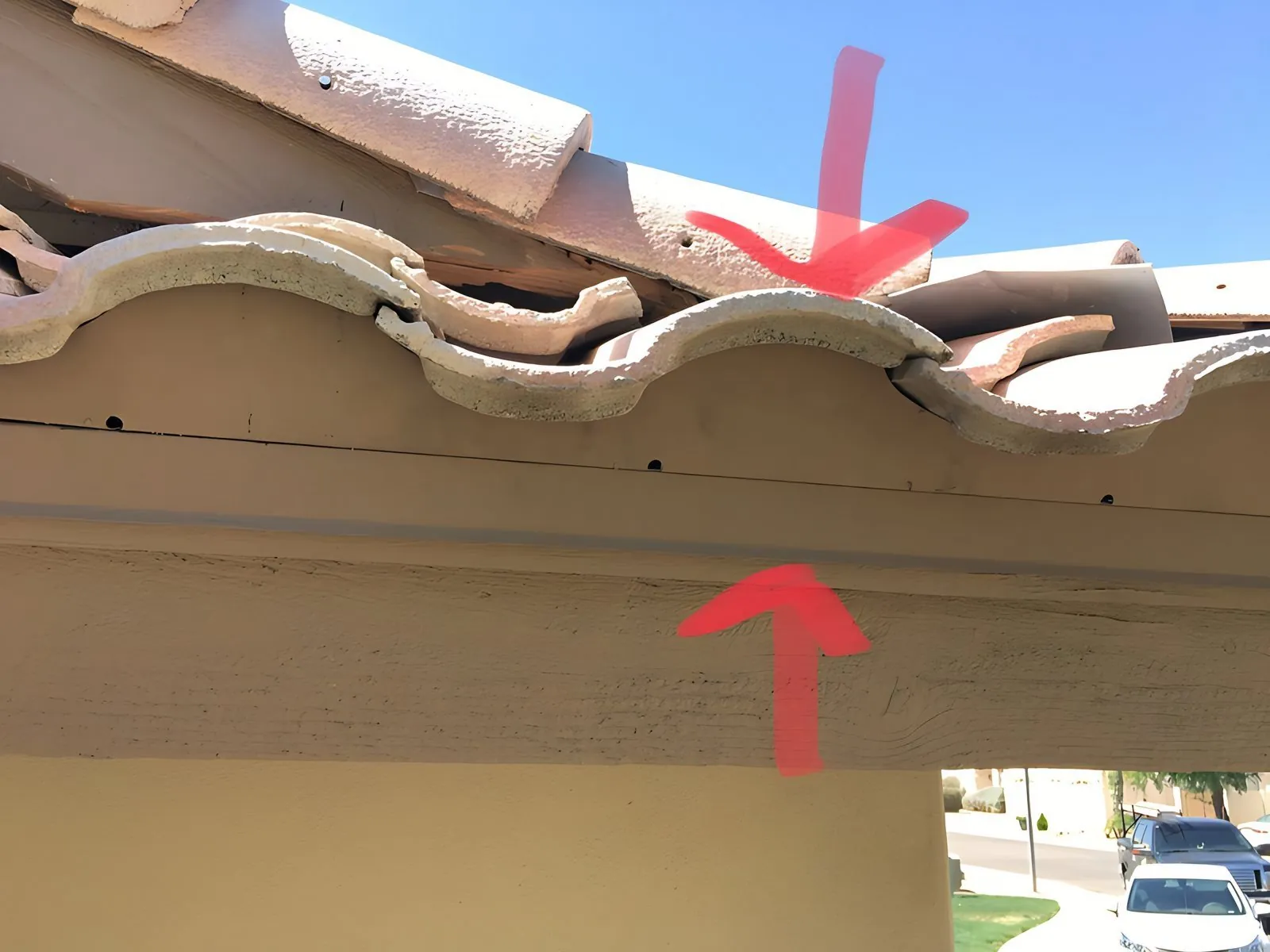
- The damage is localized, such as a few missing shingles after a windstorm, a handful of cracked tiles or one failed flashing detail.
- The roof is in the first half to two-thirds of its expected life and the rest of the surface looks sound.
- A leak can be traced to a specific cause, like a dried-out pipe boot or a clogged valley.
- On a foam roof, the foam is still in good shape and only the coating is worn, which calls for a recoat rather than a new roof.
Well-done repairs can buy many years of service. At Payne Roofing, roof repairs come with a 2–5 year warranty, which reflects that a good repair is meant to last, not just get you through the next storm.
When replacement usually makes more sense
Replacement tends to be the better investment when:
- The roof is near or past its typical lifespan, for example a shingle roof in the 20–30 year range in Arizona.
- Leaks show up in different areas, or keep returning after repairs.
- Shingles are brittle, curling or bald of granules across large sections.
- On a tile roof, the underlayment has deteriorated broadly. Patching underlayment in spots does little when the whole layer is failing.
- There is soft or rotted decking, sagging, or signs of long-term moisture in the attic.
- The cost of repeated repairs is starting to add up with no end in sight.
The tile roof middle ground
Tile roofs deserve their own note because the decision is rarely "patch or all new." Concrete and clay tiles often outlast the underlayment beneath them. When that underlayment wears out, a common solution is an underlayment replacement, also called a re-felt: the tiles are removed and stacked, new underlayment and flashings go down, and the original tiles go back on with broken ones replaced.
This keeps the look of your home and reuses durable material while renewing the part that actually keeps water out. Our re-felt guide explains the process in more detail.
On the other hand, if a tile roof has only a few cracked tiles and the underlayment beneath them is still flexible and intact, replacing those tiles is a straightforward repair. The only way to know which situation you are in is to have someone lift tiles in a few representative areas and look.
A simple way to sort it out
If you are still unsure, walk through these questions:
- How old is the roof compared with the typical range for its material?
- Is this the first leak or problem, or one of several in recent years?
- Is the damage in one area, or are signs of wear showing up across the whole roof?
- What do the hidden layers look like: underlayment, decking and flashing?
- How long do you plan to stay in the home?
Mostly "young, first problem, one area, sound layers" points toward repair. Mostly "old, recurring, widespread, worn layers" points toward replacement. Mixed answers are where a professional opinion is most useful.
Thinking about cost over time
We do not quote prices in articles because every roof is different, but it helps to know what drives the decision financially:
- Remaining life. A repair on a young roof protects many years of remaining value. A repair on a worn-out roof protects very little.
- Frequency. One repair is normal. A pattern of yearly repairs suggests the roof itself is the problem.
- Hidden damage. Water that has been getting in for a while can damage decking, insulation and drywall. Those costs grow the longer leaks continue.
- Energy and comfort. A new roof is a chance to improve ventilation or add a reflective coating on flat sections.
- Home sale plans. If you plan to sell, buyers and inspectors pay close attention to roof age and condition.
Payne Roofing offers flexible financing options for larger projects, and a free estimate will show you the specific costs for your roof.
Timing and next steps
Whenever possible, deal with known problems before monsoon season starts on June 15. Storms are when weak spots become ceiling stains, and roofers are busiest with emergency calls during and right after big storms.
The most reliable next step is a professional inspection. A roofer can check underlayment, flashing and decking condition, which you cannot judge from the ground, and tell you honestly whether a repair is likely to hold. Learn more about roof repairs and roof replacement, or request an estimate through our contact page.
Questions & answers
Is it cheaper to repair or replace a roof?
A repair is almost always cheaper up front, but not always cheaper over time. If the roof is young and the damage is isolated, repairing is usually the smart choice. If the roof is near the end of its life and needs repeated fixes, those repair costs can add up while hidden water damage grows.
How old is too old to repair a roof?
There is no single cutoff, but repairs become less worthwhile as a roof nears the end of its typical lifespan. For Arizona shingle roofs that is often around 20–30 years, and for tile roofs it is often the underlayment age that matters. Condition counts more than age alone.
Can I just replace part of my roof?
Sometimes, yes. Damaged sections can be repaired or replaced if the rest of the roof is sound, though matching older shingles or tile can be tricky. On tile roofs, partial re-felts are possible, but when the underlayment is failing broadly, doing the whole roof is usually more reliable.
Will a repair stop my roof from leaking for good?
A repair should stop the leak it was made for, but it will not prevent new leaks elsewhere on an aging roof. That is why the overall condition matters. Payne Roofing repairs include a 2–5 year warranty on the work performed, separate from the rest of the roof.
Should I repair or replace before selling my home?
It depends on the roof's condition and what the buyer's inspection is likely to find. Many sellers start with a professional inspection so they know where things stand before listing. Minor issues are often repaired, while a roof at the end of its life may become part of the sale negotiation.
Talk to a roofer who knows Arizona roofs.
Call for a free estimate. Open Monday through Friday 7–5 and Saturday 8–2.