Guide
How Long Do Roofs Last in Arizona?
In Arizona, asphalt shingle roofs typically last about 20–30 years, tile itself can last 50 years or more while its underlayment often needs replacing around 20–30 years, and foam roofs can last decades if recoated roughly every 5–10 years. Heat, UV, installation quality and maintenance decide where your roof lands.
Why Arizona is hard on roofs
Roofs in the Phoenix metro deal with a combination of stresses that many other parts of the country never see all at once. Summer heat bakes roofing materials day after day, and intense UV light breaks down asphalt, sealants, coatings and underlayment over time. Big daily temperature swings make materials expand and contract, which works fasteners loose and opens small gaps around flashing.
Then there is monsoon season, which officially runs June 15 through September 30. Sudden wind gusts, haboobs (dust storms), heavy downpours and occasional hail can expose any weakness a roof has been hiding. Most Arizona roofs do not fail because of one dramatic event. They wear down gradually from sun and heat, and a storm finds the weak spot.
That is also why lifespan figures from other regions do not always translate here. A roof rated for a certain number of years under milder conditions may age faster on a south- or west-facing slope in Gilbert or Mesa that takes full afternoon sun all summer. The good news is that Arizona has long dry stretches, so roofs here avoid some of the moisture, freeze-thaw and moss problems common elsewhere.
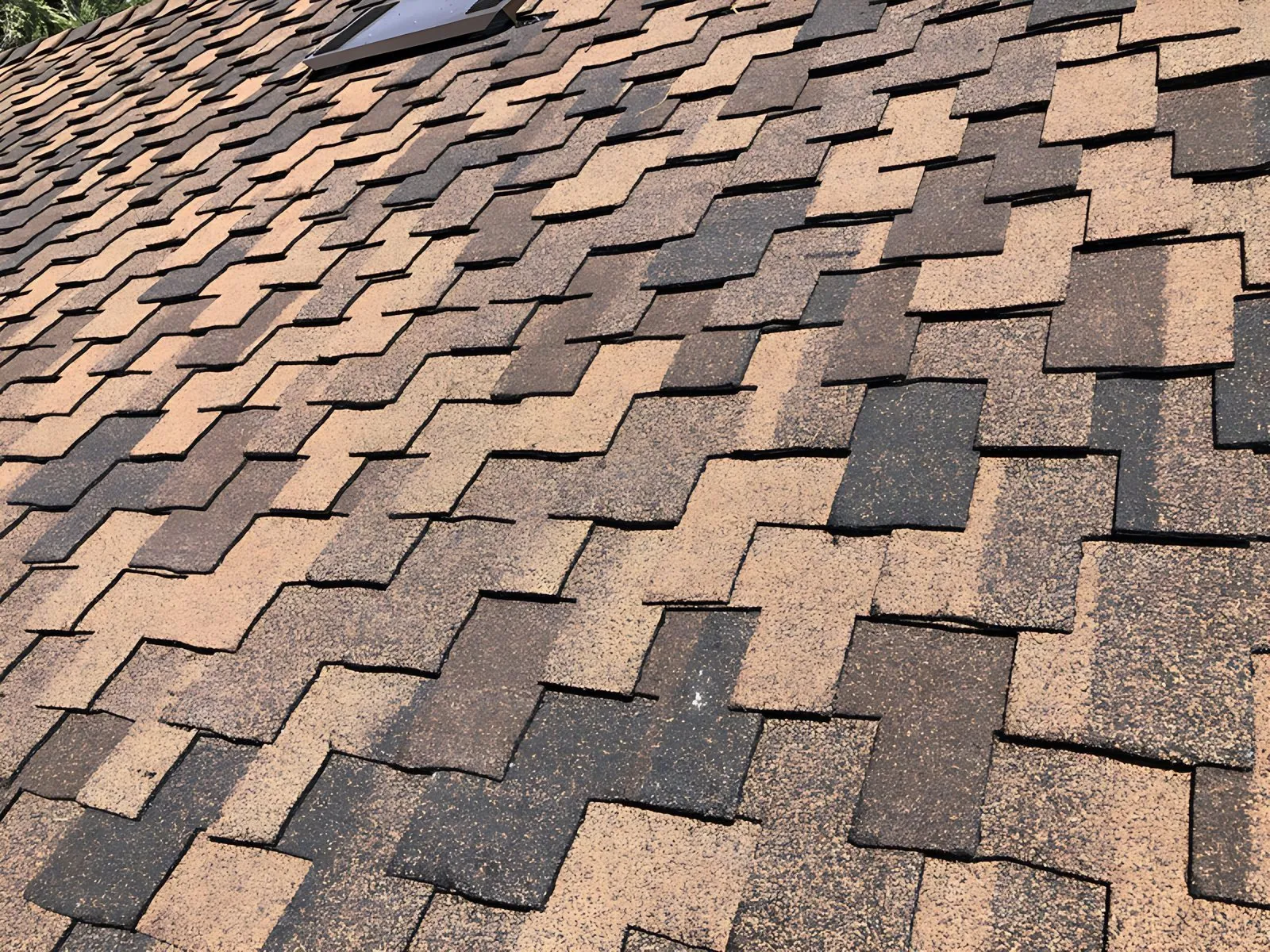
Typical lifespans by roof type
Every roof is different, so treat these as general ranges rather than promises. Installation quality, ventilation, roof pitch and maintenance all move the numbers up or down.
Asphalt shingles
Shingle roofs in the Arizona sun typically last around 20–30 years. Architectural (dimensional) shingles are thicker and often hold up longer than traditional 3-tab shingles. Over time the protective granules wear off, shingles become brittle, and edges curl or crack.
Concrete and clay tile
Tile is one of the most durable roof coverings in the Valley. The tiles themselves can last 50 years or more. The catch is the underlayment beneath the tile, which is the real waterproofing layer. Underlayment often needs attention around 20–30 years, and replacing it (often called a "re-felt") is a common project on older Arizona tile roofs.
Spray polyurethane foam (SPF)
Foam roofs on flat and low-slope buildings can last for decades, but only if the protective coating is maintained. Foam breaks down under UV, so the coating typically needs to be renewed roughly every 5–10 years, depending on the coating type and how it has weathered.
Elastomeric and emulsion coatings
Roof coatings protect flat roofs and reflect heat, but they are a wearing surface. Expect periodic reapplication. How often depends on the product, how thick it was applied and how much sun and foot traffic it gets.
What shortens a roof's life
Two roofs installed the same year can age very differently. The most common culprits we see in Arizona include:
- Poor attic ventilation. Trapped attic heat cooks shingles and underlayment from below.
- Neglected flashing and sealants. Sealant around vents, chimneys and skylights dries and cracks in the heat, letting water in.
- Debris and ponding water. Leaves, dust and clogged drains hold water on flat roofs and in valleys.
- Foot traffic. Walking on tile cracks it, and walking on brittle shingles or worn coatings damages them.
- Pigeons and other birds. Nesting under tile adds debris and droppings that block water paths.
- Skipped recoats. On foam and coated roofs, letting the coating wear through exposes the material underneath.
Signs your roof is near the end of its life
Age alone does not tell the whole story. These signs suggest a roof is wearing out and should be looked at by a professional:
- Shingles that are curling, cracked, missing or shedding lots of granules into gutters
- Repeated leaks in different areas, rather than one isolated spot
- Slipped, broken or missing tiles, or daylight visible in the attic
- Water stains on ceilings or around walls, especially after monsoon storms
- Soft spots, blisters or exposed foam on flat roofs
- Sagging rooflines, which can point to deck damage
If you notice any of these, avoid climbing up to check. Use binoculars from the ground and look for water stains in the attic with a flashlight instead.
How to get the most years out of your roof
Most of what extends a roof's life is simple and routine:
- Schedule inspections once or twice a year. Spring and fall are ideal, plus after major storms.
- Fix small problems early. A cracked tile or failed flashing seal is a small repair. Left alone through a monsoon, it can become deck and ceiling damage.
- Keep drains, valleys and gutters clear, especially before and during monsoon season.
- Recoat on schedule if you have a foam or coated flat roof.
- Improve attic ventilation if your attic runs extremely hot.
- Keep trees trimmed away from the roof surface.
Payne Roofing recommends inspections in spring and fall for this reason. Catching wear early is almost always less disruptive than dealing with it after it leaks. You can learn more about our roof inspection service.
When to plan for replacement
If your roof is approaching the typical range for its material and you are seeing several of the warning signs above, it is worth planning ahead rather than waiting for a failure. Planning lets you choose materials, check HOA requirements and schedule work outside of monsoon season when possible.
For tile roofs, remember that replacement often does not mean new tile. In many cases, the existing tile can be carefully removed, the underlayment replaced, and the tile reinstalled, with broken pieces swapped out. Our guide on repairing versus replacing walks through how to weigh the decision, and Payne Roofing offers free estimates if you want a professional opinion on where your roof stands.
Questions & answers
How long does a shingle roof last in Phoenix?
An asphalt shingle roof in the Phoenix area typically lasts about 20–30 years. Where it falls in that range depends on shingle type, attic ventilation, installation quality and maintenance. Architectural shingles often outlast 3-tab shingles, and a hot, poorly ventilated attic can shorten the life of any shingle.
Do tile roofs really last 50 years?
The tiles often can, but the underlayment beneath them usually cannot. Concrete and clay tiles are very durable, while the underlayment that actually keeps water out commonly needs replacing around 20–30 years in Arizona. That is why many older tile roofs get a re-felt rather than all-new tile.
Does the Arizona heat really shorten roof life?
Yes, heat and UV are the main reasons Arizona roofs wear out. Sun exposure breaks down asphalt, coatings, sealants and underlayment, and daily temperature swings stress fasteners and flashing. Good attic ventilation and reflective coatings on flat roofs can reduce some of that wear.
How often should a foam roof be recoated?
Most foam roofs need a new protective coating roughly every 5–10 years. The exact timing depends on the coating type, how thick it was applied and how it has weathered. Once the coating wears thin, UV begins damaging the foam itself, so recoating on time protects the much larger investment underneath.
Can regular maintenance really add years to a roof?
Often, yes. Routine inspections, clearing debris, resealing flashing and fixing small issues before monsoon season help prevent the water damage that ends many roofs early. Maintenance cannot stop a roof from aging, but it helps it reach the full lifespan its materials are capable of.
Talk to a roofer who knows Arizona roofs.
Call for a free estimate. Open Monday through Friday 7–5 and Saturday 8–2.