Blog: Roof Inspection
Causes of a Leaking Roof in Phoenix, Arizona
The most common causes of roof leaks in Phoenix are damaged flashing, cracked or missing shingles and tiles, worn tile underlayment, poorly sealed valleys, clogged gutters and drains, and normal wear from heat and UV. Leaks often appear during monsoon storms, and the source is frequently some distance from the stain you see inside.
Monsoon Rain Finds Every Weak Spot
Phoenix is one of the hottest places in the country, but our monsoon season still brings heavy rainfall and high winds. The storms are dramatic to watch, but not so exciting when you notice your roof is leaking. A leak can damage ceilings, walls, insulation and belongings, and if it is left alone, it can lead to rot and mold.
Because it rains infrequently here, a roof problem can go unnoticed for months, then show up all at once during the first big storm. Understanding the common causes helps you know what to look for.
First: What to Do If Your Roof Is Leaking
- Move furniture, electronics and valuables away from the water.
- Put a bucket or towels down to catch drips.
- If water is collecting in a bulge in the ceiling, keep people away from it. A trapped bubble of water can bring down a section of drywall. A small puncture at the lowest point, with a bucket underneath, can release the water in a controlled way, but only do this if you can do it safely and the area is well away from light fixtures and wiring. If in doubt, leave it and call for help.
- Take photos for your records.
- Call a roofer to track down the leak and repair it. Do not go on the roof yourself, especially when it is wet.
Cause 1: Damaged Flashing
Flashing is the metal that seals the joints around chimneys, skylights, vents, walls and valleys. It is one of the most frequent sources of leaks. Over time, heat makes flashing expand, contract and crack, sealants dry out, and monsoon winds loosen it. Learn more in roof flashing repair signs.
Cause 2: Cracked, Broken or Missing Shingles and Tiles
Cracked, broken or missing shingles let water reach the layers beneath. The good news is that damaged shingles are usually easy to locate and replace. On tile roofs, a cracked or slipped tile exposes the underlayment to sun and rain, which speeds its breakdown and can eventually let water through.
Cause 3: Worn-Out Tile Underlayment
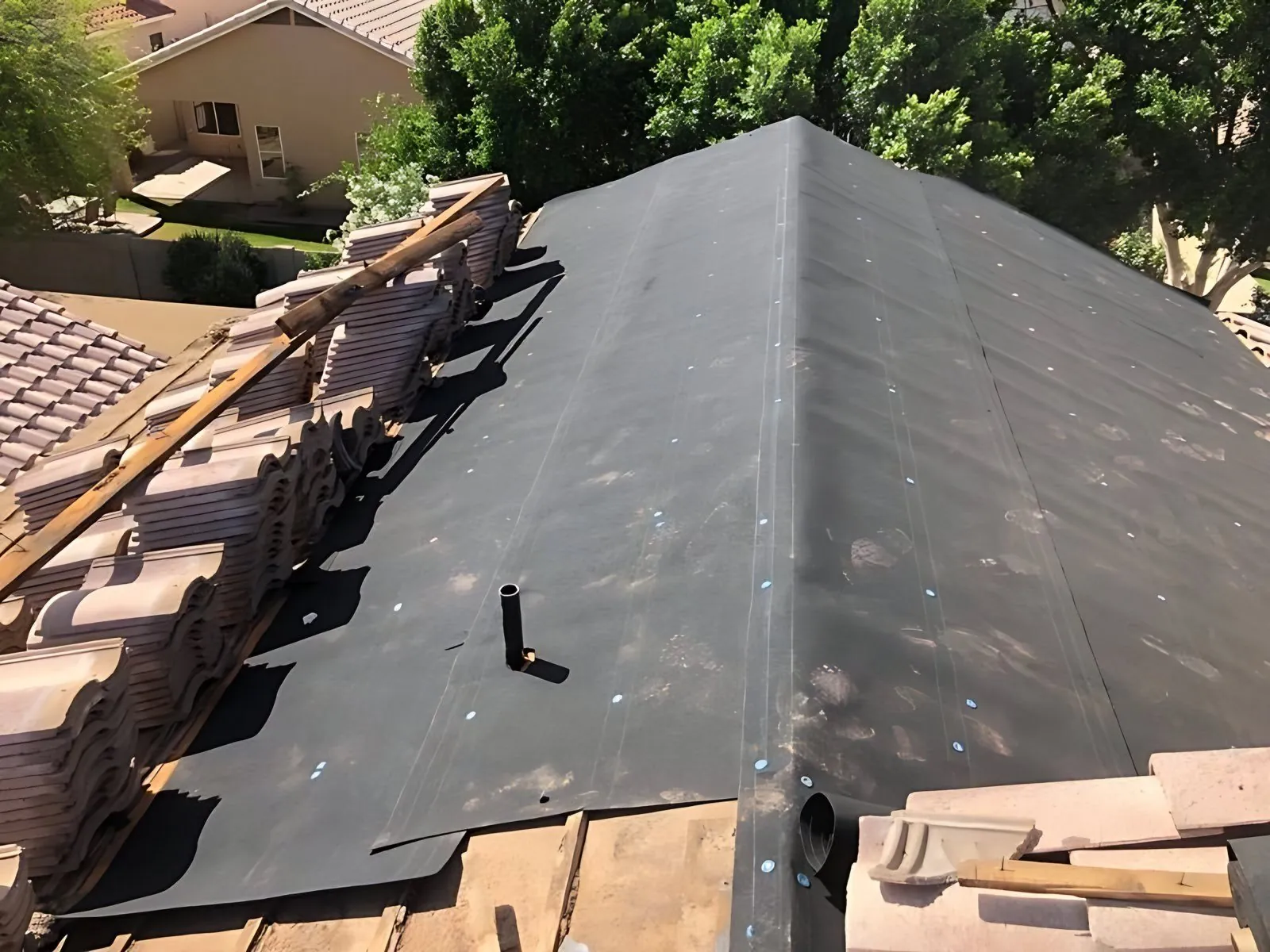
This is one of the most common causes of leaks on Phoenix tile roofs. The tiles can look perfect while the underlayment beneath has dried out and cracked from years of heat. Since the underlayment does most of the waterproofing, the roof leaks even though nothing looks wrong from the street. Underlayment often needs attention around 20 to 30 years, and the fix is often a re-felt.
Cause 4: Inadequately Sealed Valleys
Valleys are the channels where two roof slopes meet. They carry a large volume of water during a storm, and debris tends to collect there. If a valley is not properly sealed, or if debris dams the water, it can back up under the roofing and leak.
Cause 5: Clogged Gutters and Drains
Gutters and drains carry water off the roof. When they are clogged with leaves, dust and debris, water can back up under shingles at the roof edge. On flat roofs, blocked drains and scuppers cause ponding, which puts constant pressure on seams and coatings.
Cause 6: Normal Wear and Tear
As with most things, wear becomes apparent over time. Shingles lose their protective granules, coatings thin out on foam roofs, seals around vents crack and fasteners loosen. On an older roof, leaks often come from general wear across many areas rather than one specific failure.
Why Leaks Are Hard to Find
Water rarely drips straight down from the opening. It can travel along the underlayment, decking or framing before showing up on your ceiling, sometimes several feet away. That is why tracing a leak to its source takes experience and, often, a look at both the roof and the attic.
Call a Professional
The best thing you can do when your roof leaks is call a professional roofer to assess the roof, inspect the attic, trace the leak and make repairs. Payne Roofing has helped Valley homeowners with leaks since 1984. Our repairs include a 2 to 5 year warranty, and we respond to leaks as quickly as we can. Call 480-988-9250 or see our roof repair services.
Questions & answers
What is the most common cause of roof leaks in Phoenix?
Damaged flashing and worn tile underlayment are among the most common causes. Flashing around chimneys, skylights, vents and valleys cracks and loosens in the heat, and tile underlayment dries out over time. Broken tiles, damaged shingles and clogged drains are other frequent causes.
Why does my tile roof leak if the tiles look fine?
Because the underlayment beneath the tiles does most of the waterproofing, and it wears out from Arizona heat while the tiles still look good. Underlayment often needs attention around 20 to 30 years. A roofer can inspect it and recommend repairs or a re-felt.
Why does the leak appear far from where the roof is damaged?
Water often travels along the underlayment, decking or framing before it drips onto your ceiling. The stain you see may be several feet from the actual opening. An experienced roofer checks both the roof and the attic to trace the leak to its source.
Should I wait until monsoon season ends to fix a leak?
No. Each storm can let more water into decking, insulation and drywall, increasing the damage and the repair cost. Have the leak repaired as soon as possible. Payne Roofing offers prompt emergency repairs and responds as quickly as it can; call 480-988-9250 during business hours.
Can clogged gutters cause a roof leak?
Yes. When gutters or drains are clogged, water can back up under the roofing at the edges or pond on flat roofs, eventually finding a way in. Keeping gutters, valleys and drains clear, especially before and after monsoon season, helps prevent these leaks.
Talk to a roofer who knows Arizona roofs.
Call for a free estimate. Open Monday through Friday 7–5 and Saturday 8–2.