Blog: Roof Inspection
Roof Rat Season in the Valley: How to Keep Rats Off Your Roof and Out of Your Attic
Roof rats are most active in the Phoenix area from November through May, and they usually get into homes from the roof. Pick ripe citrus promptly, trim branches back from the roofline, check from the ground for gaps at tile eaves and vents, and have a roofer seal entry points after any rats inside are removed.
Why roof rats are a cool-weather problem in the Valley
Roof rats are most active in the Phoenix area from November through May. According to the Maricopa County Environmental Services Department, they thrive in cool weather and do most of their traveling at dusk and overnight, usually within 200 to 300 feet of where they nest. That makes this time of year the right moment to look at how your home could let them in.
Food plays a big part. University of Arizona Cooperative Extension notes that tangerines can be plentiful as early as September and oranges can hang on trees through spring, which lines up with when rat activity is often reported. Roof rats have been documented in the Valley since the early 2000s, first in the Arcadia area of Phoenix, and they now turn up across the metro. If you live in an older, citrus-heavy neighborhood like Arcadia or in newer communities in Gilbert and Mesa, the same advice applies.
How roof rats get onto your roof
Roof rats are climbers. Maricopa County says they spend about 90 percent of their lives 4 feet or more off the ground, can jump 2 feet straight up and about 4 feet sideways, and can cover even more distance when jumping down from a height. In practice, that means a rat rarely needs to walk across your yard to reach your roof. It uses a path, such as:
- Tree branches that touch or hang over the roofline, especially citrus, palms and dense shade trees
- Utility lines running from the pole to the house
- Block walls, trellises and patio covers that sit close to the eaves
- Vines and tall shrubs growing up stucco walls
Once a rat is on the roof, it looks for any gap that leads to shelter. The attic is warm, dry and quiet, which is exactly what it wants for a nest.
Common roof entry points we see on Arizona homes
Maricopa County says roof rats can enter through any opening larger than a nickel, and University of Arizona Extension describes openings as small as a dime. On a typical Valley home, the weak spots are often on or near the roof:
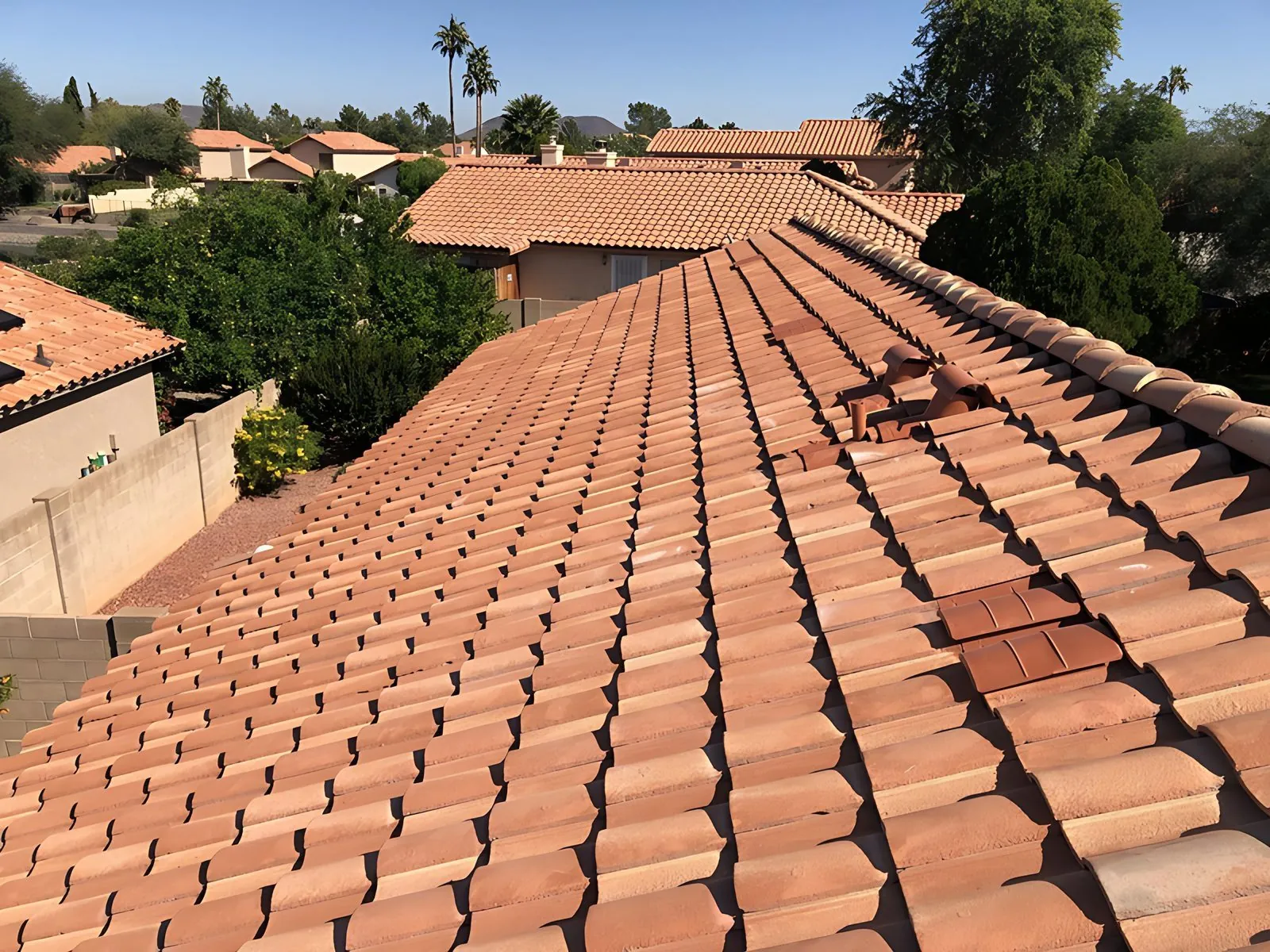
- Open tile eaves. On many concrete and clay tile roofs, the curved space under the first row of tiles leads straight to the underlayment and sometimes into the attic. The same gaps attract nesting pigeons. Eave closures, often called bird stops, can block them.
- Damaged vent screens. Gable vents, roof vents and soffit vents with torn or rusted screens give easy access. See our guide to roof ventilation and attic heat for why those vents matter and should never simply be blocked.
- Plumbing vent stacks. The county recommends screening roof sewer stacks.
- Air conditioning line covers. Where refrigerant lines run into the attic, the county suggests stuffing the cover with steel wool or copper mesh.
- Gaps at fascia, flashing and roof-to-wall joints. Weathered wood, loose flashing and old sealant can leave openings rats can chew wider.
What to check from the ground and the attic
You can spot most warning signs without climbing a ladder. Please do not walk on your roof to look for rats. Tile cracks easily underfoot, and a fall is far more dangerous than a rodent problem. Instead:
- Listen at night. University of Arizona Extension says scurrying sounds in the attic, especially after dark, are often the first sign.
- Look at your citrus. Roof rats tend to hollow out oranges right on the tree and leave the empty rind hanging.
- Scan the roofline with binoculars. Look for displaced tiles, gaps at the eaves, damaged vent screens and dark, greasy rub marks where rats travel.
- Check the attic opening with a flashlight. From the hatch, look for droppings, disturbed or tunneled insulation and chewed wiring. Avoid stirring up droppings or nesting material.
If you hear activity or find droppings, treat it as a sign that something on the roof needs attention as well.
Simple yard steps that make your roof less inviting
Taking away food and easy routes is the most useful thing a homeowner can do. These jobs are done from the ground:
- Pick ripe citrus promptly. The City of Tempe and Maricopa County both advise harvesting fruit as it ripens and picking up any that falls.
- Trim branches back from the roof. Prune trees so they do not touch walls or the roofline. Given how far roof rats can jump, more space is better. Hire a tree service for anything that needs a tall ladder.
- Secure food sources. Bring pet food indoors at night, keep trash lids closed and store bulk feed or birdseed in sealed containers.
- Thin dense vines and shrubs that climb walls near the eaves.
These steps also help with our regular winter roof care routine, because clear branches mean fewer leaves in valleys and gutters before winter rain.
When rats are already inside, and what damage to look for
If rats are already nesting in the attic, deal with them before closing every opening. Sealing a roof with rats still inside can trap them in the attic. Many homeowners use a licensed pest control company for trapping, and Maricopa County offers cleanup guidance for droppings and nests, including wearing gloves and not sweeping or vacuuming droppings.
Rodents gnaw constantly. A county vector control manager has warned that chewed electrical wiring can create a fire risk. On the roof side, rats can tear underlayment under tiles, damage vent screens and pull apart insulation, which reduces how well your attic holds back summer heat. Torn underlayment is a concern in Arizona because it is the layer that keeps water out when rain gets past the tile. If your underlayment is already aging, our guide to tile roof underlayment replacement explains what a re-felt involves.
How a roofer can help seal things up
Pest control handles the rats. A roofer handles the openings that let them in and the damage they leave behind. During a roof inspection, we look at eaves, vents, flashing, penetrations and the underlayment where we can see it, and we note gaps a rat could use. Typical fixes include installing eave closures on tile roofs, replacing damaged vent screens with sturdy material, sealing gaps at flashing and fascia, and repairing torn underlayment. You can read more about these jobs on our roof repairs and maintenance page and in our roof maintenance and safety FAQ.
Payne Roofing has served Arizona homeowners since 1984. If you hear noises overhead or see gaps along your roofline, call us at 480-988-9250, Monday through Friday from 7 am to 5 pm or Saturday from 8 am to 2 pm, or request a free estimate.
Questions & answers
When are roof rats most active in Arizona?
Roof rats are most active in the Phoenix area from November through May, according to Maricopa County. They thrive in cool weather and do most of their moving at dusk and overnight. Ripening citrus through fall, winter and spring gives them an easy food supply, so this is a good season to pick fruit promptly, trim branches back from the roof and look for openings along your roofline.
How small of a hole can a roof rat fit through?
A roof rat can fit through an opening about the size of a coin. Maricopa County says any opening larger than a nickel is enough, and University of Arizona Extension mentions holes as small as a dime. That is why small gaps at tile eaves, torn vent screens and loose flashing matter, and why rats can chew a small gap into a bigger one.
Can roof rats damage my roof?
Yes, roof rats can damage parts of your roof system. They can tear underlayment beneath tiles, rip vent screens and chew at weathered wood and sealant around flashing. Inside the attic they can disturb insulation and chew wiring. Underlayment damage matters most, since that layer keeps water out when rain gets past the tile, so it is worth having the roof checked after a rat problem.
Should I seal my roof vents to keep rats out?
No, do not seal roof vents shut, because your attic needs ventilation to release heat and moisture. Instead, damaged or flimsy vent screens should be replaced with sturdy screening that keeps rodents out while still letting air move. A roofer can check that the vents are covered correctly and that the attic still gets the airflow it needs.
Does Payne Roofing remove roof rats?
No, Payne Roofing does not trap or remove rats, so we recommend a licensed pest control company for that part. Our role is the roof itself. We can inspect your roofline for entry points, install eave closures on tile roofs, replace damaged vent screens, seal gaps at flashing and repair underlayment rats have torn. Call 480-988-9250 during business hours to schedule a visit.
Talk to a roofer who knows Arizona roofs.
Call for a free estimate. Open Monday through Friday 7–5 and Saturday 8–2.