Guide
Roof Ventilation & Attic Heat in Arizona
Roof ventilation lets hot attic air escape and cooler outside air enter, usually through intake vents low on the roof and exhaust vents near the ridge. In Arizona, good ventilation can help reduce attic heat, protect shingles and underlayment from overheating, and support comfort. Balance between intake and exhaust matters most.
Why attic heat matters in Arizona
On a summer afternoon in the Valley, a roof surface absorbs a tremendous amount of solar heat. That heat radiates into the attic, and without a way out, attic temperatures climb far above the outdoor temperature. That trapped heat has consequences:
- Roofing materials age faster. Shingles and underlayment are effectively baked from below as well as above.
- Your AC works harder. Heat moves from the attic into living spaces, and ductwork in the attic carries hotter air.
- Upstairs rooms stay hot even when the thermostat is set low.
- Items stored in the attic can be damaged by heat.
Ventilation will not make an Arizona attic cool, but a well-designed system can help move heat out instead of letting it build.
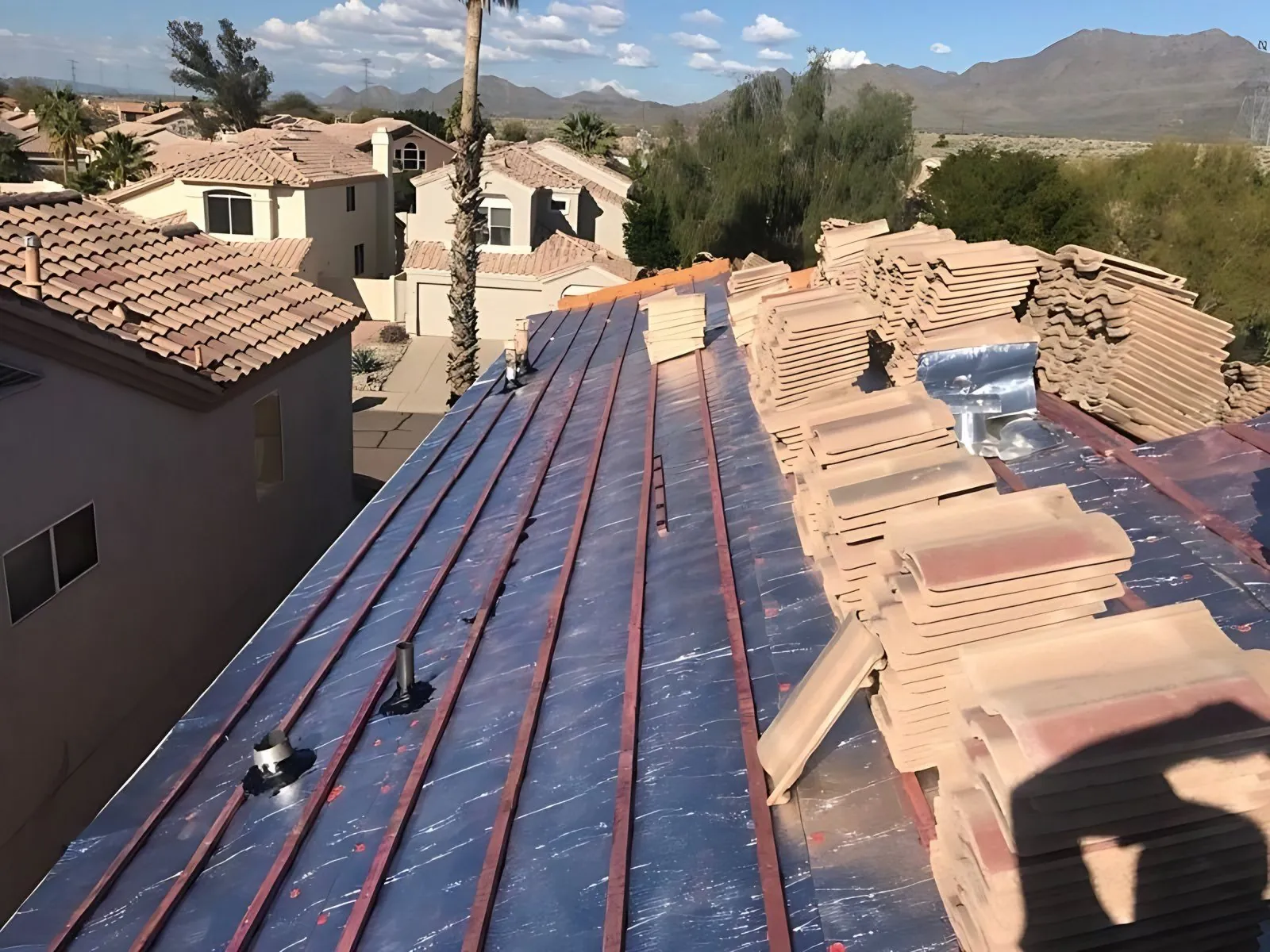
How roof ventilation works
Most attic ventilation relies on a simple principle: hot air rises. A balanced system has two parts:
- Intake vents low on the roof, usually in the soffits or eaves, let cooler outside air in.
- Exhaust vents high on the roof, near the ridge, let hot air out.
As hot air rises and exits at the top, it pulls fresh air in at the bottom, creating steady airflow along the underside of the roof deck. The key word is balance. Too little intake and exhaust vents cannot do their job. Mixing different exhaust types in the same attic can short-circuit the airflow, with one exhaust vent pulling air from another instead of from the soffits.
Common types of roof vents
Intake
- Soffit vents: continuous or individual vents under the eaves.
- Eave and bird-block vents: common on tile roofs where the roof meets the wall.
Exhaust
- Ridge vents: run along the peak and work well with balanced soffit intake.
- Static or box vents: low-profile vents placed near the ridge.
- Tile vents: designed to blend with tile roofs.
- Gable vents: in the walls at the ends of the attic.
- Powered attic fans: electric or solar fans that pull air out. These can help in some homes but need enough intake to work properly and should be evaluated case by case.
The right combination depends on your roof's design, material and attic layout.
Signs of poor ventilation
- Attic that feels extremely hot and stagnant, well beyond what you would expect
- Upstairs rooms that are much hotter than the rest of the house
- Shingles aging prematurely, blistering or curling on an otherwise young roof
- Soffit vents blocked by insulation, paint or debris
- Few or no visible exhaust vents near the ridge
- Rusted nails or stains on the deck from condensation, which can happen during cooler, humid stretches
Ventilation, insulation and reflective roofs work together
Ventilation is one part of a system. Insulation on the attic floor slows heat from moving into living space. Ventilation moves hot air out of the attic. Reflective surfaces, such as light-colored shingles or white cool roof coatings on flat roofs, reduce how much heat the roof absorbs in the first place.
Flat and low-slope roofs often have little or no attic, so ventilation plays a smaller role. On those roofs, insulation from spray foam and a reflective coating usually do more of the heat-control work. See our foam roof guide.
When to address ventilation
The best time to evaluate ventilation is during a roof replacement or tile re-felt, when vents can be added, upgraded or rebalanced with the new roof. It is also worth discussing during an inspection if your attic runs very hot or your shingles are aging early.
Payne Roofing looks at ventilation as part of roof inspections and replacements, and we can explain what your attic has, whether it is balanced and what changes might help. Shingle and other material manufacturers often specify ventilation requirements as part of proper installation, which is another reason to get it right.
Simple things homeowners can check
You do not need to climb on the roof to learn a lot about your ventilation:
- Look at the eaves from the ground. Can you see soffit or eave vents, and are they clear of paint, dust and debris?
- Look at the ridge with binoculars. Note ridge vents, box vents or tile vents near the top of the roof.
- Peek into the attic early in the morning with a flashlight. Check that insulation is not stuffed against the soffits, blocking airflow.
- Notice how the house feels. Upstairs rooms that stay much hotter than downstairs can point to attic heat.
Avoid going into the attic during the heat of the day in summer. Arizona attics can become dangerously hot.
Questions & answers
Does roof ventilation really make a difference in Arizona?
Yes, though it will not make an attic cool in summer. Balanced ventilation helps move hot air out instead of letting it build, which can reduce stress on shingles and underlayment and lessen the heat pushed into living spaces. It works best alongside good insulation and reflective roofing.
Can you have too much roof ventilation?
It is less about too much and more about the wrong balance. Too much exhaust without enough intake, or mixing different exhaust types, can disrupt airflow and pull conditioned air from the house. A roofer can evaluate your intake and exhaust and recommend a balanced setup.
Are solar attic fans worth it in Arizona?
They can help in some homes but not all. Powered fans need enough intake ventilation to work properly, otherwise they may pull cooled air from the living space. Have your attic evaluated before adding one, and consider whether passive ventilation improvements would do the job.
How do I know if my attic is ventilated properly?
Look for vents both low on the roof, such as soffit or eave vents, and high on the roof near the ridge, and make sure soffits are not blocked by insulation. An extremely hot, stagnant attic or prematurely aging shingles are warning signs. A roofer can confirm during an inspection.
Talk to a roofer who knows Arizona roofs.
Call for a free estimate. Open Monday through Friday 7–5 and Saturday 8–2.