Homeowner tip
Summer Heat Roof Care
Arizona summer heat and UV are the biggest long-term threats to your roof. Keep attic ventilation working, watch for cracked sealants and worn coatings, keep flat roofs recoated, and avoid roof work in peak heat. Schedule repairs early in the morning and leave roof access to professionals.
What summer heat does to a roof
A roof in the Phoenix area spends the summer absorbing intense sun. That heat and UV slowly break down roofing materials:
- Shingles lose granules, dry out, and can blister or curl.
- Sealants and pipe boots crack and shrink.
- Tile underlayment becomes brittle over the years, even under intact tile.
- Coatings on foam and flat roofs wear thin, exposing material to UV.
- Daily expansion and contraction loosen fasteners and flashing.
Most of this damage is gradual. You may not notice it until the first monsoon storm finds the weak spots.
Help your attic breathe
Attic heat bakes your roof from below and pushes heat into your living space. To help:
- Make sure soffit and eave vents are not blocked by insulation, paint or debris.
- Look for exhaust vents near the ridge. If you see few or none, ask your roofer about ventilation.
- Check that attic insulation is in place and not compressed.
- If your attic has ductwork, have it checked for leaks and insulation.
Avoid going into the attic in the afternoon. Summer attics in Arizona can be dangerously hot. Early morning is safer. Our ventilation guide explains more.
Protect flat and foam roofs
Flat roofs take direct sun all day. White and reflective "cool roof" coatings reflect much of that heat and lower heat gain into the building, but only while they are intact and reasonably clean. Watch for:
- Chalky, thin or dirty coating
- Tan, orange or brown patches on foam roofs, which mean exposed foam
- Blisters, cracks and punctures, especially around HVAC units
Foam roofs typically need recoating roughly every 5–10 years. If yours is due, plan the work for cooler months or early mornings when conditions suit the coating. See our foam roof guide.
Summer safety and scheduling
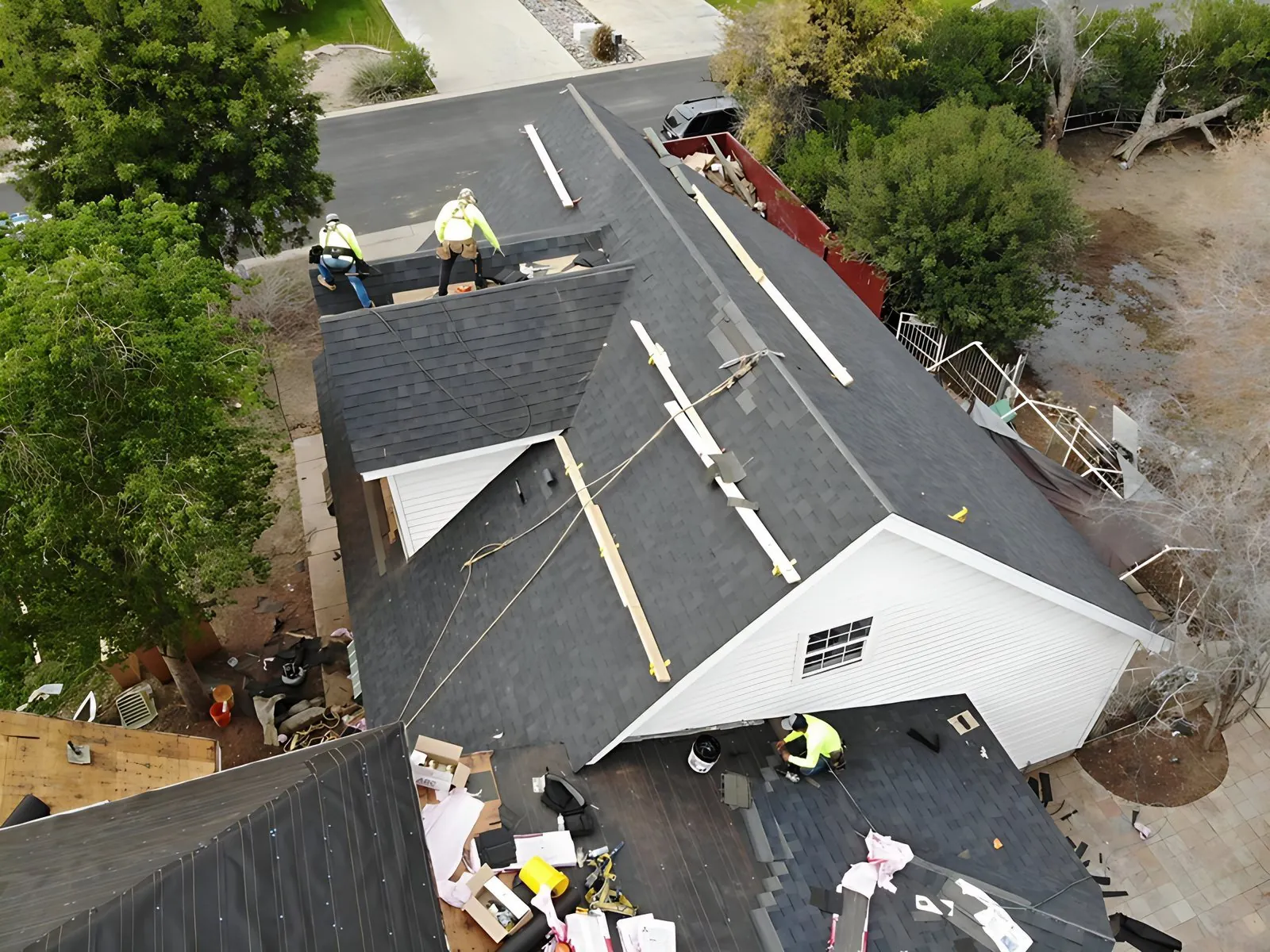
- Stay off the roof. Roof surfaces get extremely hot in summer, and heat illness is a real risk. Tile and brittle shingles can also be damaged by foot traffic.
- Schedule early. Roofers often start at dawn in summer to avoid the worst heat. Expect early arrival times.
- Do not delay repairs into monsoon season. Small issues found in early summer should be fixed before mid-June if possible.
- Check rooftop coolers. Evaporative coolers can leak onto the roof, and standing water speeds wear.
When to call a pro
Call a roofer if you notice granules collecting in gutters, curling shingles, new ceiling stains, exposed foam or a sudden spike in upstairs heat. Payne Roofing handles repairs, inspections and recoats across the Phoenix area and East Valley, and repairs include a 2–5 year warranty. Learn more about roof repairs and maintenance.
Questions & answers
Can the Arizona heat damage my roof?
Yes, heat and UV are the main reasons Arizona roofs age. Over time, sun exposure dries out shingles, cracks sealants, wears down coatings and makes tile underlayment brittle. Good ventilation, reflective surfaces on flat roofs and regular inspections help slow that wear.
Do cool roof coatings really help in Arizona?
White and reflective coatings reflect much of the sun's heat, which lowers heat gain into the building, especially on flat roofs. They work best when kept clean and intact. Like any coating, they wear over time and need periodic reapplication to keep their benefits.
Is it okay to do roof work in summer?
Yes, professionals work through summer, usually starting very early to avoid peak heat. Homeowners should not go on the roof, since surfaces get extremely hot and heat illness is a risk. Schedule needed repairs early in the season so they are done before monsoon storms.
Talk to a roofer who knows Arizona roofs.
Call for a free estimate. Open Monday through Friday 7–5 and Saturday 8–2.