Blog: Roof Replacement
Roof Replacement Signs
After monsoon storms, signs that a roof may need replacement include widespread curled, cracked or missing shingles, bald spots from granule loss, many broken tiles and a roof that has passed its expected lifespan. Storm damage on a young roof is usually repairable; storm damage on an aging roof often tips the decision toward replacement.
When Did You Last Look at Your Roof?
When was the last time you looked closely at your roof or had it inspected? Many homeowners have no idea how their roof is holding up until water shows up on a ceiling. After a round of monsoon storms, it is a good time to find out.
Monsoon season officially runs from June 15 to September 30, and it puts Valley roofs through strong winds, heavy bursts of rain, dust storms and sometimes hail. A healthy roof usually comes through with minor, repairable damage. An aging roof may not. This post focuses on how to tell the difference after a storm.
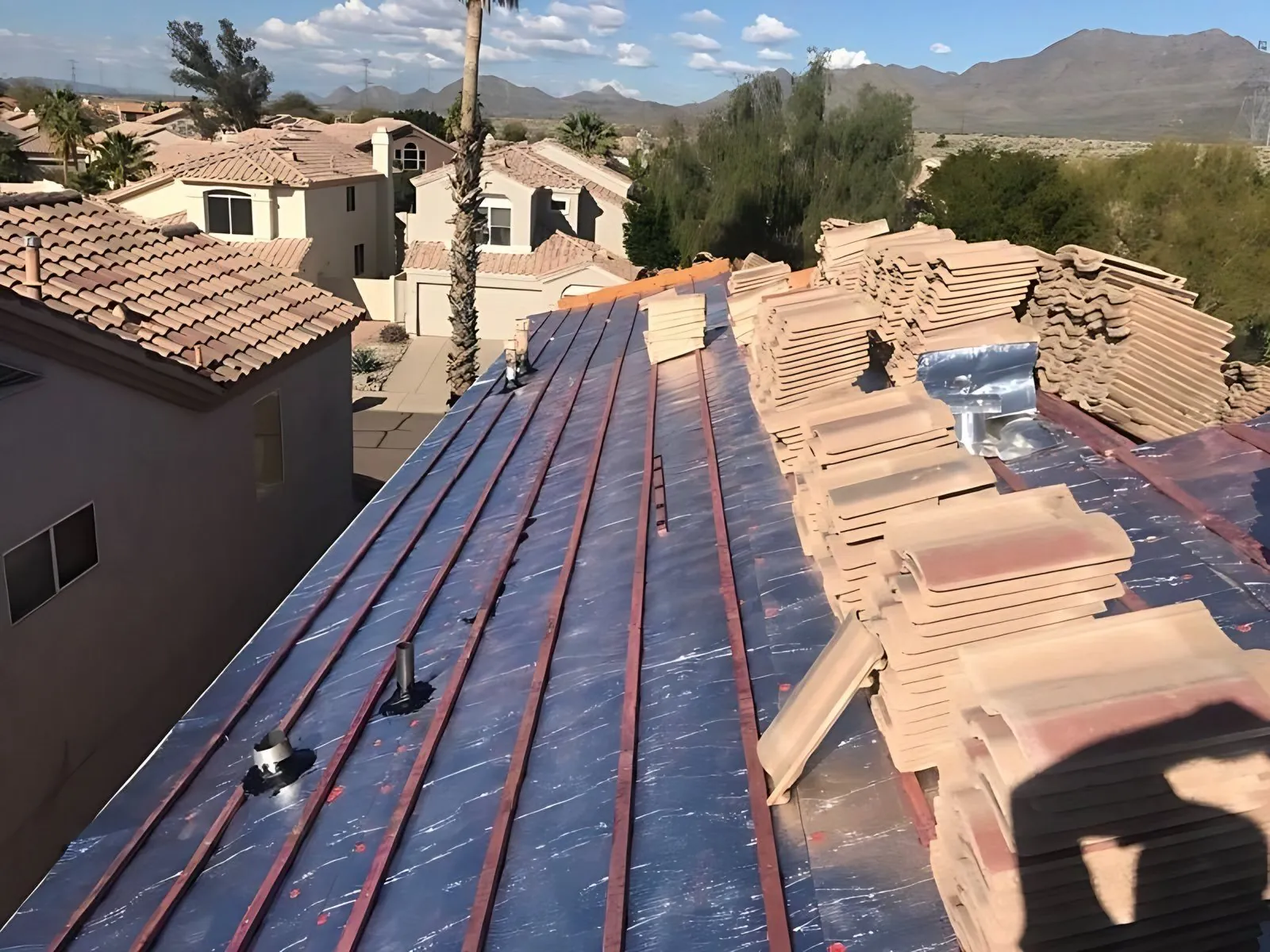
Storm Damage on a Young Roof vs. an Old Roof
The same storm can mean very different things for two roofs. On a roof with years of life left, a few lifted shingles or cracked tiles are a repair. On a roof near the end of its life, the same damage is often the final push toward replacement, because the surrounding materials are brittle, more pieces break during repairs and new leaks keep appearing. Knowing your roof's age is the first step in interpreting storm damage.
Sign 1: Curled Shingles
If you can see from the ground that shingles are curling, it is a good time to start considering replacement. Curling is usually the result of years of heat and UV exposure. Curled shingles are easier for monsoon winds to catch and tear off, and they let wind-driven rain underneath.
Sign 2: Missing Granules and Bald Spots
The granules on asphalt shingles protect them from the sun. Heavy rain and hail can knock loose granules that are already weakly attached. Bald spots on the roof, or a lot of granules washing out of gutters after a storm, may indicate the shingles are near the end of their life. Ask your roof inspector to evaluate how widespread the loss is.
Sign 3: Cracked or Broken Shingles and Tiles
Cracked and broken shingles are a good indicator a roof is due for replacement, especially when they appear across many areas. On tile roofs, wind and hail can crack or displace tiles. A few broken tiles are an easy repair, but if storm damage reveals that the underlayment beneath is brittle and failing, a re-felt may be the better long-term fix. Damaged materials let more water in with every storm if they are not addressed.
Sign 4: The Roof Has Exceeded Its Expected Lifespan
Roof lifespan in Arizona varies widely by material and care. Asphalt shingles often last around 20 to 30 years. Tile can last 50 years or more, though its underlayment often needs replacement around 20 to 30 years. Foam roofs can last decades with recoating roughly every 5 to 10 years. If your roof has passed its expected life and a storm has caused damage, replacement is usually worth serious consideration.
Other Post-Storm Warning Signs
- New ceiling stains or drips after rain
- Loose, bent or missing flashing around chimneys, vents and walls
- Debris impact damage from branches
- Water ponding on flat roofs where it did not before
- Sagging areas on the roofline
Storm Damage and Insurance
If storm damage is significant, you may want to contact your homeowners insurance company. Coverage depends entirely on your policy and on how the insurer views the cause of the damage, so we cannot promise any outcome. What we can do is inspect the roof and document the damage with photos, which can help you explain the situation to your insurer.
Get an Honest Assessment
Payne Roofing specializes in roof inspections and replacements. Our roofer will inspect your roof and go over your options with you, whether the recommendation is repair or replacement. If you decide to replace the roof, our team will be with you from start to finish, with 10, 15 or 20-year warranty options and flexible financing available. Call 480-988-9250 or learn more about our roof inspections.
Questions & answers
Does storm damage mean I need a new roof?
Not necessarily. On a roof with years of life left, storm damage is usually repairable. On an older roof near the end of its life, storm damage often makes replacement the better choice because surrounding materials are brittle and new leaks are likely. An inspection gives you a clear recommendation.
What are the most common signs a roof needs replacement after a monsoon?
Common signs include widespread curled, cracked or missing shingles, bald spots from granule loss, many broken tiles, failing tile underlayment, new leaks and a roof that has exceeded its expected lifespan. Several of these together usually point toward replacement.
Will insurance pay for a new roof after a storm?
It depends on your policy and how your insurer evaluates the cause of the damage. Sudden storm damage and gradual wear are often treated differently. We can inspect your roof and document the damage with photos to help you explain it when you contact your insurance company.
How soon after a storm should I get my roof inspected?
As soon as practical, especially after strong winds, hail or heavy rain. Damage that does not leak right away can get worse with the next storm. During monsoon season, storms can come back to back, so prompt inspection and repair help prevent water damage.
Talk to a roofer who knows Arizona roofs.
Call for a free estimate. Open Monday through Friday 7–5 and Saturday 8–2.