Blog: Roof Inspection
Roof Inspection: Monsoon Season
The best way to prepare your roof for Arizona's monsoon season, which runs June 15 to September 30, is a professional inspection in spring, followed by any needed repairs before storms arrive. Homeowners can help by clearing gutters and drains, removing debris and trimming trees that overhang the roof.
Get Ahead of Monsoon Season
Arizona is known for intense monsoon storms that bring heavy rain, strong winds, lightning and dust. These storms can damage homes and businesses, and the roof takes the brunt of it. A roof that is already worn is especially vulnerable to wind-driven rain and flying debris.
The good news is that you can prepare. Monsoon season officially runs from June 15 to September 30, so the months before it are the ideal time to get your roof ready. This post is about preparation, what to do before the first storm, so your roof is in the best possible shape when the weather turns.
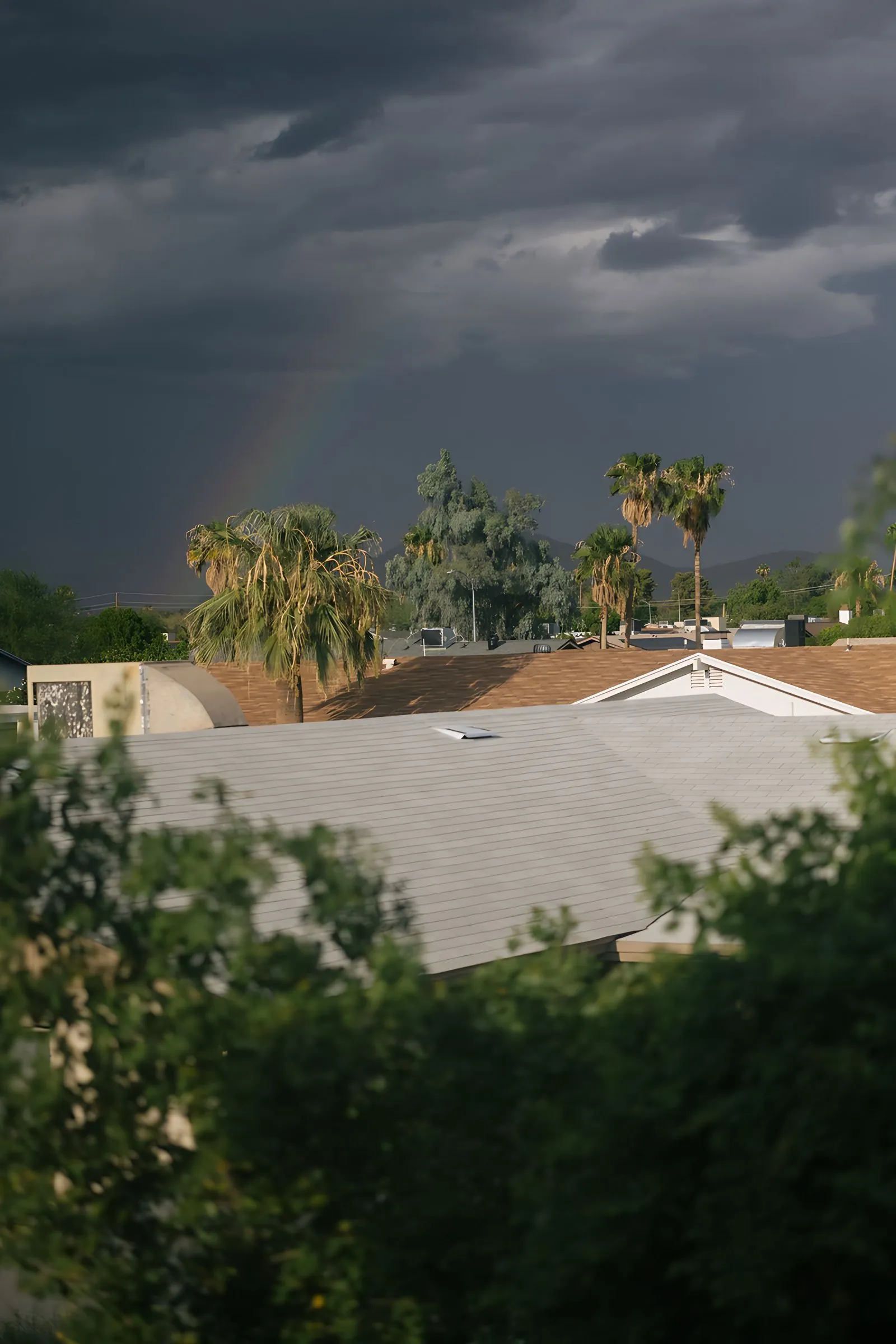
Start With a Pre-Season Roof Inspection
Regular inspections are the priority. An experienced roofer can identify areas of concern and make the repairs needed to help your roof get through this season and the ones that follow. Without regular inspections and maintenance, it is hard to know how sturdy the roof over your family really is.
We recommend scheduling the inspection in spring, ideally well before mid-June, because roofers get busy once storms start and you want repairs finished before the first big one. A pre-monsoon inspection typically focuses on:
- Cracked, broken or slipped tiles and lifted or damaged shingles
- Tile underlayment that is brittle or exposed
- Loose, bent or poorly sealed flashing
- Pipe jacks, vents, skylights and solar mounts
- Gutters, downspouts, scuppers and flat-roof drains
- Foam and coated roofs with worn or thin coating
Your Pre-Monsoon Checklist
Schedule a roof inspection
Book it early in the spring so you have time for repairs.
Clear gutters and downspouts
Monsoon rain arrives fast and heavy. Clogged gutters and downspouts cannot handle it, and water can back up under the roofing or overflow against the house.
Clear debris
Leaves, twigs and dust collect in valleys, behind chimneys and around flat-roof drains. Debris traps water and blocks drainage. If clearing debris requires walking on the roof, have a professional do it.
Trim trees
Monsoon winds can snap branches and drop them on your roof or drive them into it. Trim limbs that hang over or touch the roof, and hire a tree professional for large trees.
Schedule roof repairs
Do not carry known problems into storm season. A slipped tile or loose flashing that seems minor in May can let in a lot of water during a July downpour.
Secure loose items
Patio furniture, umbrellas and other loose items can become projectiles in a microburst or haboob. Store or secure them.
Special Considerations by Roof Type
- Tile roofs: Replace broken tiles and check for bird nests at the eaves that can block drainage.
- Shingle roofs: Replace missing or lifted shingles, which wind can peel back further.
- Foam and coated roofs: Make sure the coating is intact and drains are clear to prevent ponding.
- Older roofs: If your roof is nearing the end of its expected life, ask your inspector whether it is likely to make it through another season. Replacing a failing roof before storms arrive is far less stressful than dealing with water damage in the middle of monsoon season.
It also helps to know where your roof's weak points are. Most monsoon leaks start at the same places: flashing, valleys, penetrations and spots where tiles or shingles are already damaged. Those are exactly the areas a pre-season inspection examines.
Safety Reminder
Please do not climb onto your roof to prepare it. Spring and summer heat make roof surfaces dangerous, and tile can crack underfoot. Use binoculars from the ground, work from a ladder at the roof edge only if you are comfortable, and leave on-roof work to professionals.
Do You Need a Roofing Company You Can Trust?
Payne Roofing has the crew to get the job done and keep your roof steady through the season. We specialize in roof inspections, maintenance and repairs, and we are committed to keeping you and your family covered all monsoon season long. If a storm does cause damage, we respond as quickly as we can. Call 480-988-9250 or read what to do after a storm.
Questions & answers
When is monsoon season in Arizona?
Arizona's monsoon season officially runs from June 15 to September 30. Storms during this period can bring strong winds, heavy rain, lightning, dust storms and sometimes hail, so it is best to have your roof inspected and repaired before mid-June.
When should I schedule a pre-monsoon roof inspection?
Schedule it in spring, well before June 15. That leaves time to complete any repairs before storms begin. Roofers often get busier once monsoon storms start, so booking early helps you avoid delays and gives you time to compare options for any larger repairs.
What can homeowners do to prepare a roof for monsoon storms?
Clear gutters and downspouts, remove debris you can safely reach, trim trees that overhang the roof, secure loose outdoor items and schedule any known repairs. Most importantly, have a professional inspect the roof so hidden problems are fixed before the first storm.
Why are tile roofs vulnerable during monsoon season?
Tiles shed most water, but the underlayment beneath does the waterproofing. Broken or slipped tiles expose that underlayment, and aging underlayment may already be brittle. Wind-driven monsoon rain can then get through. Replacing damaged tiles before the season helps prevent leaks.
Talk to a roofer who knows Arizona roofs.
Call for a free estimate. Open Monday through Friday 7–5 and Saturday 8–2.