Blog: Homeowner Tips
Freeze Warning in the Valley? How to Protect Your Pipes, Plants and Pool
When a freeze is forecast in the Phoenix area, drain and cover outdoor faucets, wrap exposed pipes, keep the house at 55 degrees or warmer, cover tender plants with frost cloth before sundown, and run your pool pump through the night. Most of this takes an hour or less and can prevent costly water damage.
Why a rare freeze catches Valley homes off guard
Freezing nights are uncommon in central Phoenix. National Weather Service records show the city has averaged about one day a year at or below 32 degrees in recent decades, down from roughly eight a year over the full record. That is exactly why a freeze warning can cause trouble here. Many Valley homes have water lines, irrigation valves and pool plumbing that sit above ground with little or no insulation, because builders plan for heat, not cold.
According to the Arizona Municipal Water Users Association, frost or freeze is possible in Greater Phoenix from late November through mid-February. Outlying neighborhoods and low spots often run a few degrees colder than the city core, so homeowners in places like Cave Creek, Queen Creek and San Tan Valley should pay close attention to local forecasts. The good news is that a little prep, done the afternoon before a cold night, handles most of the risk.
Protect outdoor faucets and exposed pipes first
Water expands as it freezes, and a split pipe can leak for hours before anyone notices. Pipes are the most important thing to protect, and the jobs are simple:
- Disconnect garden hoses. The City of Phoenix recommends removing, draining and storing hoses before a freeze. A hose left attached traps water in the faucet.
- Drain and cover hose bibs. If a faucet has an indoor shut-off valve, close it, then open the outdoor faucet to let it drain and leave it open. Add an insulated faucet cover from the hardware store.
- Wrap pipes that come out of the ground. The water line entering your house, irrigation lines and backflow assemblies are often bare. Foam pipe sleeves work well. In a pinch, old towels or blankets secured with duct tape will do.
- Cover irrigation valves. Lift the valve box lid and drape loose towels over the valves inside, then put the lid back.
Before cold weather arrives, find your home's main water shut-off valve. It is usually in the garage or in a box near the street. If a pipe does burst, shutting the water off quickly limits the damage.
Keep warm air moving around indoor pipes
Pipes inside the house can freeze too, especially lines in the garage, along exterior walls or in the attic. The American Red Cross and the City of Phoenix both suggest a few easy habits on freezing nights:
- Keep the garage door closed if water lines run through the garage.
- Open cabinet doors under kitchen and bathroom sinks so warm air can reach the pipes.
- Let one or two faucets drip slowly, starting with the one farthest from where water enters the house.
- Keep the thermostat steady overnight. If you are traveling, the City of Phoenix recommends setting it no lower than 55 degrees.
If a pipe does freeze, shut off the main valve, open the connected faucet and warm the pipe gently with a hair dryer or warm towels. Never use an open flame. Call a licensed plumber if you are unsure.
Cover tender plants the right way
Citrus, bougainvillea, lantana, yellow bells and many tropical plants can be damaged when temperatures drop near freezing. The University of Arizona Cooperative Extension and AMWUA share the same basic advice:
- Cover before sundown. Use frost cloth, cotton sheets or lightweight blankets. Avoid plastic, which conducts cold and can damage leaves.
- Drape covers all the way to the ground. That traps heat rising from the soil. A simple frame of stakes keeps the cover off the foliage.
- Move potted plants under a patio, into the garage or close to a block wall that held heat during the day.
- Water tropicals a day or two ahead, since dry, stressed plants take more damage. Do not water cacti and succulents before a freeze.
- Uncover once it warms up. Take heavy sheets and blankets off in the morning. Lightweight frost cloth can stay on for a few days if cold nights continue.
If leaves turn brown after a cold snap, wait until spring to prune. The damaged growth helps insulate the healthy parts of the plant, and many plants recover.
Run the pool pump through the night
Pool equipment is some of the most exposed plumbing on an Arizona property. Moving water is much less likely to freeze, so pool supply stores recommend running the main pump continuously when temperatures are near or below freezing. Many automation systems have a freeze protection setting that starts the pump at a preset temperature. Check that it is turned on, and if the pump has not started as the temperature drops, switch it on manually.
Keep the water level above the skimmer so the pump does not run dry. If your pool has a water feature, let it run with its valves open or drain it. If you are not sure how your system works, a quick call to your pool service company before the cold night is worth it.
What a freeze means for your roof
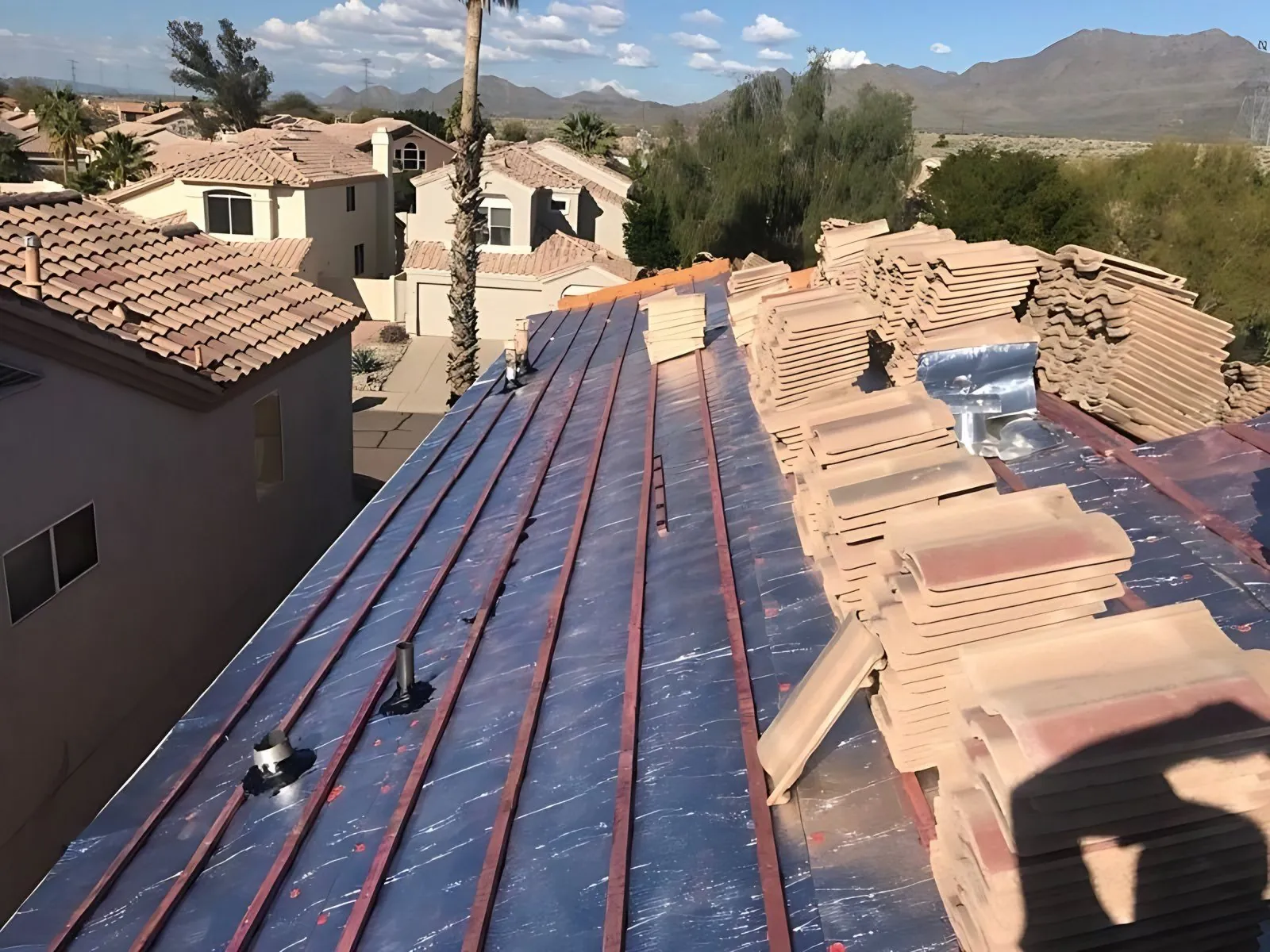
A single cold night will not hurt a healthy roof, but winter weather does show where a roof is weak. Water that gets into cracked tile, worn underlayment or open seams can expand on a freezing night and make small gaps a bit larger. Pipes that run through the attic are also more exposed than many homeowners realize, so it is worth checking that attic lines are insulated. Our guide to roof ventilation and attic heat explains how airflow and insulation work together.
Please do not climb onto the roof to brush off frost or check for damage. Frost makes tile and shingles slick, and tile cracks easily under foot traffic. Check from the ground with binoculars instead, and look at your ceilings for new stains after the next rain. Our winter roof care tips walk through more safe checks.
Make it part of your winter routine
Freeze prep fits neatly with the other cool-season jobs on an Arizona home. Keep a small kit in the garage with frost cloth, faucet covers, pipe sleeves and duct tape, so you are ready when the forecast turns. Pair it with the jobs in our fall home maintenance checklist, and if forecasters are right about a wetter winter, read our post on getting your roof ready for El Niño.
If you would like a professional look at your roof before winter rain, Payne Roofing has served the Valley since 1984. Our roof inspections cover tile, shingle and foam roofs. Call 480-988-9250, Monday through Friday from 7 am to 5 pm or Saturday from 8 am to 2 pm, or request a free estimate.
Questions & answers
How often does Phoenix get freezing temperatures?
Freezing temperatures are rare in central Phoenix but not impossible. National Weather Service records show the city has averaged about one day a year at or below 32 degrees in recent decades. Outlying and lower-lying neighborhoods often get colder than the city center, and frost is possible from late November through mid-February, so it pays to watch the forecast.
Should I drip my faucets during a freeze in Arizona?
Yes, letting one or two faucets drip slowly can help on a freezing night. Start with the faucet farthest from where water enters your home. Dripping keeps water moving, but it works best alongside other steps such as opening cabinets under sinks, keeping the garage door closed and wrapping exposed pipes outside.
Can I use plastic to cover my plants from frost?
No, plastic is a poor choice for frost protection. It conducts cold and can damage leaves where it touches them. Use frost cloth, cotton sheets or lightweight blankets instead, drape them all the way to the ground to hold in heat from the soil, and keep them off the foliage with a few stakes if you can.
Can a freeze damage my roof?
A single freeze rarely harms a roof that is in good shape, but it can make existing problems worse. Water trapped in cracked tile, worn underlayment or open seams can expand as it freezes. Stay off the roof, since frost makes it slick, and check from the ground with binoculars. A roof inspection can find weak spots before winter rain.
Does Payne Roofing offer after-hours service during winter storms?
No, Payne Roofing does not offer after-hours or overnight service. We handle emergency roof repairs during business hours, Monday through Friday from 7 am to 5 pm and Saturday from 8 am to 2 pm. If you call after hours, leave a voicemail at 480-988-9250 and we will call you back. Learn more about our roof repairs.
Talk to a roofer who knows Arizona roofs.
Call for a free estimate. Open Monday through Friday 7–5 and Saturday 8–2.