Blog: Roof Replacement
Gilbert Tile Roofs at 20 to 30 Years: Repair, Re-Felt or Replace?
If your Gilbert home was built in the 1990s or early 2000s, the tile on your roof may still be fine while the underlayment beneath it is near the end of its typical 20 to 30-year life. A professional inspection tells you whether spot repairs, a re-felt or a full replacement makes sense.
Why so many Gilbert roofs are reaching the same age
Gilbert grew faster than almost anywhere in the country. U.S. Census counts show the town going from about 29,000 residents in 1990 to nearly 110,000 in 2000 and more than 208,000 in 2010, and between 2000 and 2010 it was the fastest-growing place of 100,000 or more people in the United States. Most of those new residents moved into homes built in master-planned subdivisions, and most of those homes got concrete or clay tile roofs.
That building boom has a roofing side effect. When thousands of homes go up in the same decade, their roofs age together. Neighborhoods like Greenfield Lakes, Ashland Ranch and the early sections of Power Ranch were built from the late 1990s into the 2000s, which puts their original roofs in the 20 to 30-year range right now. Payne Roofing is based in Gilbert, and this is the question we hear most from neighbors around town: is my roof done, or does it just need work?
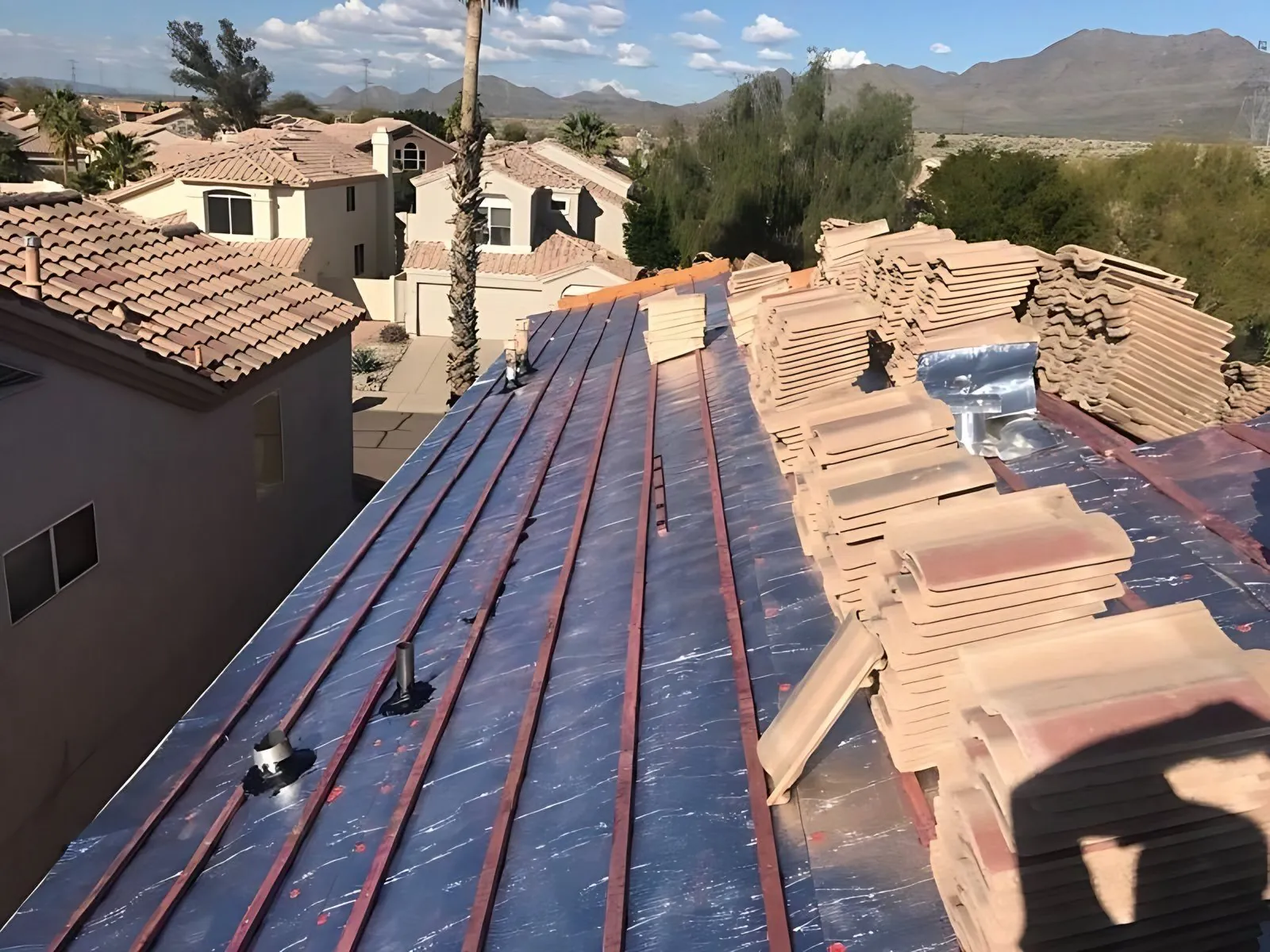
The tile usually outlasts what is underneath it
A tile roof is really two roofs. The tile you see sheds most of the water and blocks the sun. Underneath it, a layer of underlayment (often felt on older homes) is the true waterproof barrier that catches whatever slips past the tile during wind-driven rain.
Concrete and clay tile can last 50 years or more. The underlayment typically does not. In our Arizona heat, original felt underlayment often needs attention somewhere around 20 to 30 years, sometimes sooner on sun-baked slopes. Attic heat and years of summer sun dry it out until it turns brittle, cracks at laps and nail holes, and stops sealing.
That is why a 25-year-old Gilbert roof can look nearly perfect from the street and still leak. The tile hides the problem. For a deeper look at how the layers work, see our guide to tile roof underlayment replacement.
Signs your roof is ready for more than a patch
You can learn a lot without ever climbing a ladder. Please stay off the roof itself; tile cracks easily underfoot, and falls are a real danger. Instead, look for these clues from the ground and from inside:
- Ceiling stains or bubbling paint, especially after the first rain in a while or after a monsoon storm.
- Leaks that come back in a different spot after a repair. That pattern often points to underlayment wearing out across the whole roof, not one bad tile.
- Daylight or dark, crumbly felt visible from the attic hatch with a flashlight.
- Slipped, cracked or missing tiles you can spot with binoculars, along with debris piled in valleys.
- Rusted or lifted flashing around vents, chimneys and walls.
- Roof age. If you know your home was built before about 2005 and the roof has never had underlayment work, it is worth an inspection even with no leak.
Our list of roof replacement signs covers more of what to watch for.
Repair, re-felt or replace: how the choice usually breaks down
There are three common paths for an aging tile roof, and the right one depends on the condition of both layers.
Targeted repair
If the underlayment is still mostly sound and the trouble is limited to a few cracked tiles, a worn valley or one area of flashing, a roof repair can buy years of service. This is common on homes built in the mid-2000s and later.
Re-felt (underlayment replacement)
When the underlayment is failing across the roof but the tile is in good shape, a re-felt is often the best value. The crew removes the tile, replaces the underlayment and any worn flashing, then reinstalls the original tile, swapping in new pieces for broken ones. You keep the look of your home, which matters in HOA neighborhoods.
Full replacement
If many tiles are damaged, the roof deck has rot, or you want a different material or color, a full roof replacement may make more sense. It is a bigger project, but it resets the clock on every layer.
Cost depends on roof size and pitch, how much tile can be reused, deck condition and the underlayment chosen. A free estimate is the best way to compare options for your home.
What Gilbert HOAs mean for your roof project
Most Gilbert subdivisions from this era have a homeowners association, and many have rules about roof materials, tile profile and color. A re-felt that reinstalls your existing tile usually keeps you within those rules, but it is still smart to check with your HOA before work starts. A replacement with new tile, or any change in color or style, often needs architectural review approval first.
Matching replacement tile can also take some planning on older roofs, since tile colors and profiles change over the years. We can help you gather the details your HOA asks for. Our guide to HOA roofing rules in Arizona walks through the usual steps.
Why late fall and winter is a good time to decide
The cooler months are a comfortable stretch for roof work in the East Valley, and they come before the most stressful season for a tile roof. Arizona monsoon season runs from June 15 to September 30, and wind-driven monsoon rain is exactly the kind of weather that finds worn underlayment. Winter storms can bring steady soaking rain too.
Getting an inspection now gives you time to compare options, get any HOA approval you need and schedule work without the pressure of an active leak. If you are planning to sell in the spring, knowing your roof's condition ahead of time can also make the process smoother. Our tile roof FAQ answers many of the questions homeowners ask at this stage.
Talk to a roofer who works in your neighborhood
Payne Roofing has served Arizona since 1984, and our office is right here in Gilbert. We inspect, repair, re-felt and replace tile roofs across Gilbert and the rest of the East Valley. During a roof inspection, we look at the tile, underlayment, flashing and attic, then explain plainly whether your roof needs a repair, a re-felt or a replacement, and why.
Call 480-988-9250, Monday through Friday from 7 am to 5 pm or Saturday from 8 am to 2 pm, to set up a free estimate.
Questions & answers
How long does tile roof underlayment last in Gilbert?
Original tile roof underlayment in Gilbert typically lasts around 20 to 30 years. Our long, hot summers dry felt underlayment until it becomes brittle and cracks, so south and west-facing slopes often wear first. The tile on top can last much longer, which is why many roofs from the 1990s and early 2000s need underlayment work while the tile is still usable.
Can I keep my existing tile when I replace the underlayment?
Yes, in most cases the existing tile can be reused during a re-felt. The crew removes the tile, replaces the underlayment and worn flashing, then reinstalls the original tile. Any cracked or broken pieces are replaced. How much tile can be reused depends on its condition, which an inspection will show before work begins.
Do I need HOA approval for a re-felt or new roof in Gilbert?
It depends on your HOA and the scope of work. A re-felt that reinstalls your existing tile often needs no design change, but many associations still want notice before work starts. A full replacement or any change in tile color or profile usually needs architectural review approval. Check your CC&Rs or call your HOA first.
My roof does not leak yet. Should I still have it inspected?
Yes, if your roof is 20 years old or more, an inspection is worthwhile even without a leak. Underlayment wears out under the tile where you cannot see it, and the first sign is often a ceiling stain after a heavy storm. Finding worn areas early gives you time to plan a repair or re-felt on your schedule.
Is it safe to check my tile roof myself?
It is safest to check your roof from the ground and the attic, not from on top of it. Tile cracks easily underfoot and roofs are a real fall risk. Use binoculars to look for slipped or broken tiles, and a flashlight in the attic to look for stains, daylight or damp insulation. Leave walking the roof to a professional.
Talk to a roofer who knows Arizona roofs.
Call for a free estimate. Open Monday through Friday 7–5 and Saturday 8–2.