Guide
Monsoon Roof Preparation Checklist
Prepare for Arizona's monsoon (June 15 – September 30) by scheduling a spring inspection, repairing loose or cracked roofing, resealing flashing and penetrations, clearing gutters, valleys and roof drains, trimming trees, and securing rooftop equipment. After big storms, check from the ground and attic, never by climbing up.
Why monsoon prep matters
Arizona's monsoon season officially runs June 15 through September 30. Storms can arrive with little warning, bringing strong gusts, haboobs (walls of dust), intense downpours and sometimes hail. A roof that handled months of dry weather without complaint can start leaking in the first big storm.
The reason is timing. By June, roofs have endured months of rising heat. Sealants have dried, small cracks have opened, and debris has collected in valleys and drains. Monsoon storms then test all of it at once. Preparing in spring, before the season starts, is the most effective way to avoid emergency calls in July.
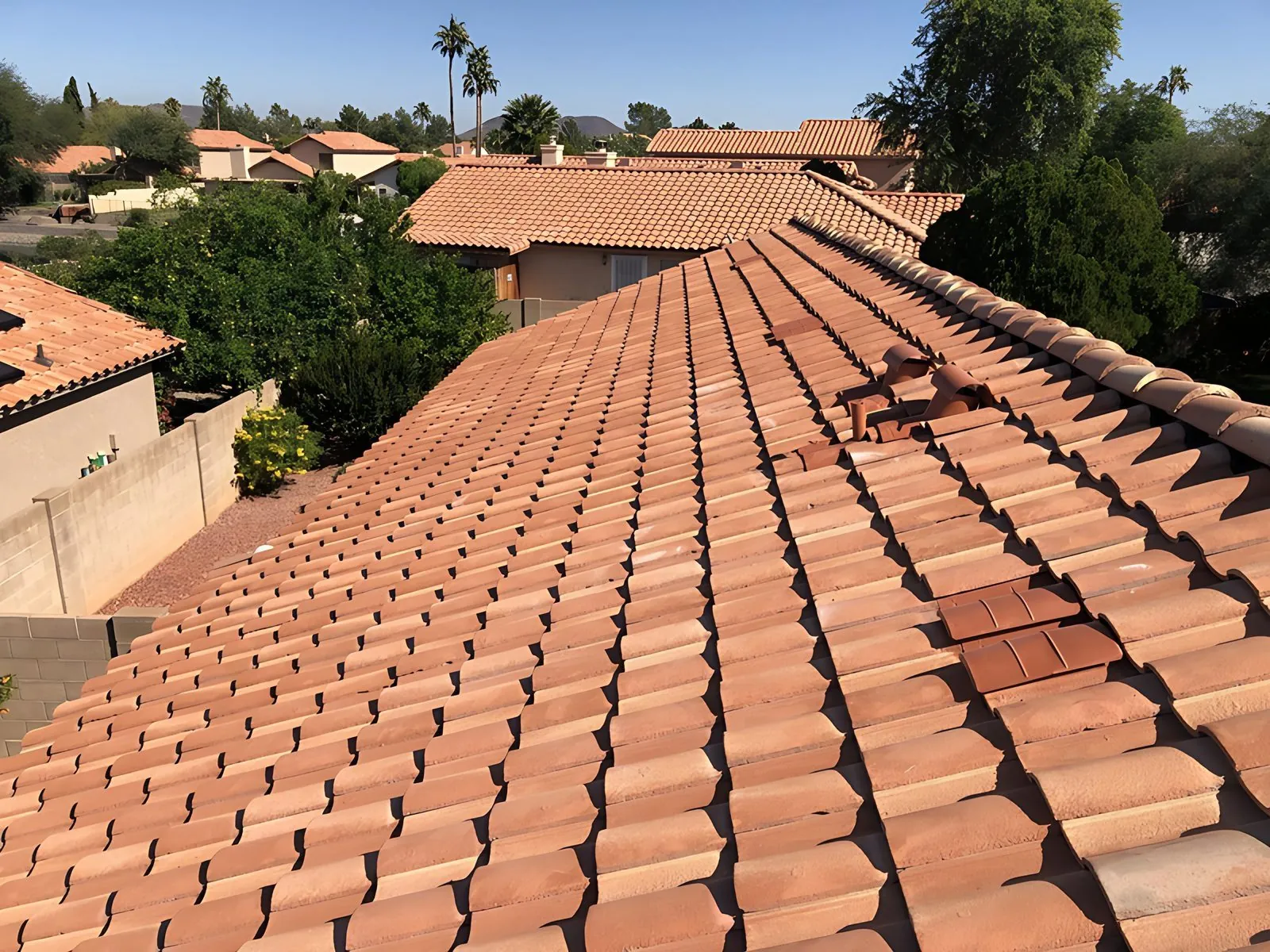
Step 1: Schedule a spring inspection
A professional inspection in April or May gives you time to fix problems before storms arrive and before roofers' schedules fill up with emergency repairs. An inspector checks things you cannot safely see yourself, including:
- Cracked, slipped or missing tiles and lifted or missing shingles
- Condition of tile underlayment in key areas
- Flashing at walls, valleys, chimneys and skylights
- Pipe boots and roof jacks
- Coating condition and exposed foam on flat roofs
- Drainage paths, scuppers and roof drains
Payne Roofing recommends spring and fall inspections each year. See our monsoon inspection article for more.
Step 2: Make repairs before the first storm
Small issues found in spring are usually straightforward to fix. Prioritize anything that lets water reach the underlayment or deck:
- Replace cracked or missing tiles and shingles.
- Reseal or replace failed flashing and pipe boots.
- Re-secure loose ridge caps and hip tiles.
- Repair blisters, cracks and worn areas in flat roof coatings, or schedule a recoat if the coating is near the end of its life.
- Fill gaps where birds are nesting under tile and install bird stops if needed.
Step 3: Clear the drainage path
Monsoon rain comes fast and heavy. Water needs a clear path off the roof, or it backs up under roofing materials and over flashing. Before June 15:
- Clean gutters and downspouts, and make sure downspouts discharge away from the foundation.
- Clear valleys on pitched roofs of leaves, dust and nesting material.
- On flat roofs, clear scuppers, canales and roof drains, and note any spots where water ponded during winter rains.
- Check that splash blocks and drainage at the ground are in place.
Gutter cleaning from a ladder is fine for many homeowners if done carefully, but leave roof-level cleaning, especially on tile, to a pro.
Step 4: Trim trees and secure loose items
Monsoon winds turn branches and yard items into projectiles. Before the season:
- Trim branches that overhang or touch the roof. Palm fronds and mesquite and eucalyptus limbs are common culprits.
- Remove dead trees or limbs near the house.
- Secure or store patio furniture, umbrellas and trash cans.
- Have rooftop equipment such as evaporative coolers, AC units and satellite dishes checked to make sure mounts and covers are secure.
- If you have solar panels, ask your installer or roofer to check mounting points and the roof beneath.
Step 5: Know what to do during and after storms
During a storm
Stay inside and off the roof. If a leak appears, contain the water with buckets and towels, move valuables and take photos.
After a storm
- Walk around the house and look at the roof with binoculars for missing or displaced material.
- Look for debris on the roof, granules piled at downspouts, and damaged gutters.
- Check ceilings and the attic with a flashlight for new stains or damp insulation.
- If you had hail or very high winds, schedule a professional inspection even if you see no obvious damage. Hail damage can be hard to spot from the ground.
If you find damage, call promptly. Payne Roofing offers prompt emergency roof repairs; call 480-988-9250 during business hours.
Printable monsoon roof checklist
- Book a spring roof inspection (April or May).
- Repair cracked tiles, missing shingles and failed flashing.
- Check pipe boots and roof jacks for cracking.
- Recoat or repair worn flat roof coatings.
- Clean gutters, valleys, scuppers and roof drains.
- Trim branches away from the roof.
- Secure rooftop equipment and yard items.
- Know where your attic access is and keep a flashlight handy.
- Save your roofer's number in your phone.
- After major storms, check from the ground and attic, and schedule an inspection if needed.
For more seasonal ideas, see our monsoon season roof tips.
Questions & answers
When does monsoon season start in Arizona?
Arizona's monsoon season officially runs from June 15 through September 30. Storm activity varies from year to year, but the safest approach is to have your roof inspected and repaired in spring, ideally April or May, so it is ready before the season begins.
What roof damage is most common during monsoon season?
The most common monsoon damage includes lifted or missing shingles, cracked or displaced tiles, leaks at flashing and pipe boots, and water backing up from clogged valleys and drains. Hail can also bruise shingles and damage flat roof coatings. Many of these problems start as heat-related wear before storms expose them.
Should I get my roof inspected after a monsoon storm?
Yes, after a major storm with high winds or hail, an inspection is a good idea even if you see no obvious damage. Some damage, like bruised shingles or cracked underlayment, is not visible from the ground. Catching it early prevents slow leaks later in the season.
Do I need to clean my gutters if it rarely rains?
Yes, because when it does rain in Arizona, it often rains hard. Dust, leaves and debris collect for months, and clogged gutters and drains cause water to back up under roofing during monsoon downpours. Cleaning them before June 15 is one of the simplest ways to prevent leaks.
Talk to a roofer who knows Arizona roofs.
Call for a free estimate. Open Monday through Friday 7–5 and Saturday 8–2.