Guide
Roof Warranties Explained (Workmanship vs. Manufacturer)
Most roofs have two kinds of warranty. A workmanship warranty from the contractor covers installation errors. A manufacturer warranty covers defects in the roofing materials. They protect against different problems, have different terms and exclusions, and both typically depend on proper maintenance and using qualified installers.
Two warranties, two different jobs
When you get a new roof or a significant repair, you are often protected by two separate warranties:
- Workmanship warranty: provided by the roofing contractor. It covers problems caused by how the roof was installed, such as improper nailing, flashing mistakes or poorly lapped underlayment.
- Manufacturer (material) warranty: provided by the company that made the shingles, tile, underlayment, foam or coating. It covers defects in the product itself.
Understanding the difference matters because most roof failures in the first years are installation-related, not material defects. A long material warranty does not help much if the installer's work is not backed.
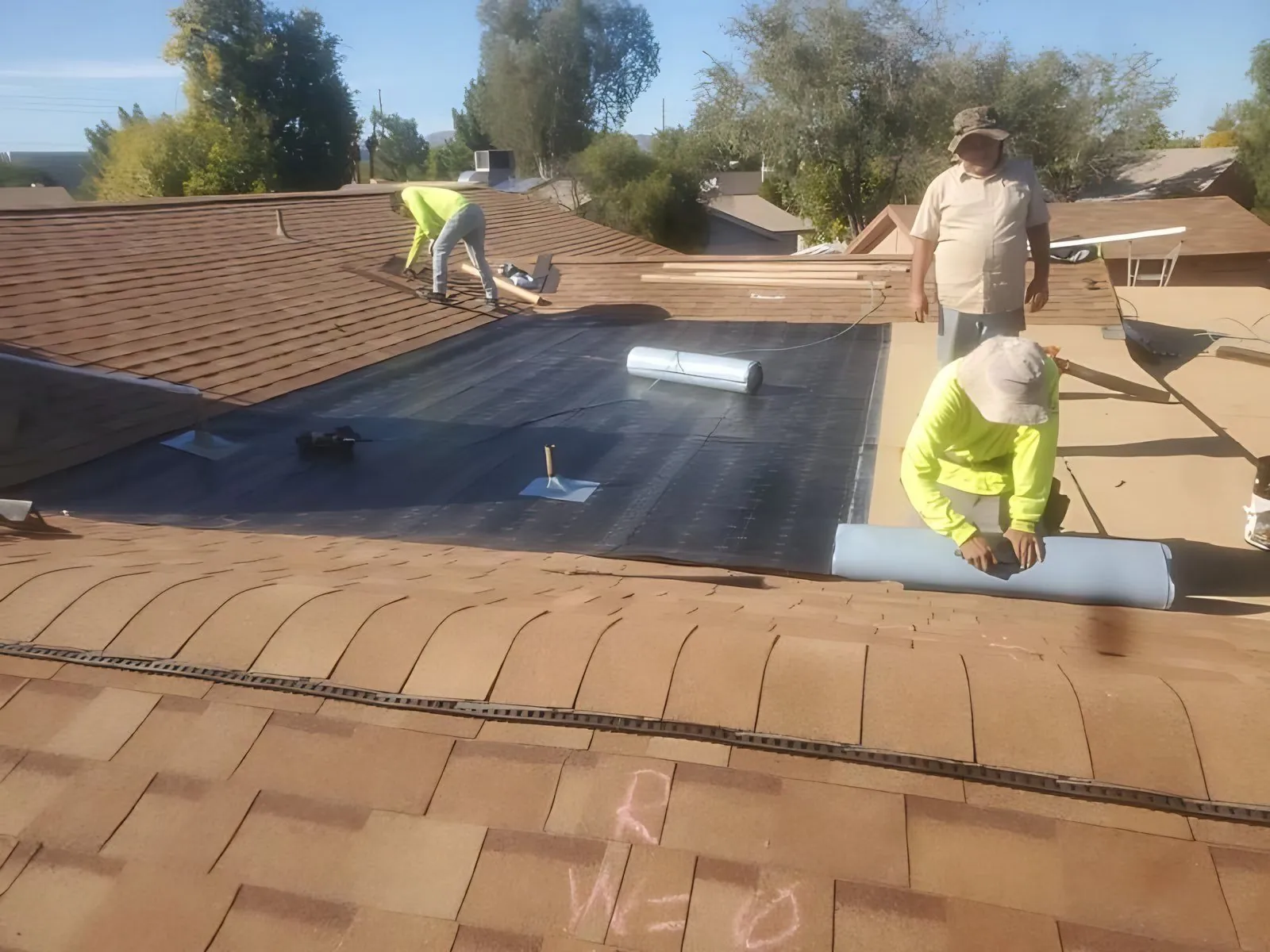
Workmanship warranties
A workmanship warranty is the contractor's promise to stand behind their installation for a stated period. Terms vary widely between contractors, so read the details.
At Payne Roofing, roof repairs include a 2–5 year warranty, and complete re-roofs offer 10, 15 or 20-year warranty options. We also back our work with a 100% satisfaction guarantee.
A workmanship warranty is only as good as the contractor's ability to honor it. That is why it is worth choosing an established, licensed local company. You can verify any Arizona roofing contractor's license at https://roc.az.gov.
Manufacturer warranties
Material manufacturers offer warranties against product defects, such as shingles that fail prematurely due to a manufacturing problem. Some general points to know:
- Coverage often changes over time. Many material warranties offer fuller coverage early on and prorated coverage later.
- Registration may be required. Some warranties must be registered within a certain time.
- Installation requirements apply. Manufacturers usually require their installation instructions to be followed, and some enhanced warranties require specific components or certified installers.
- Labor may not be included. Some material warranties cover only replacement material, not the labor to install it.
Every manufacturer and product line is different. Ask for the actual warranty document for the products on your roof and read it.
What warranties usually do not cover
Both kinds of warranties commonly exclude:
- Damage from storms, hail, high winds beyond rated limits, falling trees and other acts of nature, which are typically insurance matters
- Damage from foot traffic, other trades, or equipment installed on the roof later, including some solar installations
- Lack of maintenance, such as a foam roof that was not recoated or clogged drains that caused ponding
- Alterations or repairs made by others
- Normal weathering and aging
Read the exclusions carefully. They are as important as the coverage period.
Keeping your warranty valid
- Keep your paperwork: contract, invoice, warranty documents and any registration confirmation.
- Maintain the roof: inspections once or twice a year and prompt small repairs.
- Talk to your roofer before adding equipment like solar panels, satellite dishes or new HVAC units.
- Report problems promptly. Many warranties require timely notice.
- Use the original contractor for warranty issues where possible, since outside repairs can affect coverage.
Transferring a warranty when you sell
Some warranties can be transferred to a new owner, sometimes with notice or conditions; others cannot. If you are buying or selling a home, ask about transferability and gather the documents early. Buyers often ask about remaining roof warranty coverage, and having the paperwork ready helps.
Questions to ask before you sign
- How long is your workmanship warranty, and what exactly does it cover?
- Is it in writing, and can I see it before signing?
- What manufacturer warranty comes with these materials, and who registers it?
- What maintenance is required to keep the warranties valid?
- Is the warranty transferable if I sell?
- Who do I call if there is a problem, and how quickly do you respond?
Learn more about the benefits of working with us.
Warranties are not a substitute for a good installer
It is easy to compare roofing bids by the length of the warranty alone, but a warranty is a promise to fix problems, not a guarantee that problems will not happen. A carefully installed roof with sound flashing, properly lapped underlayment and good ventilation is less likely to need warranty service in the first place.
When comparing contractors, weigh the warranty alongside their license status, how long they have been in business locally, how clearly they explain the scope of work, and how they handle questions. An established local contractor, such as one that has served Arizona homeowners since 1984, is more likely to be around to honor a long warranty than one that appeared after the last storm.
Questions & answers
What is the difference between a workmanship and manufacturer warranty?
A workmanship warranty covers installation errors and comes from your roofing contractor, while a manufacturer warranty covers defects in the materials and comes from the product maker. They protect against different problems. Since many early roof issues stem from installation, the workmanship warranty is especially important.
What warranty does Payne Roofing offer?
Our roof repairs include a 2–5 year warranty, and complete re-roofs offer 10, 15 or 20-year warranty options. Manufacturer material warranties are separate and depend on the products used. We also back our work with a 100% satisfaction guarantee. Ask about the specific warranty terms when you request your estimate.
Does a roof warranty cover storm damage?
Usually not, because storm damage is generally outside warranty coverage. Roof warranties generally cover installation errors or material defects, while damage from monsoon winds, hail or falling trees is typically handled through homeowners insurance. Check both your warranty documents and your insurance policy to understand what applies.
Can installing solar panels void my roof warranty?
It can, depending on the warranty terms and how the panels are installed. Penetrations and work done by other trades may affect coverage. Talk with your roofer before solar installation and review your warranty documents so mounting is planned in a way that protects both the roof and your coverage.
Is my roof warranty transferable if I sell my home?
Some roof warranties are transferable and some are not, and transfers may have conditions such as notice or time limits. Check your workmanship and manufacturer warranty documents, and ask your roofer. Having the paperwork ready is helpful during a home sale.
Talk to a roofer who knows Arizona roofs.
Call for a free estimate. Open Monday through Friday 7–5 and Saturday 8–2.