Guide
The Roof Replacement Process, Step by Step
A roof replacement typically moves through an inspection and estimate, material selection and any HOA approval, scheduling and permits, tear-off, deck inspection and repair, new underlayment and flashing, installation of the roofing, and final cleanup and walkthrough. Weather, roof size and material affect how long each step takes.
Step 1: Inspection and estimate
Every replacement should start with a thorough look at the existing roof. The roofer measures the roof, notes its slope and material, checks flashing, penetrations and ventilation, and looks in the attic for signs of deck damage or long-term moisture.
From there you get an estimate that should explain the scope clearly: what is being removed, what is being installed, how flashings and vents will be handled, and how unexpected deck damage will be addressed. Payne Roofing provides free estimates, and if the project is tied to a home sale, let us know so the timing can work with your escrow.
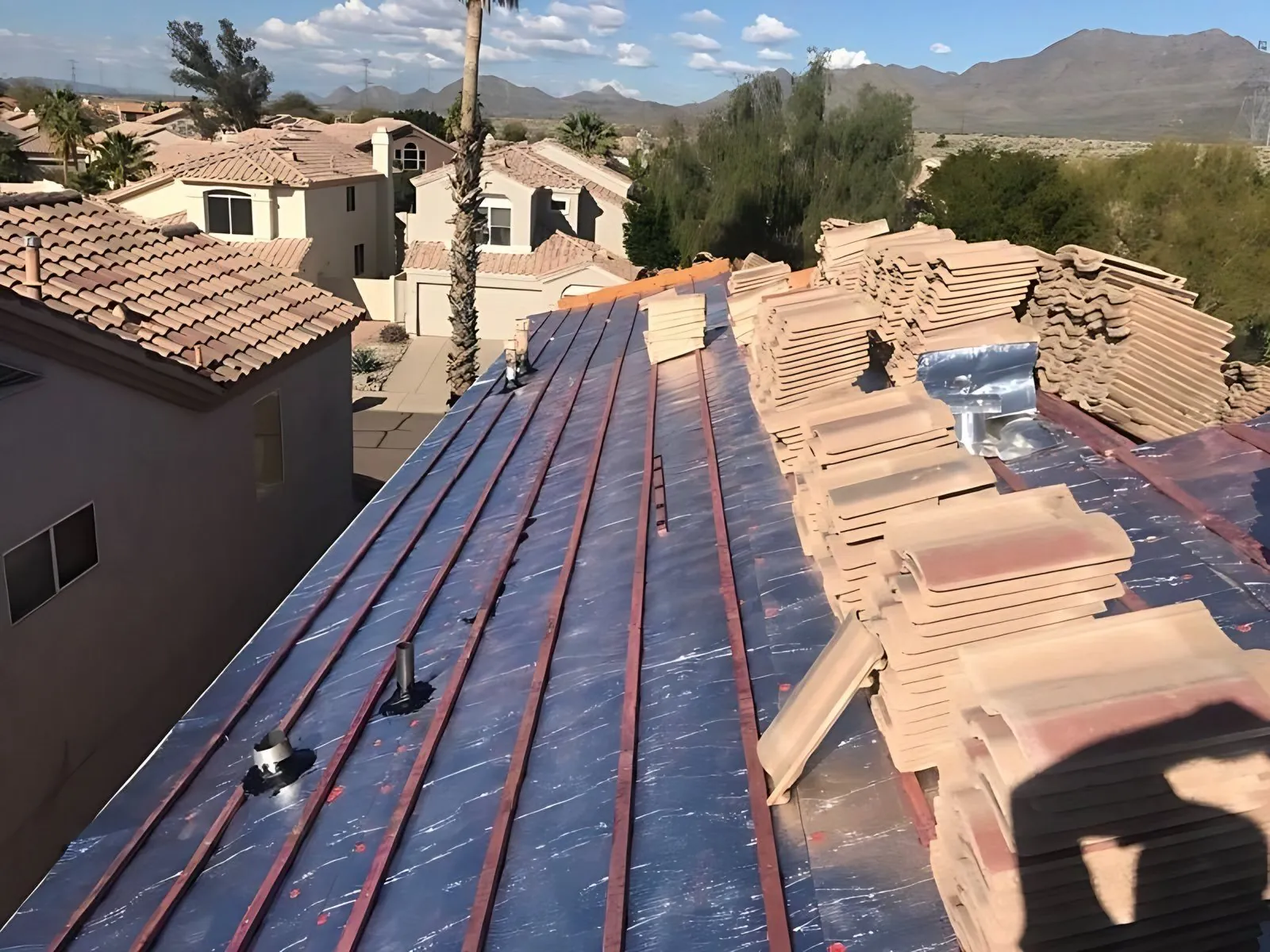
Step 2: Choosing materials and getting approvals
Next, you decide on the roofing system. That might mean new architectural shingles, a tile re-felt that reuses your existing tile, new tile, or spray foam on flat sections. Your roofer should explain the trade-offs for your home. Our guide to choosing a roofing material covers the options.
If you live in an HOA community, this is when you submit the material and color for approval. Many Arizona HOAs require written approval before work starts, so build that time into your plans.
You will also choose a workmanship warranty. Payne Roofing offers 10, 15 or 20-year warranty options on complete re-roofs, separate from any manufacturer's material warranty.
Step 3: Scheduling, permits and prep
Your roofer schedules the work and handles any permits your city requires. Many homeowners prefer to replace roofs outside of monsoon season (June 15 – September 30), though work can happen year-round with proper weather planning and protection of open areas.
Before the crew arrives, you can help by:
- Moving vehicles out of the driveway and garage area
- Taking down wall hangings that could shake loose from vibration
- Covering items stored in the attic, since some dust may fall
- Moving patio furniture, grills and potted plants away from the house
- Letting neighbors know about the work and noise
- Planning for pets to be kept safely away from the work area
Step 4: Tear-off
On shingle roofs, the old shingles and underlayment are stripped down to the deck and removed. On tile re-felts, the tiles are carefully removed and stacked for reuse, then the old underlayment is torn off. Crews typically protect landscaping, walls and windows with tarps and use a dumpster or trailer for debris.
Tear-off is the noisiest, messiest part of the job. A professional crew works in manageable sections when weather is a concern, so the roof is not left exposed longer than necessary.
Step 5: Deck inspection and repair
With the old roofing off, the deck is visible for the first time in years. The crew checks for soft, rotted or delaminated sheathing, often found near old leaks, valleys and roof edges, and replaces damaged sections. This step matters because new roofing is only as good as the surface it is fastened to.
A good estimate explains in advance how deck repairs will be handled, so you are not surprised if some are needed.
Step 6: Underlayment, flashing and ventilation
New underlayment goes down over the deck, lapped so water always flows down and out. Drip edge, valley metal, wall and step flashing, and pipe flashings are installed or replaced. This is the waterproofing backbone of the roof, and in Arizona, where heat ages underlayment, getting it right is essential.
This is also the ideal time to improve attic ventilation and, on tile roofs, to install bird stops at the eaves.
Step 7: Installing the new roof
- Shingles: installed in courses from the eaves up, with proper nailing and starter strips, finished with ridge caps and vents.
- Tile: battens are installed where specified, and tiles are set and fastened, with broken originals replaced on re-felts. Ridge and hip tiles are set last.
- Foam: the surface is prepped, foam is sprayed to the specified thickness and slope, and a protective coating is applied.
Step 8: Cleanup and final walkthrough
The crew removes debris, sweeps for nails with magnets around the yard and driveway, and hauls away old materials. A final inspection checks the finished roof, flashing and details. You should get a chance to ask questions and receive your warranty information.
Ready to start? Learn more about roof replacement with Payne Roofing, or ask about our flexible financing options when you request an estimate.
Questions & answers
How long does a roof replacement take?
Many residential roof replacements take a few days, but timing varies widely. Roof size, material, complexity, deck repairs and weather all affect the schedule. Tile re-felts often take longer than shingle roofs because tiles are removed, stacked and reinstalled. Your roofer should give you an estimated timeline before work begins.
Do I need to be home during a roof replacement?
You usually do not need to be home the whole time, but you should be reachable. The crew may have questions if they find deck damage or other surprises. Make sure they can access the work area, power outlets if needed, and that pets are safely kept away.
What happens if the roofer finds rotted wood?
Damaged decking is normally replaced before the new roof goes on. A good estimate explains how deck repairs are handled and billed, so there are no surprises. Rotted wood is common near old leaks, valleys and edges, and fastening a new roof to it would shorten the new roof's life.
Can a roof be replaced during monsoon season?
Yes, with careful planning. Roofers watch forecasts closely, work in sections and protect open areas when storms threaten. Many homeowners still prefer to schedule replacements outside of June 15 – September 30, when storms are less frequent and schedules are less crowded with emergency repairs.
Talk to a roofer who knows Arizona roofs.
Call for a free estimate. Open Monday through Friday 7–5 and Saturday 8–2.